
If you have ever visited Denmark or even admired Scandinavian food culture from afar, you have probably seen the famous dark, dense rye bread known as rugbrød. This authentic Danish rye bread is a staple of Danish cuisine and has been enjoyed throughout the Scandinavian countries since the Middle Ages. It is traditionally served in thin slices and topped with everything from soft cheeses to cold cuts.
The good news is that making your own Danish rye bread at home is not nearly as intimidating as it looks. While it does take a long time because of the extended fermentation, the method is actually very simple. There is no kneading, no shaping, and no complicated process. You mix the ingredients, spread the dough into a pan, let it rise, and bake.

If you are newer to sourdough baking, I recommend starting with my How to Make Sourdough Starter from Scratch so you can be confident your starter is strong enough for long fermentation recipes like this one.
This is my go-to Danish rye bread recipe as a private chef when I want a nourishing and deeply flavorful hearty bread that lasts for days. It is packed with whole grains, has gentle sour notes, and makes the perfect base for Danish-style open-faced sandwiches.
If you are looking for a traditional rugbrød recipe, this is the real thing.
Quick Summary:
- Dense seeded sourdough rye bread
- 18 to 24 hour fermentation
- No kneading required
- Best sliced thin for open sandwiches
- Improves in flavor the next day
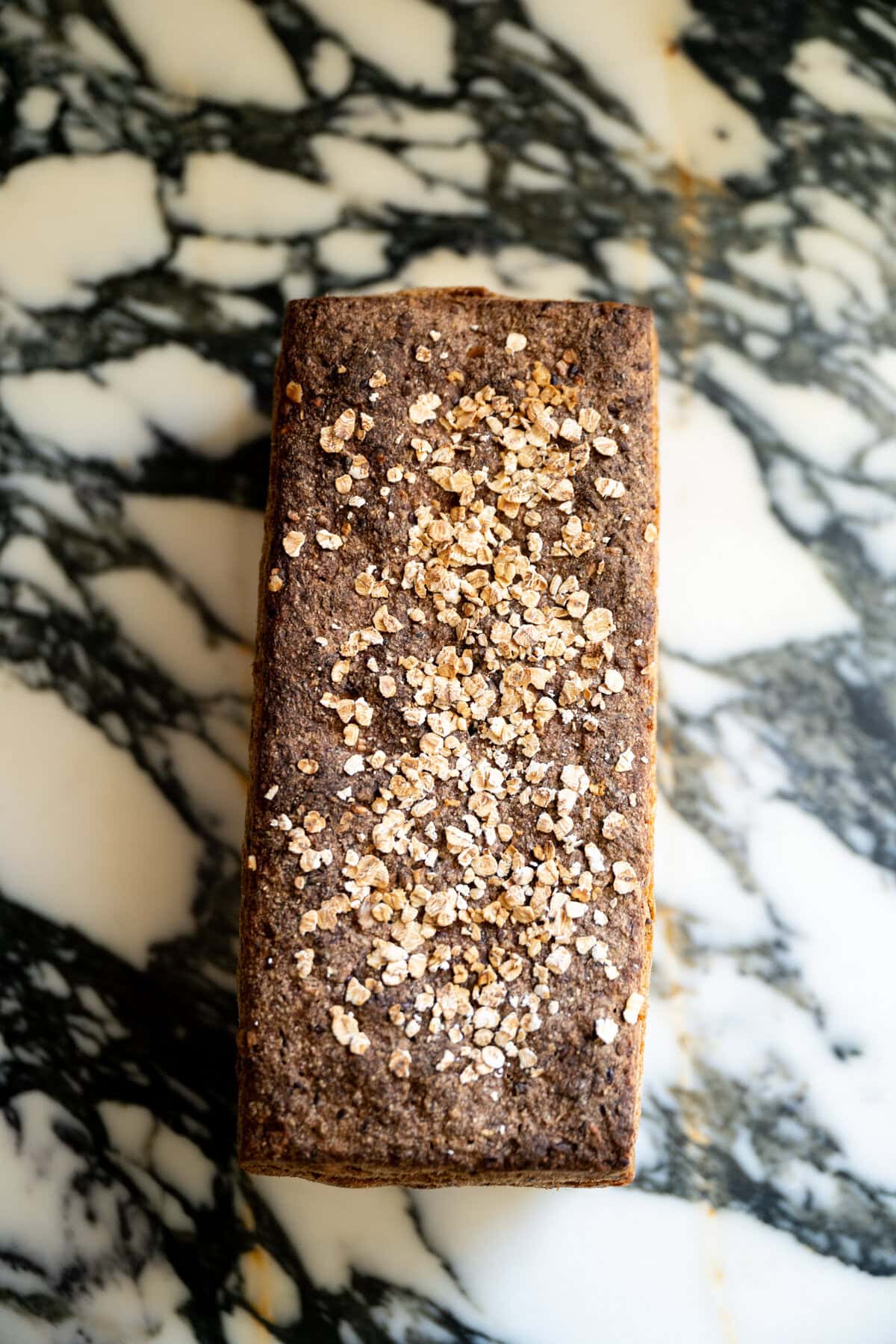
Table of contents
- What Is Rugbrød?
- Why You Will Love This Rugbrød Recipe
- Ingredients for Danish Rye Bread
- Equipment You Will Need
- How to Make Danish Rye Bread (Sourdough Rugbrød)
- Tips for the Best Homemade Rugbrød
- Rugbrød Variations and Add-Ins
- How to Serve Danish Rye Bread
- Storage Tips
- Troubleshooting Rugbrød (Common Problems + Fixes)
- Quick Troubleshooting Chart
- Recipe FAQs
- More Sourdough Recipes to Try
- Love This Recipe?
What Is Rugbrød?
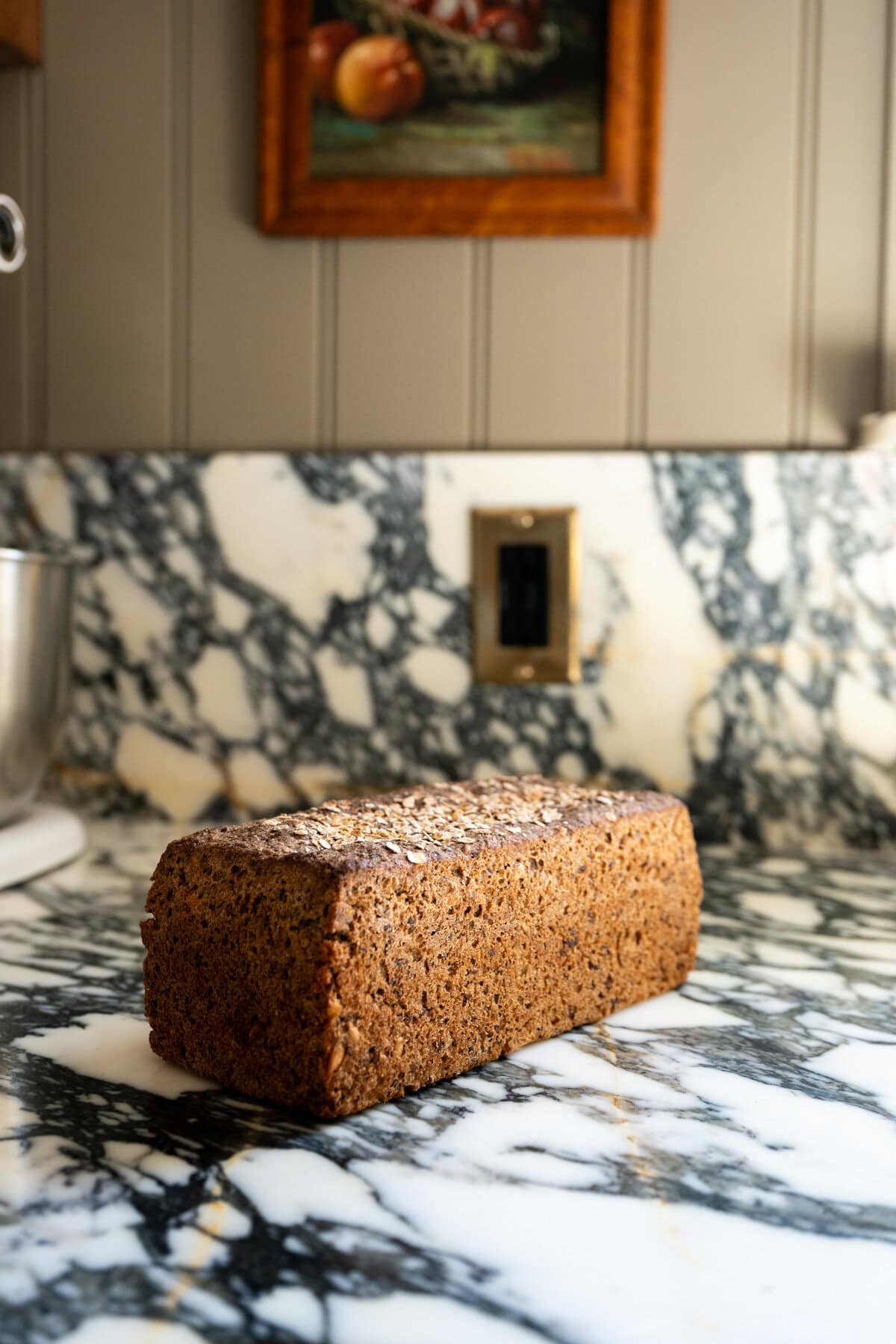
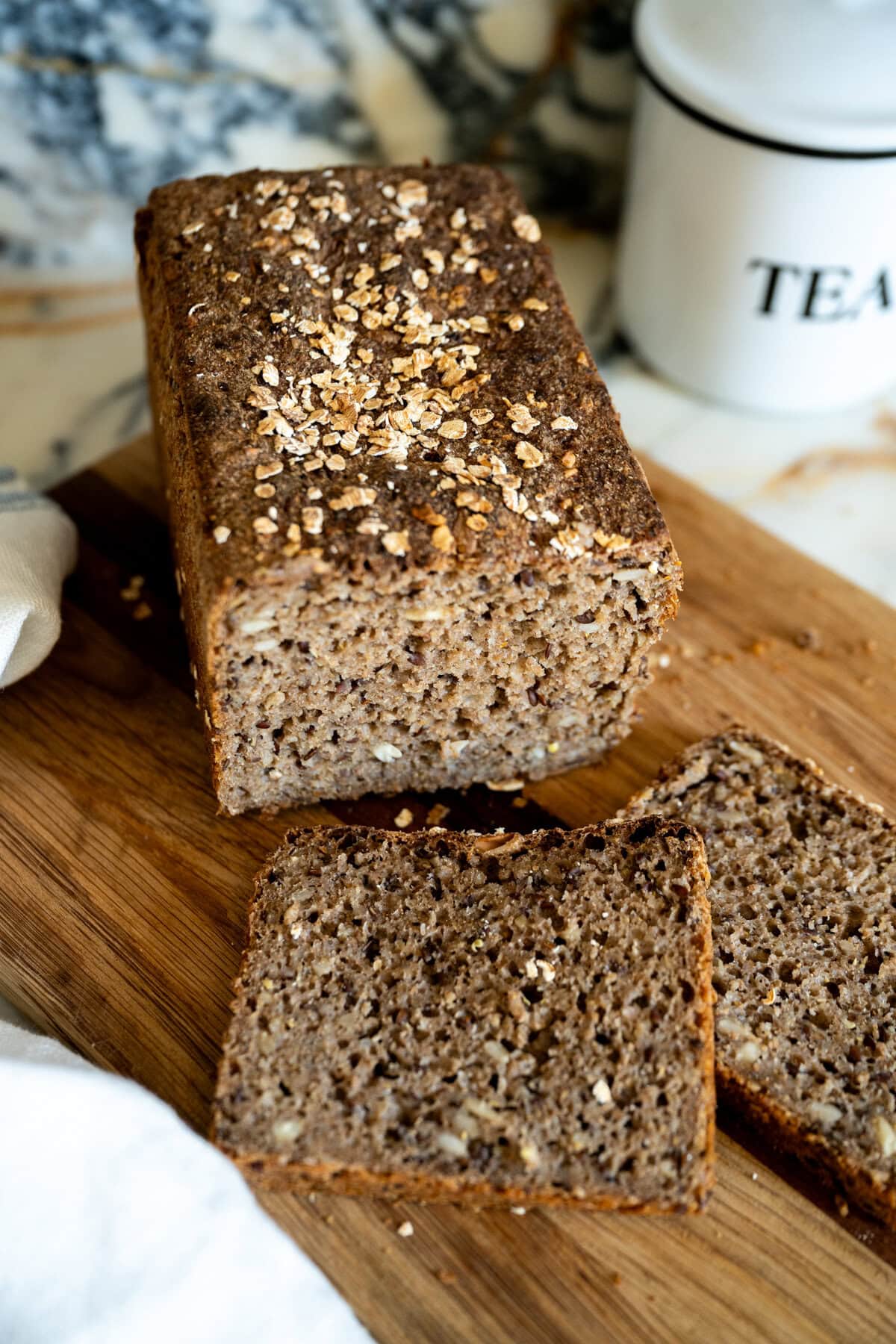
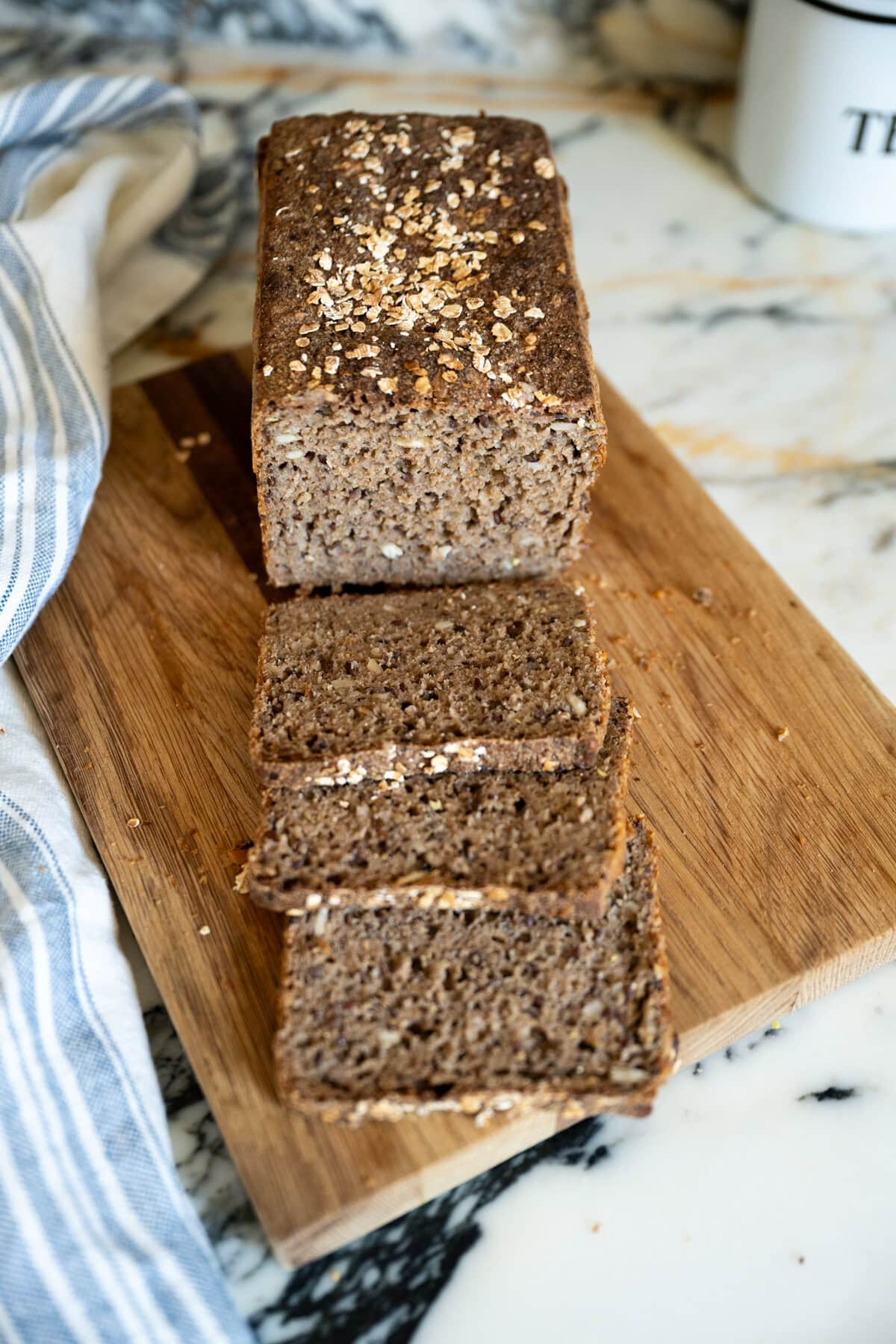
Rugbrød is a traditional Danish rye sourdough bread made with rye flour, rye berries, and seeds. Unlike fluffy sandwich loaves, this type of bread is meant to be dense, moist, and filling.
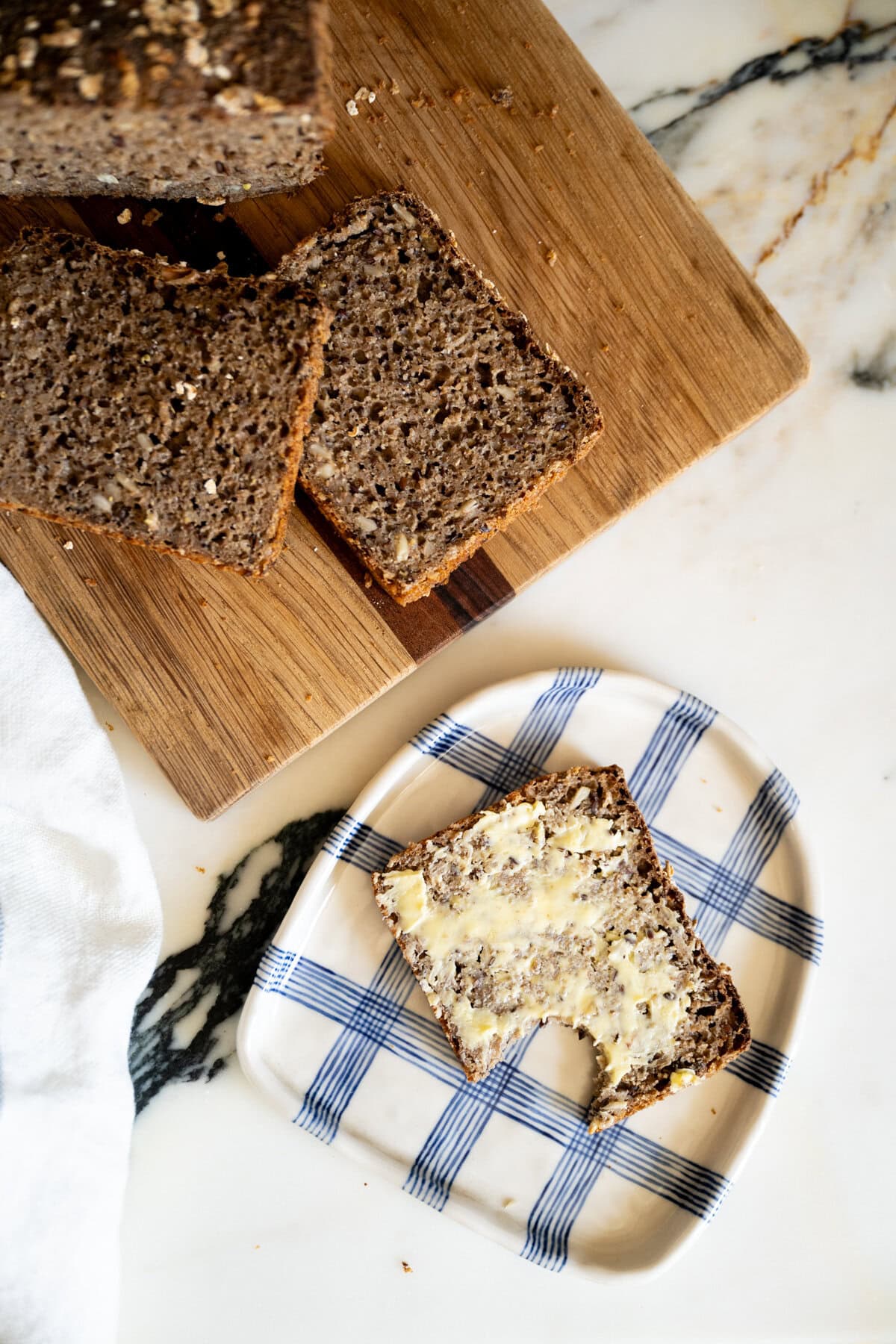
A slice of rugbrød is usually served with toppings, which is why it is so popular for Danish open sandwiches (also called smørrebrød). Common toppings include liver pate, pickles, herbs, red onions, and sliced meats like roast beef.
Rugbrød is especially delicious when used for open sandwiches, just like my Sourdough Focaccia Bread Recipe, which is another sturdy bread that holds up well to savory toppings.
This is the kind of dense rye bread recipe Scandinavian kitchens have relied on for generations. It is practical, nourishing, and incredibly satisfying.
What does rugbrød taste like?
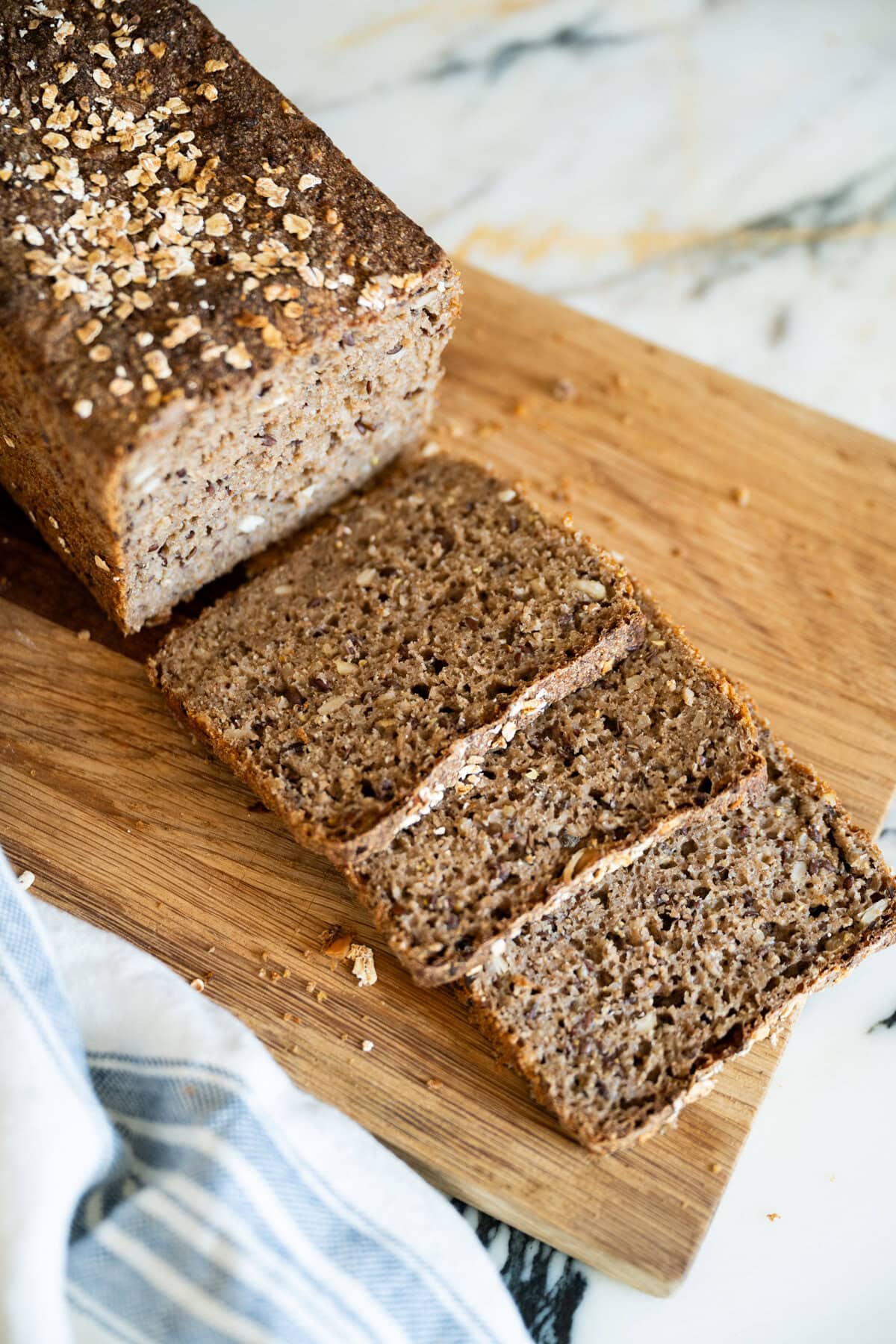
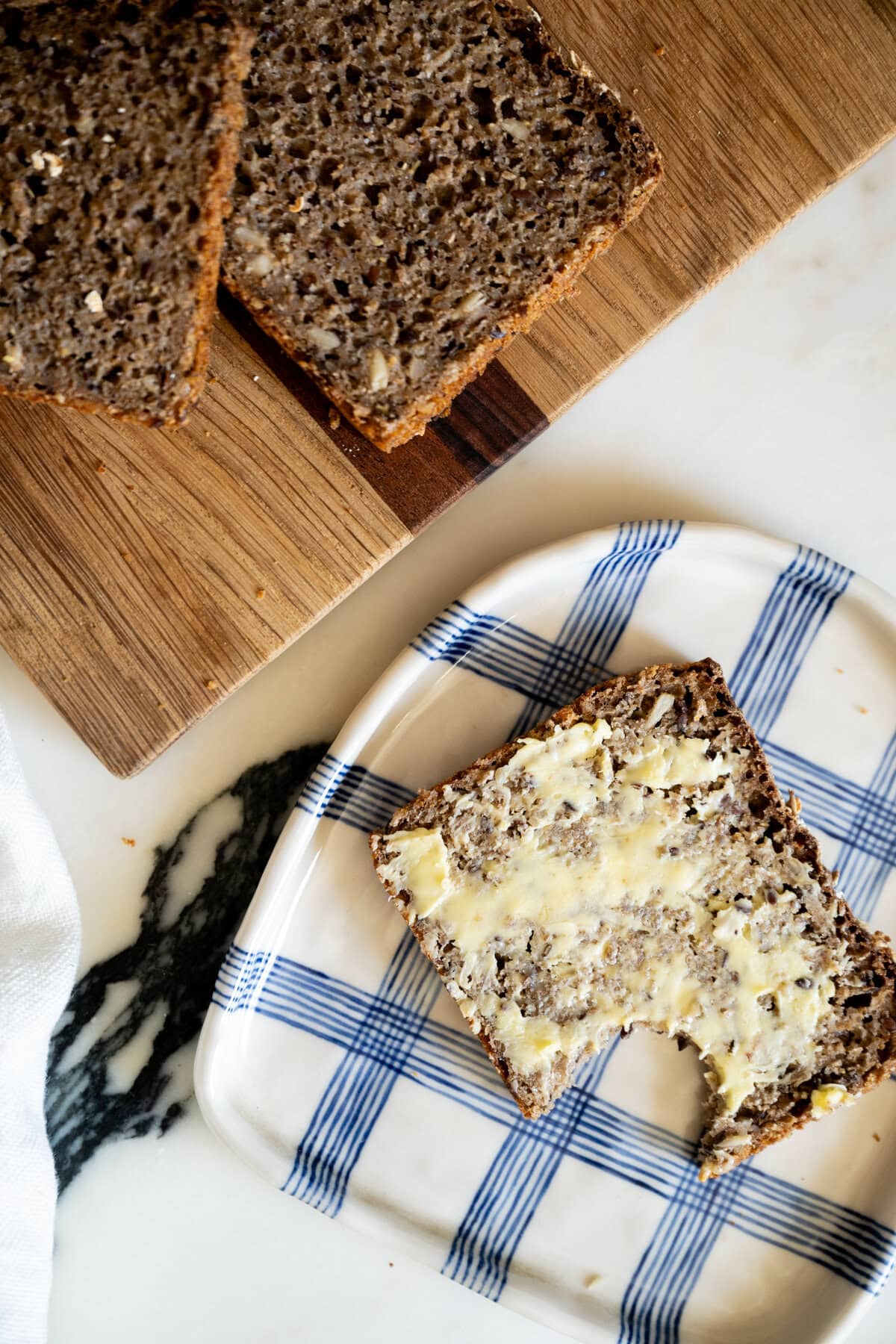
Rugbrød tastes earthy, nutty, and deeply rye-forward with mild sour notes from fermentation. It is not sweet, and it has a hearty texture thanks to soaked rye berries and seeds.
Rugbrød Baking Timeline (Example Schedule)
Example:
- Night before: soak rye berries + seeds
- Morning: mix dough
- Next day: bake
- Next day: slice
Rugbrød is a two-day bread, but the hands-on time is minimal and the results are worth it.
If you enjoy long-fermented bread recipes, you might also love my Homemade Artisan Sourdough Bread Recipe, which is a classic crusty loaf with a chewy crumb and deep sourdough flavor.
Why You Will Love This Rugbrød Recipe
This rugbrød recipe is one of my favorites because it is:
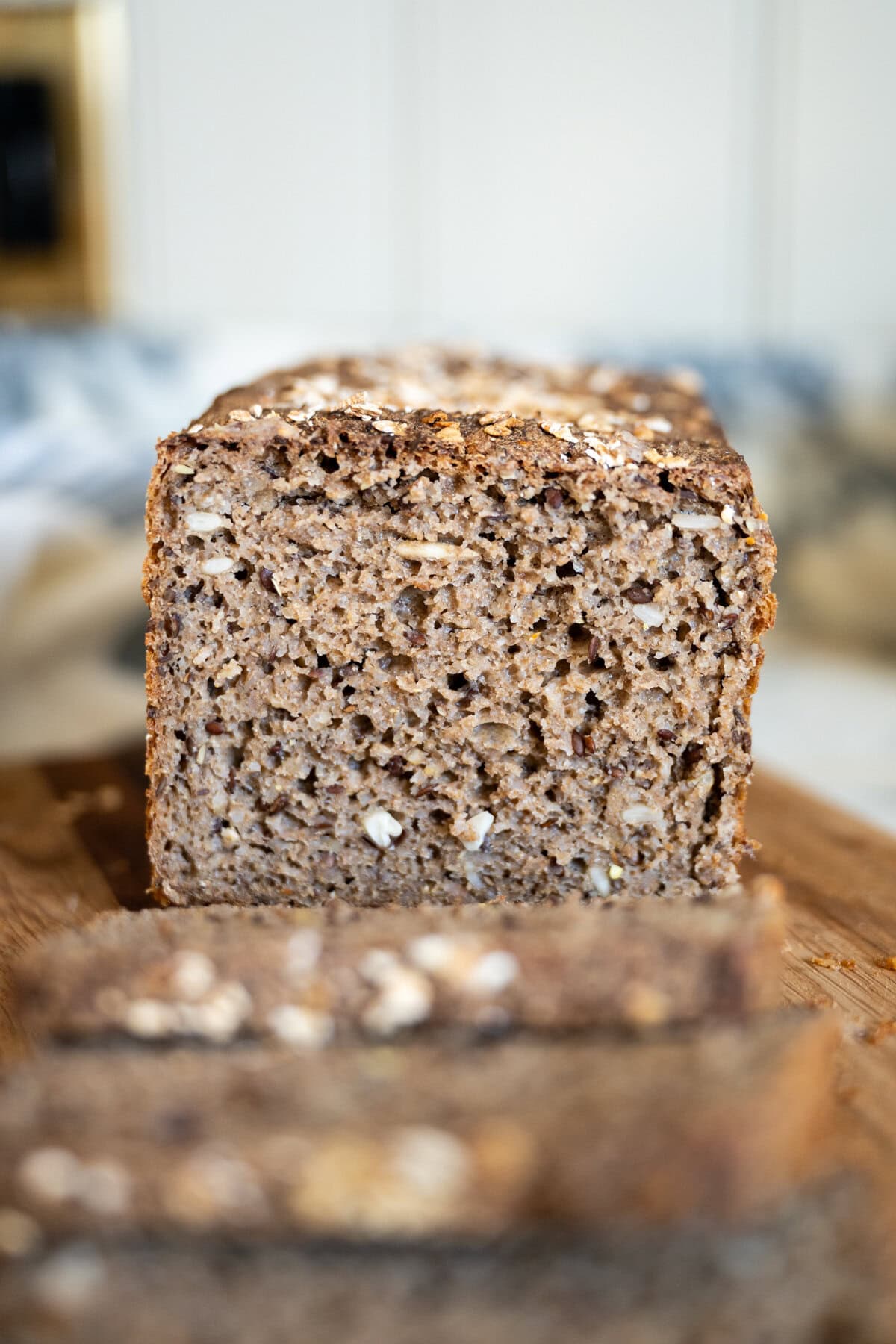
- Packed with whole grains and soaked seeds
- Naturally fermented using sourdough starter
- Deeply flavorful with a rich rye taste
- Easy to mix with minimal hands-on time
- Perfect for meal prep and open-faced sandwiches
Even though the proofing time is long, the actual work is very minimal. Once you mix the batter-like dough, the starter does the rest.
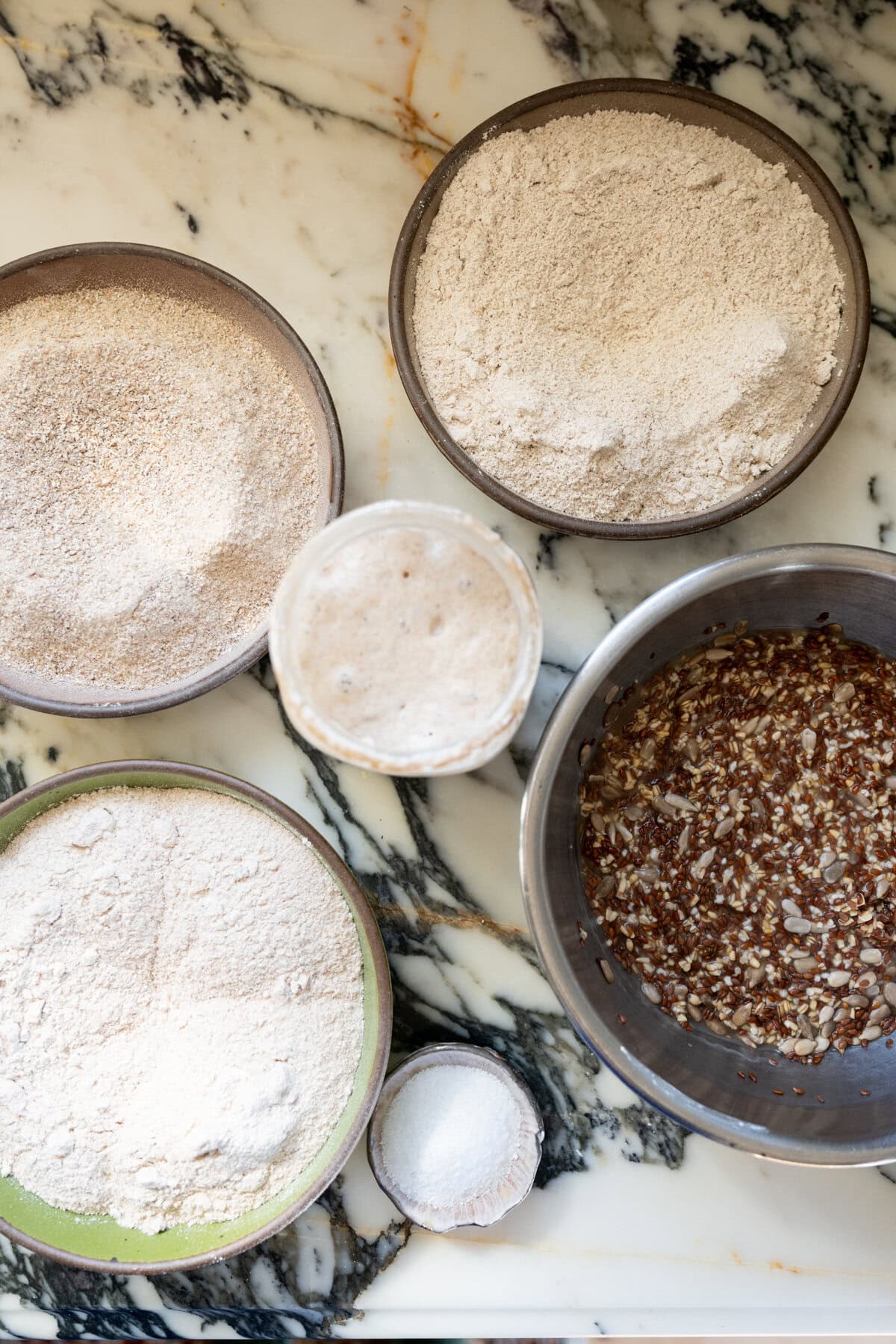
Ingredients for Danish Rye Bread
This Danish rye bread with seeds uses a simple but powerful combination of grains, flours, and seeds. Each ingredient adds structure, moisture, and flavor.
- Cracked Rye Berries (or Coarse Ground Rye Berries): Add texture and chew. If you have a grain mill, you can make your own coarse rye meal, but store-bought cracked rye berries work perfectly.
- Dark Rye Flour: gives this loaf its signature color and deep flavor. This is essential for an authentic loaf of rye bread.
- Spelt Flour or Whole Wheat Flour: Both options work well. Spelt flour gives a slightly sweet and nutty flavor, while whole wheat flour adds depth and structure.
- Rye Berries or Steel Cut Oats (Presoaked): Soaked grains are key to rugbrød. Whole rye berries are traditional, but steel cut oats are a great option if you want a softer texture.
- Water: Water hydrates the whole grains and helps create the sticky dough texture that rugbrød is known for.
- Active Sourdough Starter: A recently fed and active sourdough starter is the heart of this recipe. It provides fermentation, flavor, and structure without commercial yeast.
- Not sure if your starter is ready to bake with? My guide on How to Make Sourdough Starter from Scratch walks you through feeding, timing, and how to tell when it is active and bubbly.
- Salt: Salt balances the flavor and strengthens the dough as it ferments. I use Diamond Crystal Kosher Salt in all of my recipes unless otherwise noted.
- Sunflower Seeds and Flax Seeds: These seeds add richness and texture. Sunflower seeds are especially traditional in rugbrød. Flax seeds help hold moisture in the crumb.
Optional common additions include pumpkin seeds or sesame seeds if you want to customize your loaf.
What flour is best for Danish rye bread?
Dark rye flour gives rugbrød its classic flavor and color. Adding spelt flour or whole wheat flour helps balance the texture and makes the loaf easier to slice.
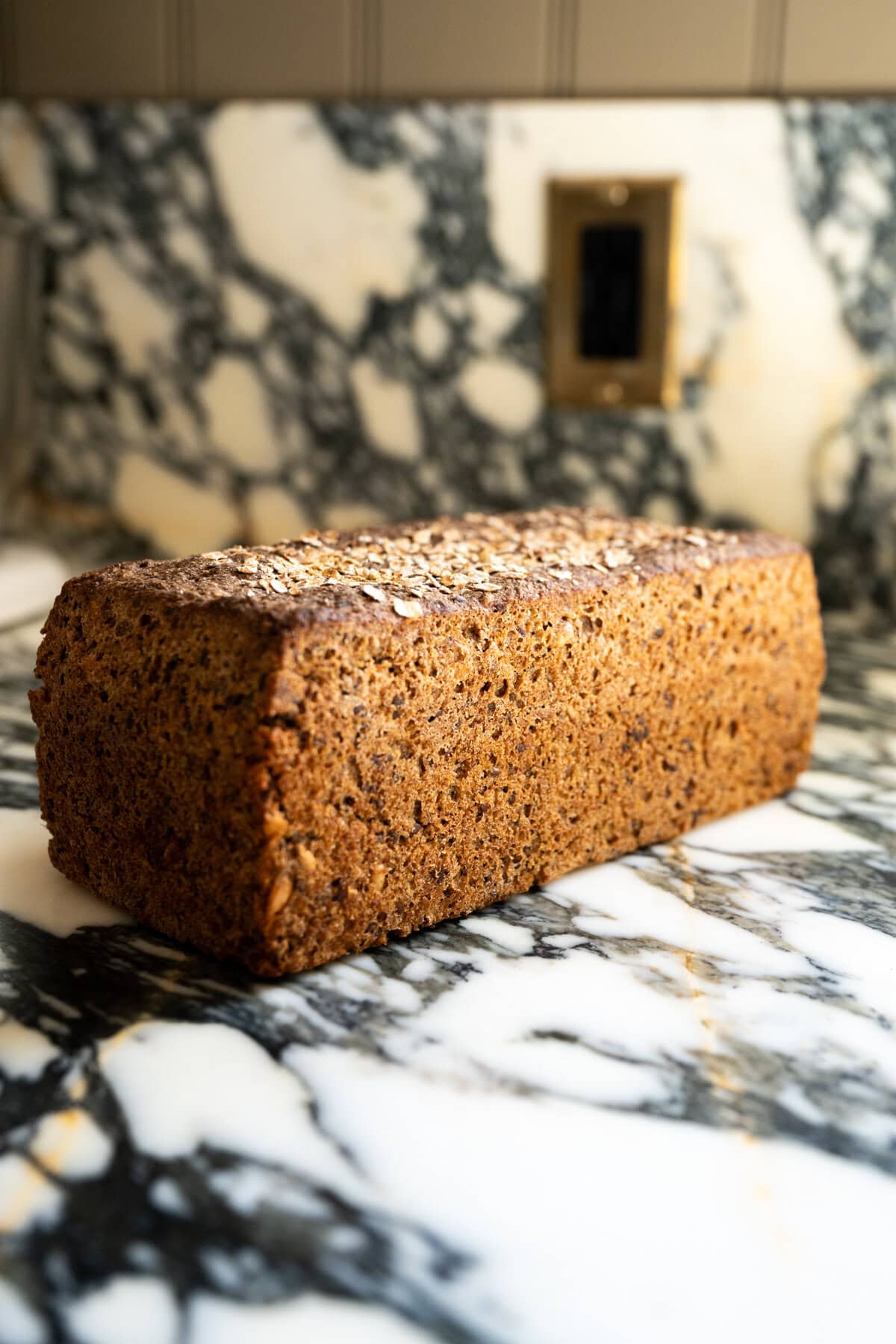
Equipment You Will Need
This is a simple recipe, but using the right pan matters.
- Large bowl or mixing bowl
- Fork or dough whisk or wooden spoon
- Pullman pan (recommended) or standard loaf pan
- Plastic wrap
- Offset spatula or butter knife
- Cooling rack
- Instant-read thermometer
Recommended pan size: A 9x4x4 inch Pullman pan works best for this recipe. If using a loaf pan, make sure it is large enough to hold the dough with room to rise.
If you love baking bread at home, you may also enjoy my Soft Honey Whole Wheat Sourdough Sandwich Bread, which is a great beginner-friendly loaf and uses similar tools and timing.
How to Make Danish Rye Bread (Sourdough Rugbrød)
This is a high hydration dough. It will feel more like thick batter than traditional bread dough, and that is exactly what you want for rugbrød.
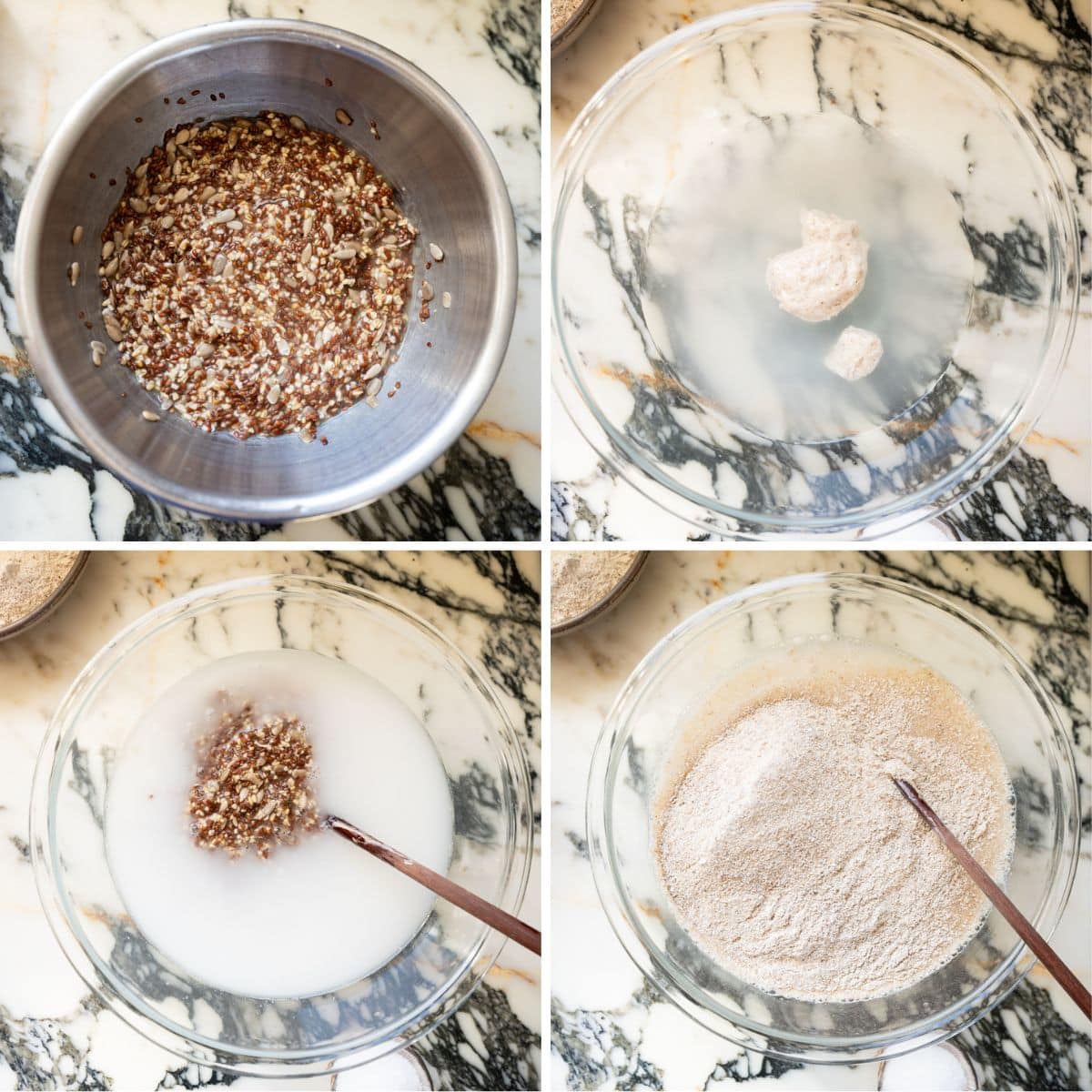
Step 1: Presoak Rye Kernels and Seeds
The night before making your dough, soak the rye kernels and seeds.
In a bowl, combine:
- Whole rye berries (or rye kernels)
- Sunflower seeds
- Flax seeds
- Water
Cover and leave at room temperature overnight.
If you are using steel cut oats instead of rye berries, they can be soaked the next day since they soften faster.
Soaking is essential. It softens the grains and prevents them from pulling moisture from the dough during the long fermentation.
Step 2: Mix the Water and Sourdough Starter
In a large mixing bowl, add the water and active sourdough starter.
Mix with a fork until mostly dissolved. You want the starter evenly distributed through the liquid.
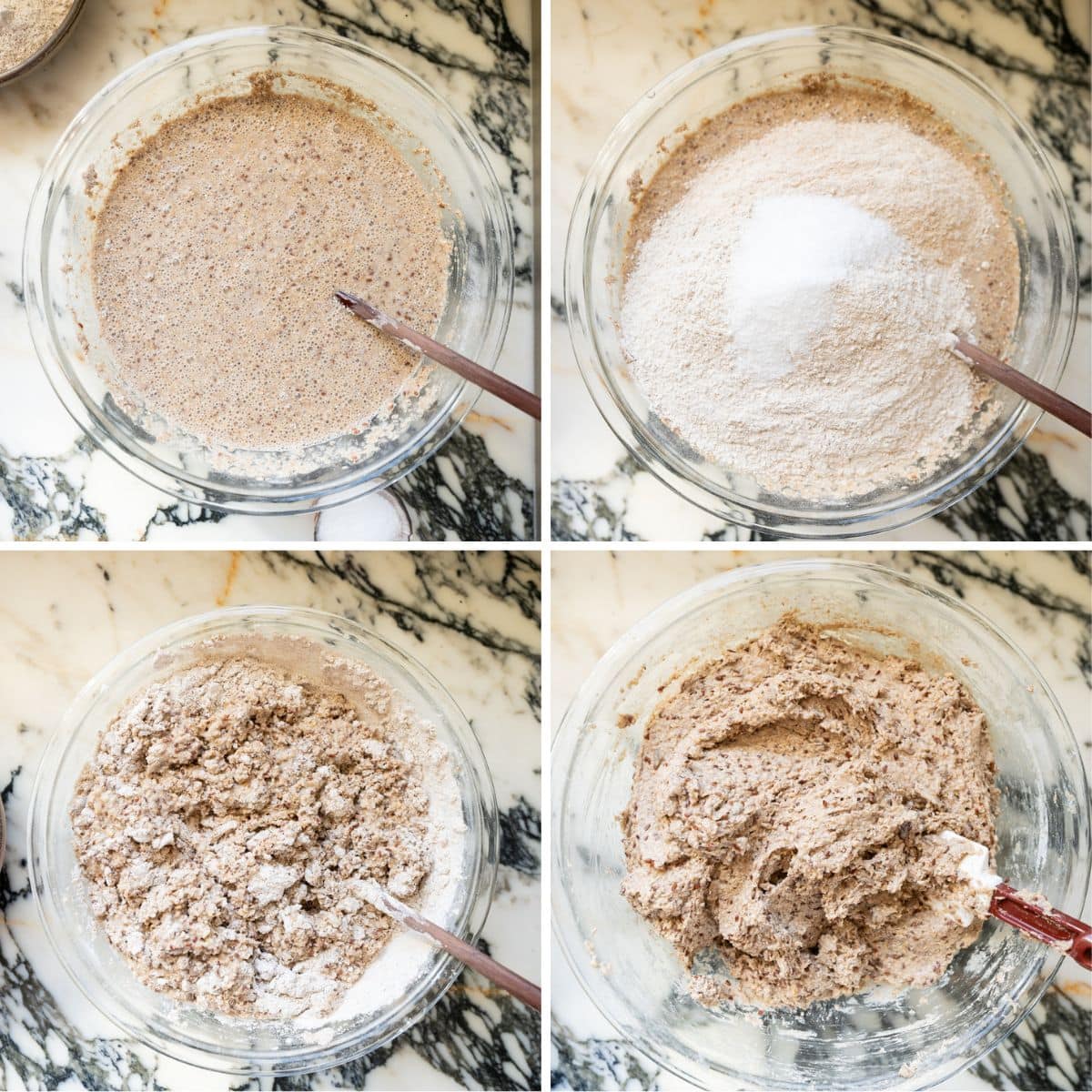
Step 3: Add the Dry Ingredients and Soaked Grains
Add the cracked rye berries, dark rye flour, spelt flour (or whole wheat flour), and salt.
Drain the soaked rye berries and seeds, then add them to the bowl.
Mix with a wooden spoon until everything is fully combined. The dough will be very sticky and wet. It should resemble a thick batter more than a kneadable dough.
This is normal because rye has less gluten than bread flour. Rugbrød does not need kneading.
If you prefer, you can use a stand mixer with a dough hook, but it is not required.
Step 4: Transfer to a Greased Pullman Pan
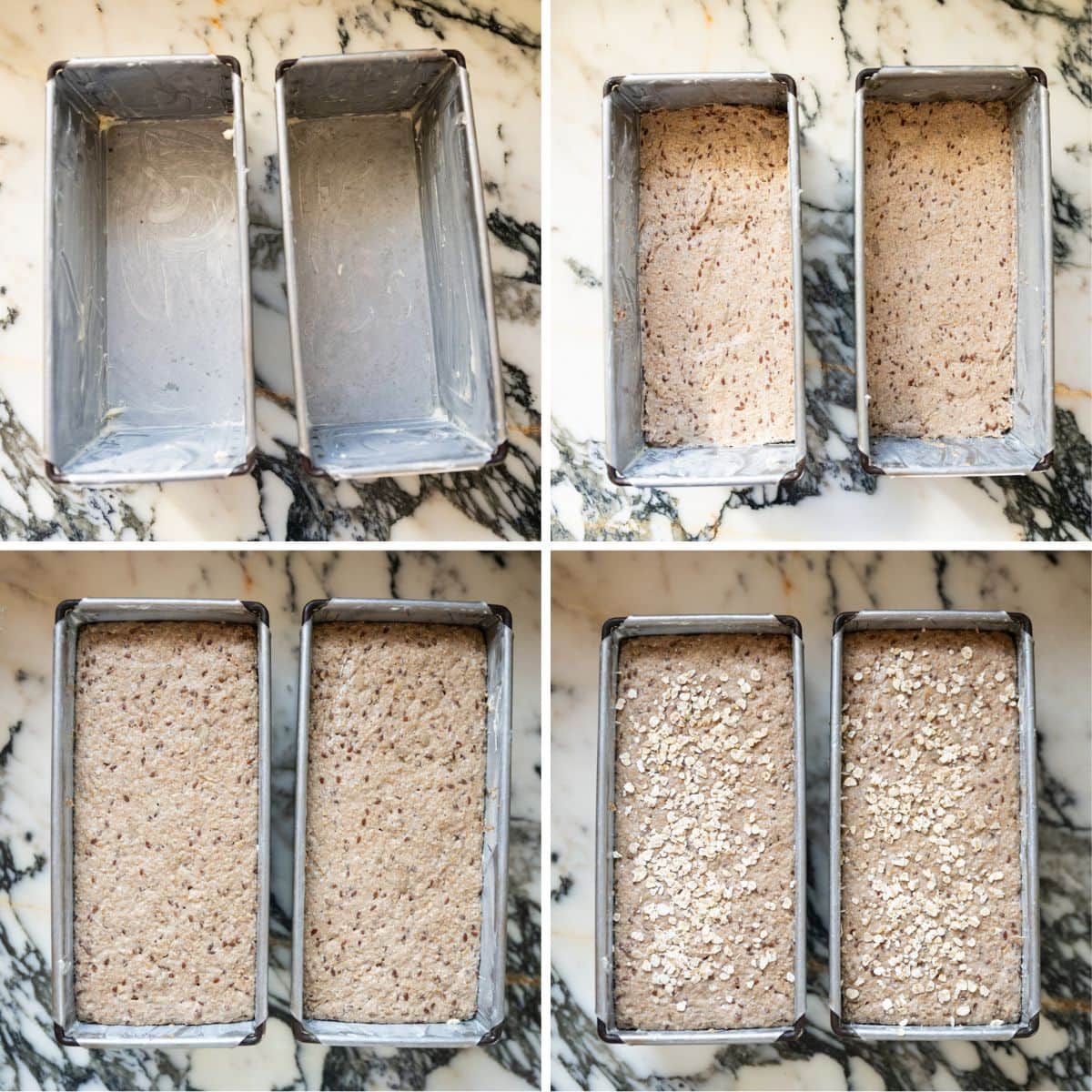
Grease a pullman pan generously with butter. This is important because rye dough loves to stick.
Scrape the dough into the pan and spread it evenly. Smooth the top with a spatula or damp hands.
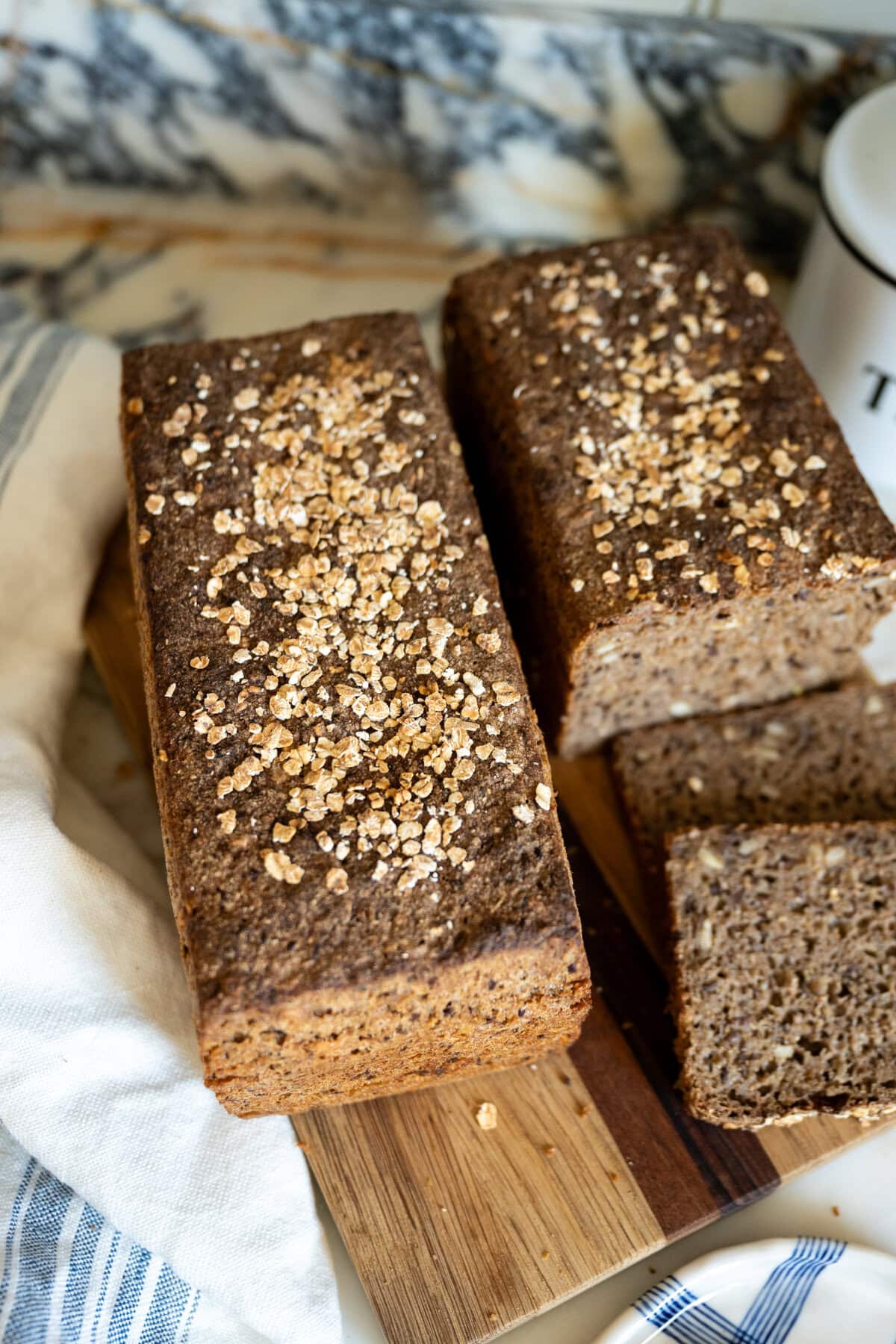
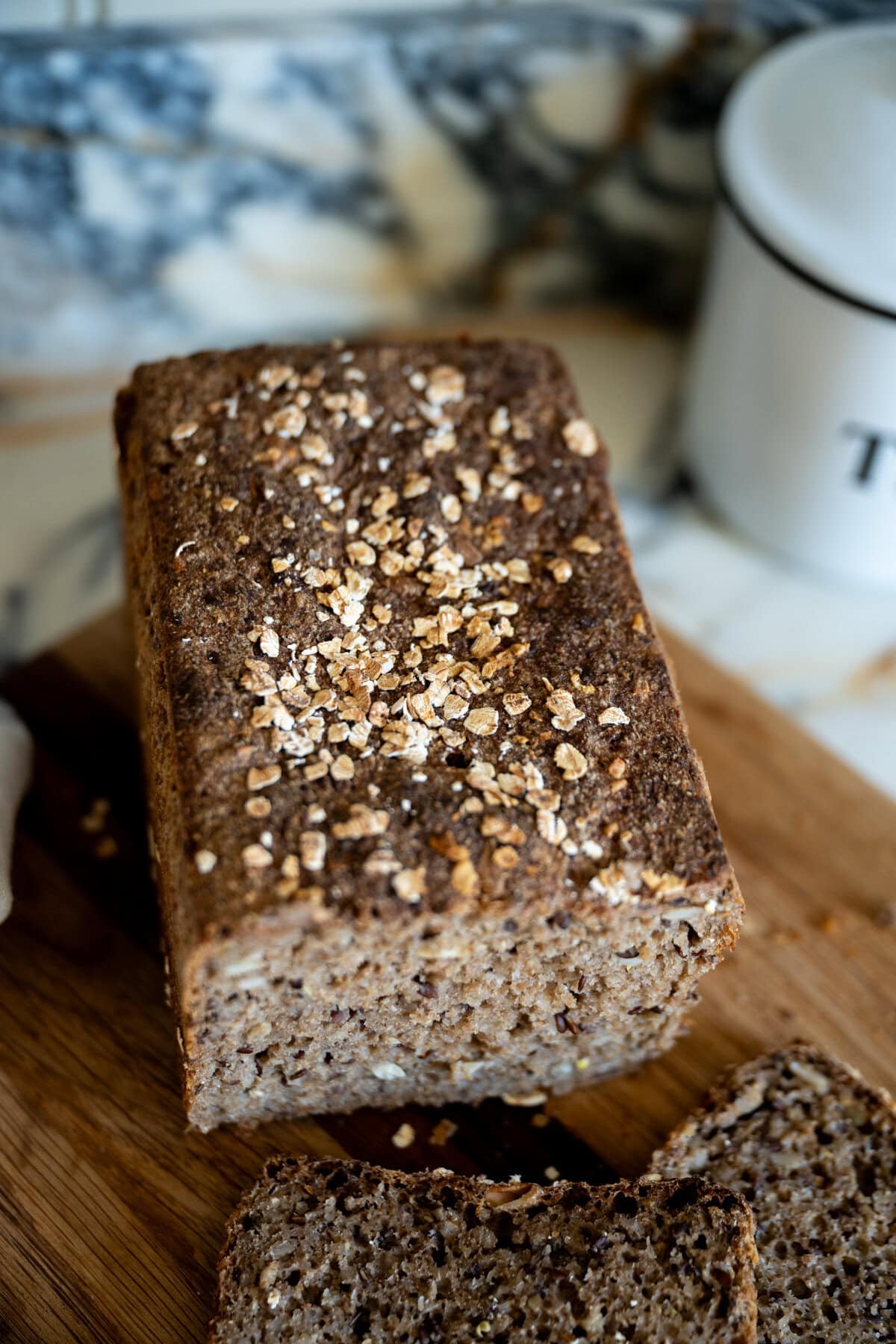
If desired, you can sprinkle extra sunflower seeds or rolled oats on top for a classic look.
Step 5: Cover and Bulk Ferment
Cover the pan tightly with plastic wrap.
Let the dough rise at room temperature until it reaches about 1 inch from the top of the pan. This bulk fermentation will take about 18 to 24 hours depending on your kitchen temperature, humidity, and starter strength.
This long fermentation time is what creates the signature sour notes and deep flavor in rye sourdough.
If your kitchen is cooler, it may take closer to 24 hours. If it is warm, it may be ready sooner.
Step 6: Bake Until Dark and Fully Set
Preheat your oven to 425°F.
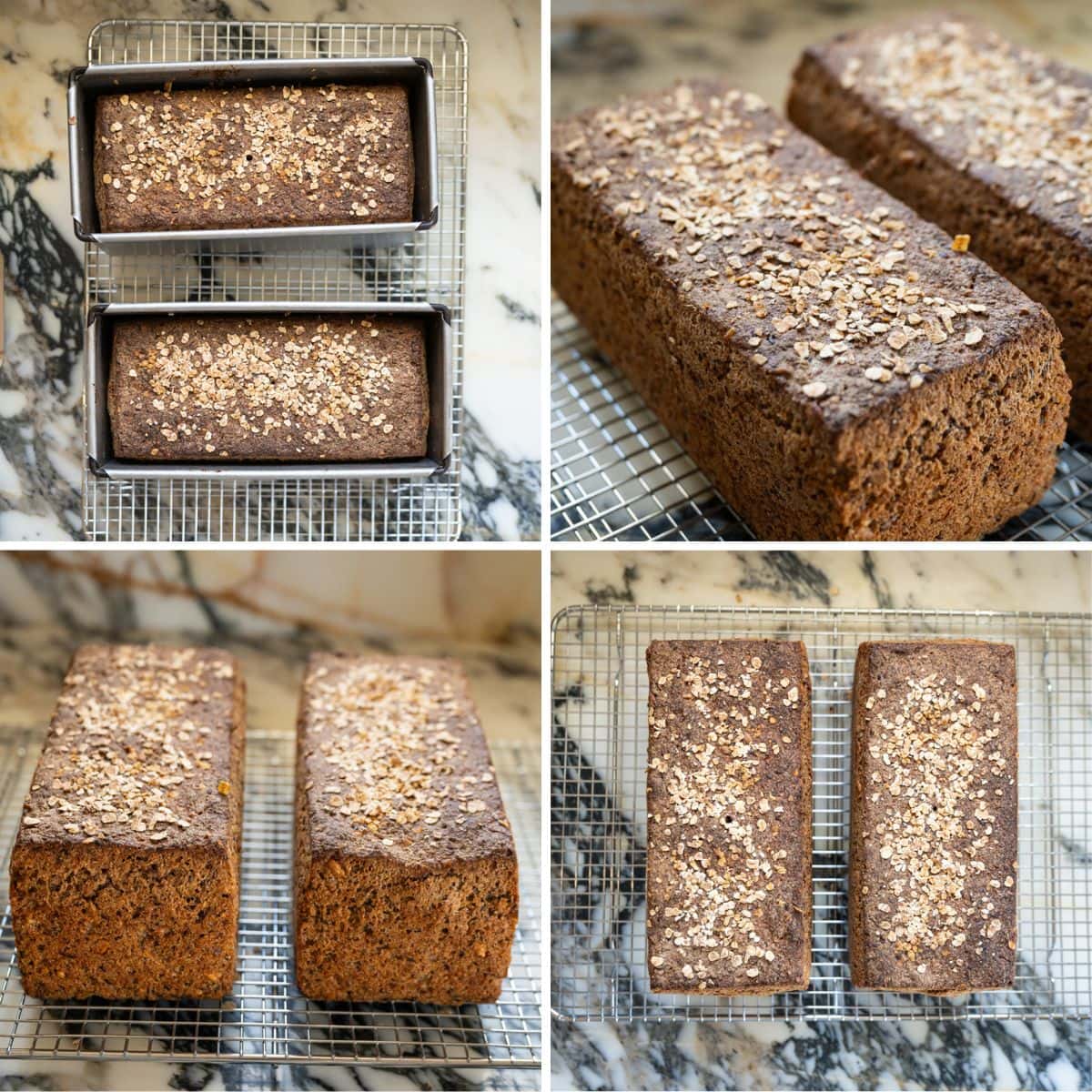
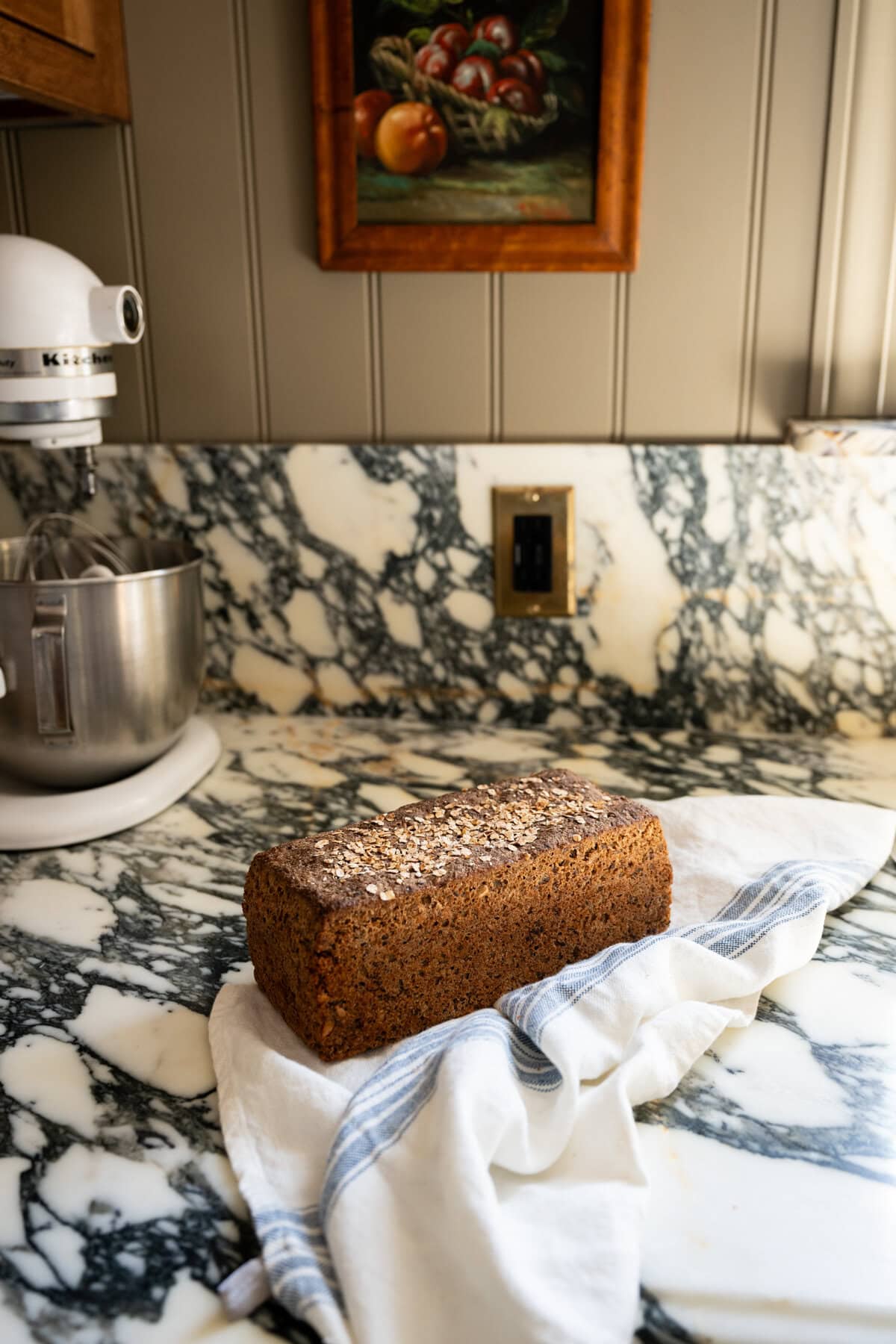
Bake for 60 to 70 minutes, until the crust is dark brown and the internal temperature reaches 210°F.
This is one of the hardest things about rye bread. It can look done on the outside while still being gummy inside, so checking internal temperature is important.
For easier handling, place the pan on a rimmed baking sheet before baking.
Pro Tip: If the crust is getting too dark before the internal temperature reaches 210°F, loosely tent the loaf with foil for the final 15 minutes.
Step 7: Cool Completely Before Slicing
Once baked, run an offset spatula or butter knife around the edges of the loaf.
Tip the loaf out onto a wire rack.
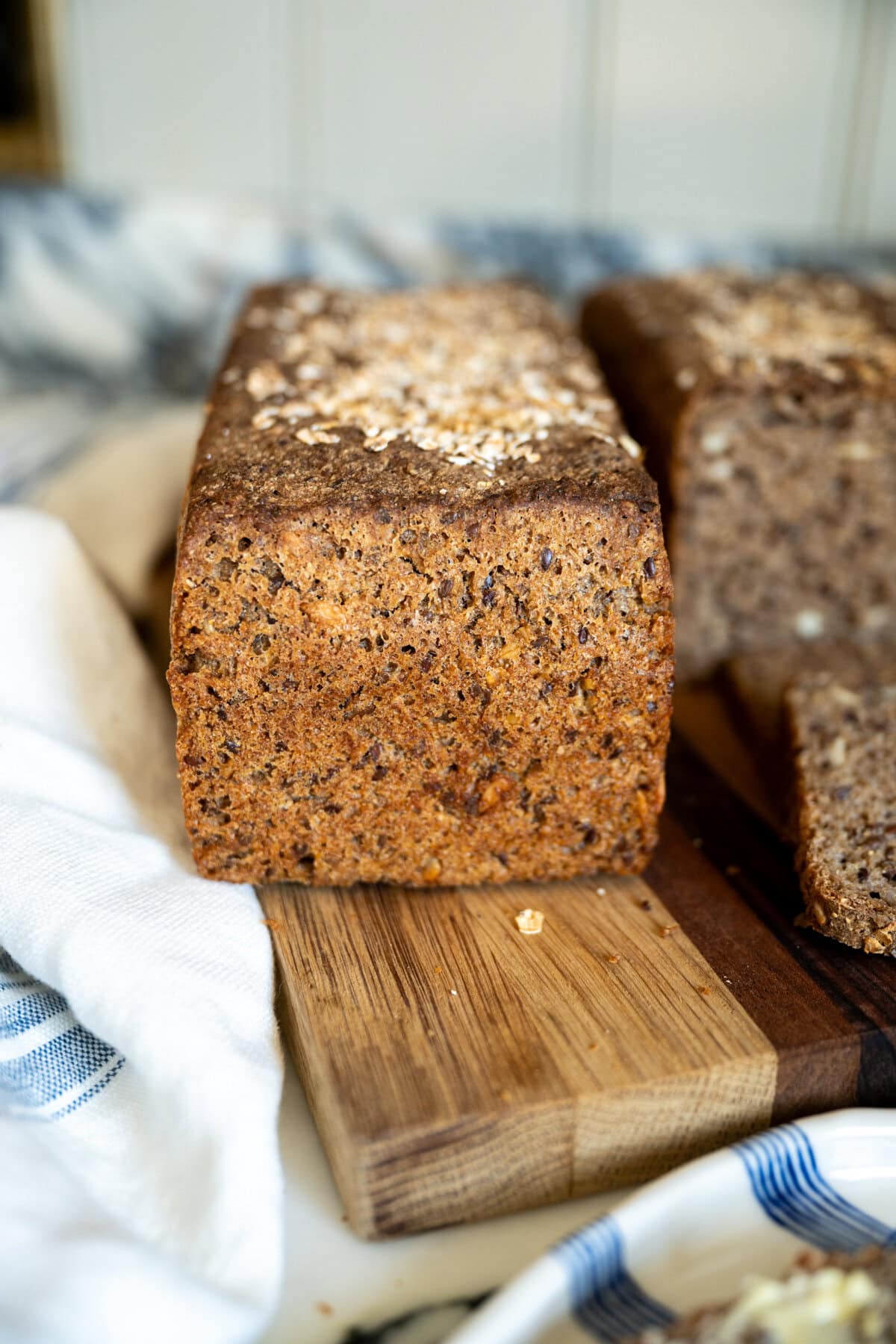
Let it cool completely to room temperature before slicing. This step matters more than most bread recipes. Rugbrød needs time to set its crumb structure, and slicing too early can lead to a sticky interior.
For best results, wrap the loaf and wait until the next day before slicing.
Pro Tip: Rye dough is naturally sticky and heavy. This is correct and expected. Do not try to knead or overwork it like wheat dough.
Tips for the Best Homemade Rugbrød
- Use an Active Starter: Your sourdough starter should be recently fed and bubbly. A weak starter will lead to a slow dough rise and dense texture.
- Do Not Skip the Soaking Step: Soaking rye grains and seeds is what keeps this bread moist. Dry grains will steal moisture from the dough and affect the final texture.
- Expect a Wet Dough: This bread dough will not behave like wheat dough. Rye has less gluten, so it will never become elastic. That wet batter-like consistency is correct.
- If you are interested in other wet, high-hydration doughs, my Sourdough Focaccia Bread Recipe is another no-knead favorite that is incredibly beginner-friendly.
- Bake Fully: Rye bread needs a thorough bake. Always use a thermometer. Once the internal temperature hits 210°F, you can be confident the loaf is fully baked.
Rugbrød Variations and Add-Ins
Once you master the original recipe, you can customize it easily. Rugbrød is very forgiving.
Try adding:
- Pumpkin seeds for crunch
- Sesame seeds for extra nutty flavor
- A splash of dark beer to replace some of the water for deeper flavor
- Extra cracked rye berries for more chew
- Molasses for a hint of sweetness and dark color
These are all common additions in parts of Scandinavia.
How to Serve Danish Rye Bread
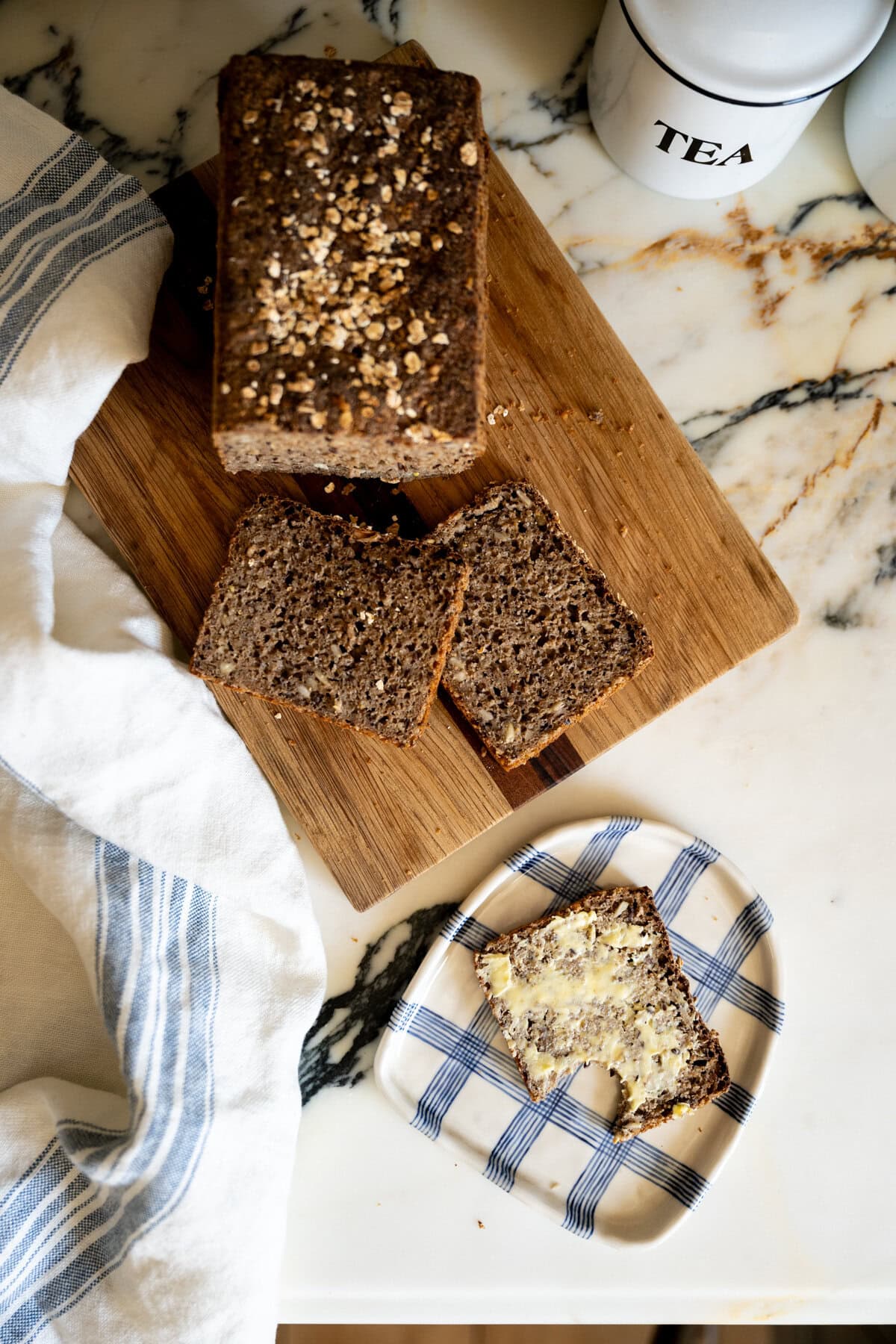
This is the ultimate bread for open sandwiches (smørrebrød). Slice it thin and serve with:
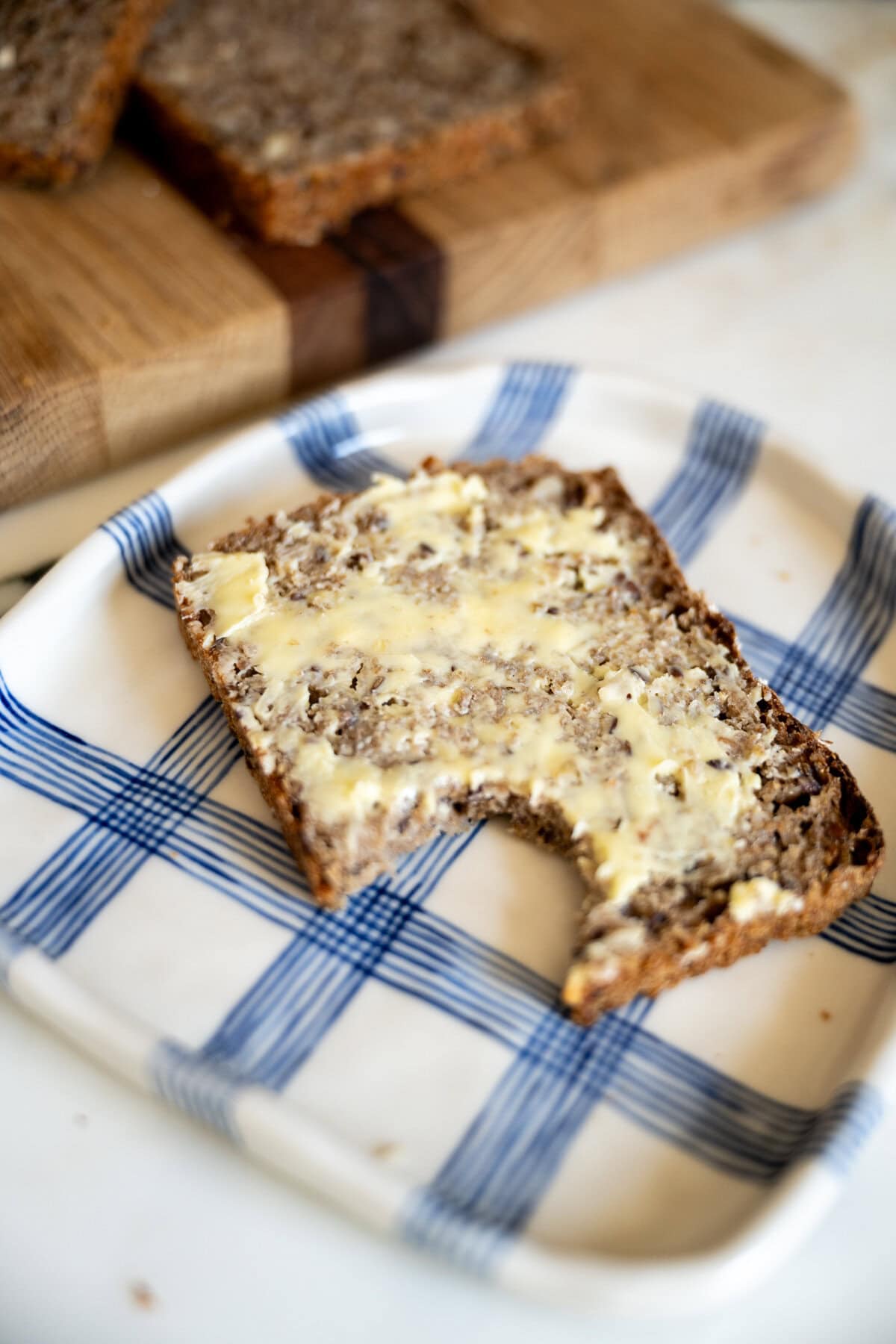
- Good butter and cheese
- Cream cheese and smoked salmon
- Liver pate with red onions
- Roast beef with pickles
- Cold cuts and mustard
- Toasted with butter, avocado, greens and a jammy soft boiled egg for breakfast (my favorite)
- A snack plate with cheese, pickles, hummus, vegetables and fruit
- Toasted and topped with tahini, thinly sliced cucumbers, olive oil drizzle, flaky salt and black pepper
This is the kind of delicious bread that turns simple ingredients into a full meal. In Denmark, rugbrød is a daily staple, and once you make it at home, you will understand why.
If you love breads that work well with savory meals, my Easy Sourdough Naan Recipe is another great option for pairing with dips, spreads, and weeknight dinners.
Storage Tips
- Room Temperature Storage: Store the loaf at room temperature in a bread bag or wrapped tightly. It stays moist for several days thanks to the soaked grains.
- Refrigerating: You can refrigerate it, but it may dry slightly. Toasting brings it back to life.
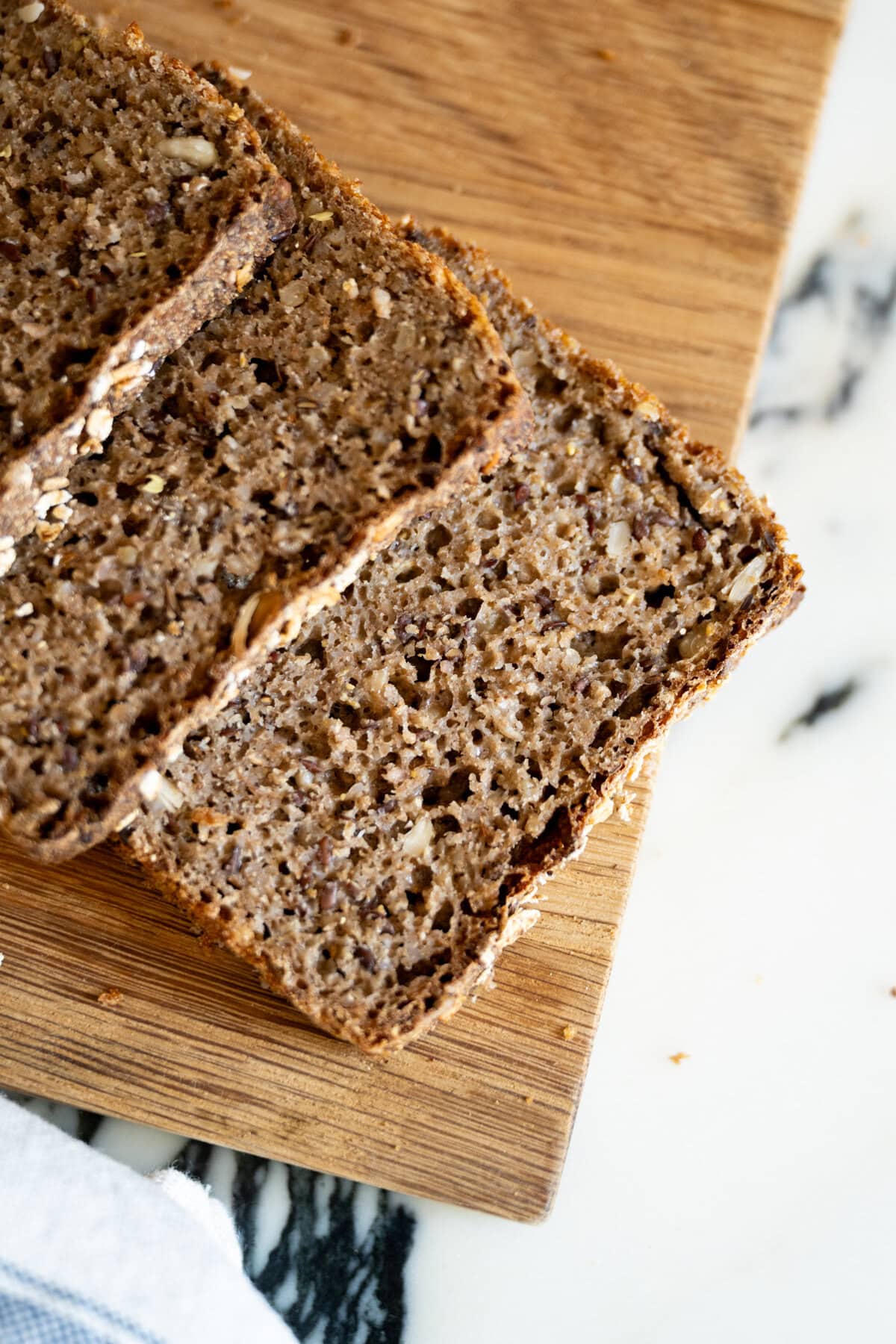
- How to slice rugbrød cleanly: Use a sharp serrated bread knife and slice rugbrød once fully cooled. For the cleanest thin slices, wrap the loaf and slice the next day.
- Freezing: This loaf freezes very well. Slice it first, then freeze in a sealed bag so you can pull out individual slices as needed.
If you like freezer-friendly baking projects, you may also enjoy my Sourdough Bagel Recipe, since bagels freeze beautifully and can be toasted straight from frozen.
RUGBRØD VS OTHER RYE BREADS
| Type | Texture | Leavening | Flavor | Best Use |
|---|---|---|---|---|
| Danish Rugbrød | Dense, moist, seeded | Sourdough | Deep, sour | Open sandwiches |
| German Rye Bread | Dense but lighter | Sourdough or yeast | Tangy | Sandwiches |
| Swedish Limpa | Soft | Yeast | Slightly sweet | Toast |
| American Rye Bread | Soft | Yeast | Mild | Deli sandwiches |
Quick Takeaway:
If you want the real traditional Danish rye bread recipe, rugbrød is the densest and most seed-packed option. It is designed for thin slices and open sandwiches, not fluffy deli-style sandwiches.
Troubleshooting Rugbrød (Common Problems + Fixes)
If your Danish rye bread recipe does not turn out exactly as expected the first time, do not worry. Rugbrød is a unique sourdough rye bread with a wet dough and a long fermentation time, so small changes in temperature and timing can make a big difference.
Rugbrød is gummy or wet in the middle
This almost always means the loaf is underbaked or sliced too soon. Bake until the internal temperature reaches 210°F, then cool completely to room temperature. For the cleanest slices, wait until the next day.
Danish rye bread did not rise
Your sourdough starter may not have been active enough, or your kitchen may have been too cold. Use a recently fed starter and allow the full 18 to 24 hour bulk fermentation.
Rugbrød is too dense or heavy
This usually happens when the dough did not ferment long enough or the rye berries were not soaked properly. Make sure your rye kernels and seeds are fully soaked and allow the dough to rise close to the top of the Pullman pan.
The loaf collapsed after rising
This is a sign of over-proofing. Once the dough rises to about 1 inch from the top of the pan, bake it right away.
The bread tastes too sour
Your fermentation time may have been too long or your ambient temperature too warm. Try shortening the rise slightly or fermenting in a cooler spot for a milder flavor.
The loaf stuck to the pan
Rye dough is naturally sticky. Grease your Pullman pan generously with butter and consider lining the bottom with parchment paper for easy release.
The crust is too thick or hard
This usually means the loaf baked too long or the oven temperature was too high. Check your oven accuracy and remove the bread once it reaches 210°F internally.
The slices crumble instead of cutting cleanly
Rugbrød needs time to set. Let it cool completely, then slice with a sharp serrated knife. Thin slices cut best once the loaf has rested overnight
Quick Troubleshooting Chart
| Problem | Cause | Fix |
|---|---|---|
| Gummy center | Underbaked | Bake to 210°F |
| No rise | Weak starter | Use active starter |
| Dense loaf | Under fermentation | Extend rise |
| Too sour | Over fermentation | Shorten proof |
| Collapse | Over proofed | Bake sooner |
| Hard crust | Overbaked | Reduce bake time |
| Sticking | Poor greasing | Butter + parchment |
| Crumbly slices | Too warm | Cool overnight |
Pro Tip: If your rugbrød texture is consistently gummy, try baking 5 to 10 minutes longer and always confirm the center reaches 210°F. Rye breads need a full bake and a full cool to set properly.
Recipe FAQs
Danish rye bread (rugbrød) is darker, denser, and typically made with soaked rye berries and seeds. It is traditionally fermented with sourdough starter instead of commercial yeast, which gives it a deeper flavor and longer shelf life.
Rugbrød is usually gummy if it is underbaked or sliced too soon. Bake until the internal temperature reaches 210°F, then cool completely before slicing so the crumb can fully set.
Danish rye bread usually takes 18 to 24 hours to rise at room temperature. The exact fermentation time depends on your sourdough starter strength and the ambient temperature of your kitchen.
Yes. Soaking rye berries and seeds is essential for rugbrød because it softens the grains, improves texture, and prevents them from pulling moisture from the dough during fermentation and baking.
Yes. A Pullman pan gives the traditional tall shape, but you can also use a standard loaf tin or large loaf pan. Just be sure not to overfill it and bake until fully set.
Yes, but it will not have the same flavor or texture as authentic rugbrød. Traditional Danish rye bread relies on sourdough starter for fermentation, sour notes, and structure.
The best way is to check the internal temperature. Rugbrød is fully baked when it reaches 210°F in the center and has a dark brown crust.
This usually happens if your sourdough starter was not active enough or your kitchen was too cold. Rugbrød needs a strong starter and a long fermentation time to rise properly.
At minimum, let rugbrød cool completely to room temperature. For the best texture, wait until the next day before slicing. This helps the crumb set and prevents gumminess.
Rugbrød should be sliced thin using a serrated knife. Thin slices are traditional and work best for open sandwiches.
Yes. Rugbrød freezes very well. Slice it first, then freeze the slices in a sealed bag so you can thaw only what you need.
Traditional toppings include good butter, liver pate, roast beef, cold cuts, pickles, red onions, smoked fish, and soft cheeses. Rugbrød is most often served as an open-faced sandwich.
Yes. Sunflower seeds are classic, but you can also add flax seeds, pumpkin seeds or sesame seeds. For best texture, soak any additional seeds with the rye berries.
Danish rye bread is typically high in whole grains and fiber, making it a hearty and filling bread. It is a traditional everyday bread in Denmark and other parts of Scandinavia.
Yes. Fermenting in a warmer spot speeds up the rise, but the flavor will be milder. For best taste and texture, a slow 18 to 24 hour fermentation is ideal.
Final Thoughts
This Danish rye bread recipe is one of the most satisfying breads you can bake at home. It is wholesome, nourishing, and deeply rooted in Danish tradition. With its long fermentation, rich whole grain flavor, and seed-packed texture, it is exactly what a homemade rugbrød Danish rye bread recipe should be.
If you have been wanting to try a traditional rugbrød recipe, this is a wonderful place to start. Once you taste a fresh slice with good butter, you may never go back to store-bought rye again.
More Sourdough Recipes to Try
If you love this recipe, you might also enjoy:
- Soft Honey Whole Wheat Sourdough Sandwich Bread (a soft everyday loaf that is perfect for toast and sandwiches)
- Cinnamon Raisin Sourdough Sandwich Bread Recipe (Swirl Loaf) (a sweet breakfast sourdough bread with a cinnamon sugar spiral)
- How to Make Sourdough Starter from Scratch (a complete beginner guide to creating and feeding an active starter)
- Homemade Artisan Sourdough Bread Recipe (a classic crusty sourdough loaf with an open crumb)
- Sourdough Focaccia Bread Recipe (an easy no-knead focaccia with olive oil and crispy edges)
- Easy Sourdough Naan Recipe (soft skillet naan made with sourdough discard or active starter)
- Sourdough Bagel Recipe (chewy bakery-style sourdough bagels for weekend baking)
Love This Recipe?
Please leave a star rating of the recipe and let me know what you think in the comments. Ratings and reviews help more people find and trust my recipes, and they are one of the best ways to support the food blogs you read and love.
Danish Rye Bread Recipe (Easy Sourdough Rugbrød)
Equipment
- 1 pullman pan 9x4x4 inches
Ingredients
For the Soaker (Night Before)
- 50 g Whole rye berries (or steel cut oats)
- 50 g Sunflower seeds
- 50 g Flax seeds
- Water
For the Dough
- 400 g Water
- 40 g Active sourdough starter (recently fed and bubbly)
- 200 g Cracked rye berries (or coarse ground rye berries)
- 150 g Dark rye flour
- 150 g Spelt flour or whole wheat flour (or more rye flour)
- 10 g Salt
- Soaked rye berries and seeds (drained)
Instructions
Make the soaker (night before)
- In a bowl, combine the whole rye berries (or rye kernels), sunflower seeds, flax seeds. Cover with water and soak at room temperature overnight. If using steel cut oats instead of rye berries, they can be soaked the next morning (or several hour before mixing the dough) since they soften faster.
Mix the Dough
- In a large mixing bowl, add the water and active sourdough starter. Mix with a fork until mostly dissolved.
- Add the cracked rye berries, dark rye flour, spelt flour (or whole wheat flour), and salt. Drain the soaked rye berries and seeds, then add them to the bowl. Mix with a wooden spoon until fully combined. The dough will be sticky and batter-like.
Bulk Ferment
- Grease a Pullman pan generously with butter. Scrape the dough into the pan and spread evenly. Smooth the top with a spatula or damp hands. Sprinkle extra sunflower seeds on top if desired.
- Cover the pan tightly with plastic wrap. Let the dough rise at room temperature until it reaches about 1/2 inch from the top of the pan, about 18 to 24 hours depending on starter strength and kitchen temperature.
Bake and Cool Completely
- Preheat the oven to 425°F. Bake for 60 to 70 minutes until the crust is dark brown and the internal temperature reaches 210°F. If the crust is browning too quickly, loosely tent with foil during the last 15 minutes.
- Run an offset spatula or butter knife around the edges of the loaf and turn it out onto a cooling rack. Cool completely to room temperature before slicing. For best texture, wrap the loaf and slice the next day.

Kaity Farrell
Have a question? Ask me here in the comments! If you’ve made the recipe, please leave your star rating and review. Thanks!
Hobby Chef
Lazy guy here. Read thru but didnt note if the short Pullman (9 inch) and recipe match. Is this a single or double loaf recipe? Is it for the 9 inch? Will I ruin if using my lid? I’m interested enough to go buy a shorter Pullman pan if the latter. Please help me out.
Thnx 4 da recipe and write up (U did lots of wrk here)!
– -Chad
Amherst
MA
Kaity Farrell
The recipe makes 1 loaf. Don’t use the lid.
Libbie
When does the Pullman lid come into play. I understand you don’t want it on during fermenting so, but what about when baking?
Kaity Farrell
Thanks for your question! The pullman pan lid is not needed for this recipe. Bake it uncovered.
Hannah
Hello.
I have heard you can use buttermilk for the liquid in your soaker.Would you recommend trying this or sticking with water?
Kaity Farrell
Yes, you can use buttermilk or whey in place of water.