
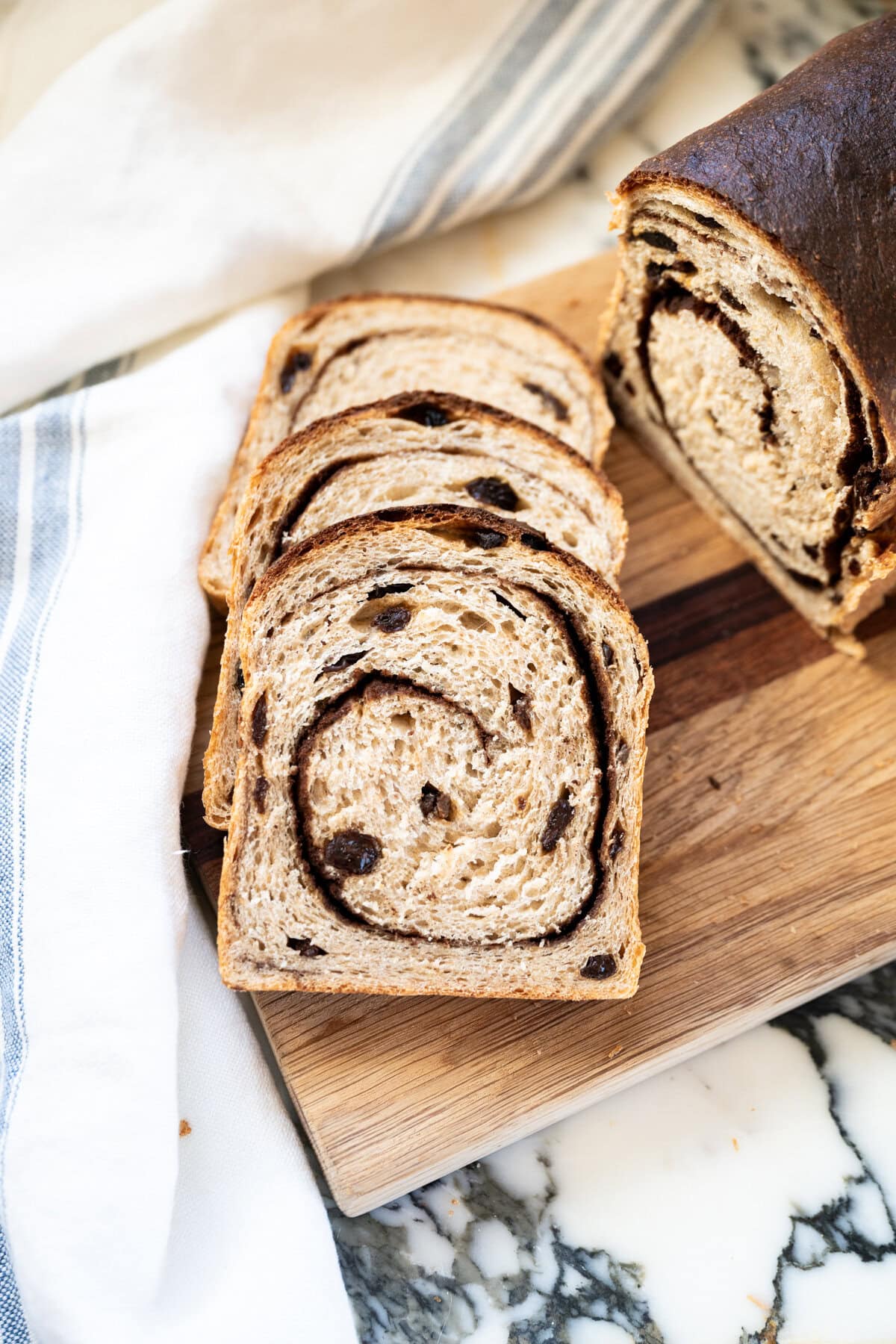
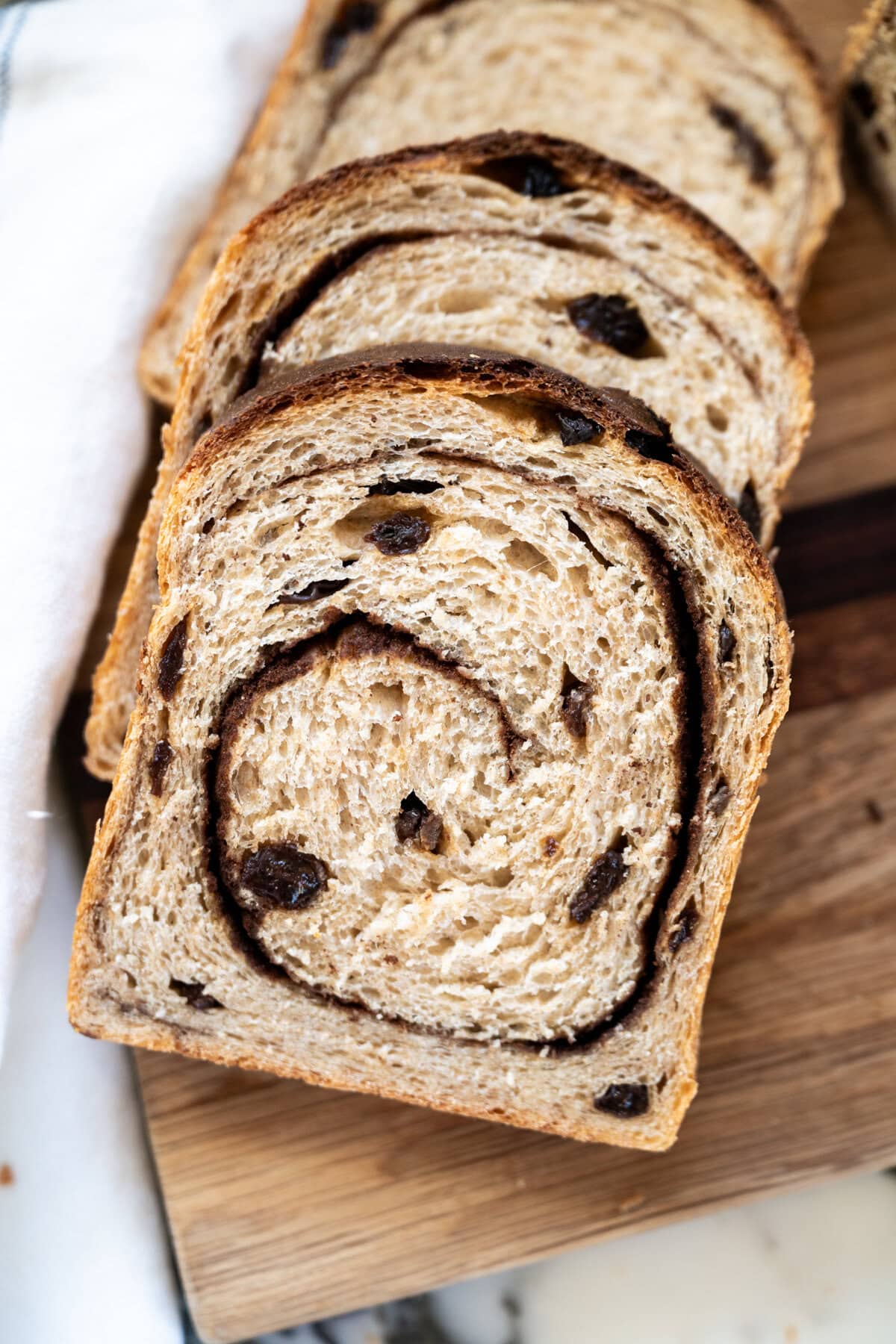
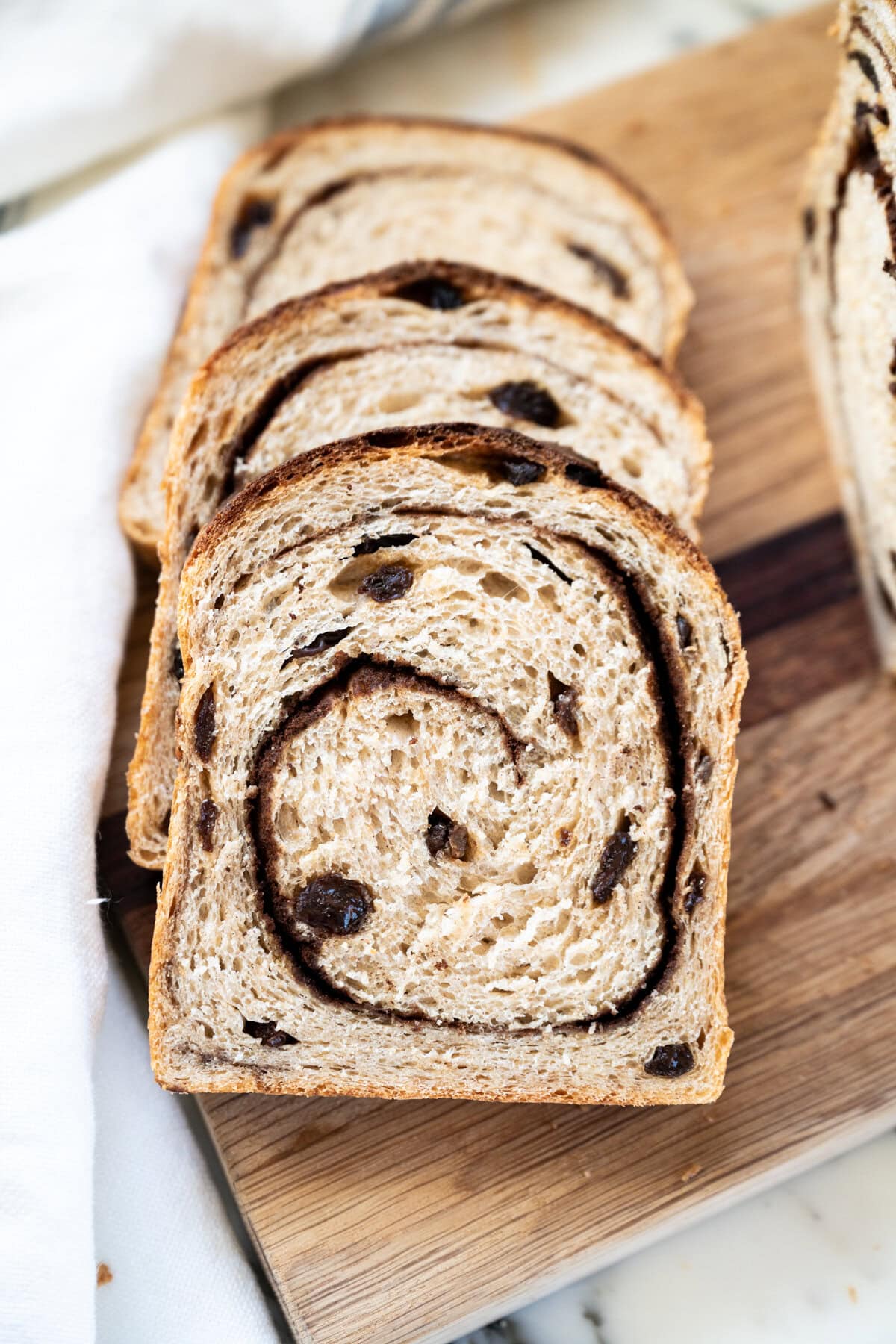
If you love cinnamon rolls but want something a little more practical for everyday breakfasts, this cinnamon raisin sourdough bread is the perfect in-between. It has a soft, tender crumb, a beautiful cinnamon swirl, and sweet raisins tucked throughout the loaf. The flavor is lightly sweet, warmly spiced, and still has that classic sourdough depth that makes homemade bread so satisfying. This is a loaf pan cinnamon raisin sourdough recipe designed for soft sandwich slices, not a crusty artisan boule.

This sourdough cinnamon raisin bread is baked in a loaf pan, which means it slices cleanly and evenly. It is ideal for toast, French toast, or just eating warm with butter and a cup of tea. And the best part is that it uses the same dough ingredients as my Regular Sourdough Sandwich Loaf, with a simple cinnamon sugar filling and raisins added during shaping. If you love sourdough breakfasts, you should also try my Sourdough Bagel Recipe, which makes chewy bakery-style bagels using the same active starter.
As a private chef, this is one of my favorite variations to make when I am already baking a loaf for the week. If I am doubling the base dough, I almost always turn the second loaf into this cinnamon raisin swirl bread because it disappears fast.
Quick Summary:
A soft and fluffy cinnamon raisin sourdough sandwich bread made with whole wheat flour, honey, milk, and oil, filled with sweet raisins and a cinnamon sugar swirl.
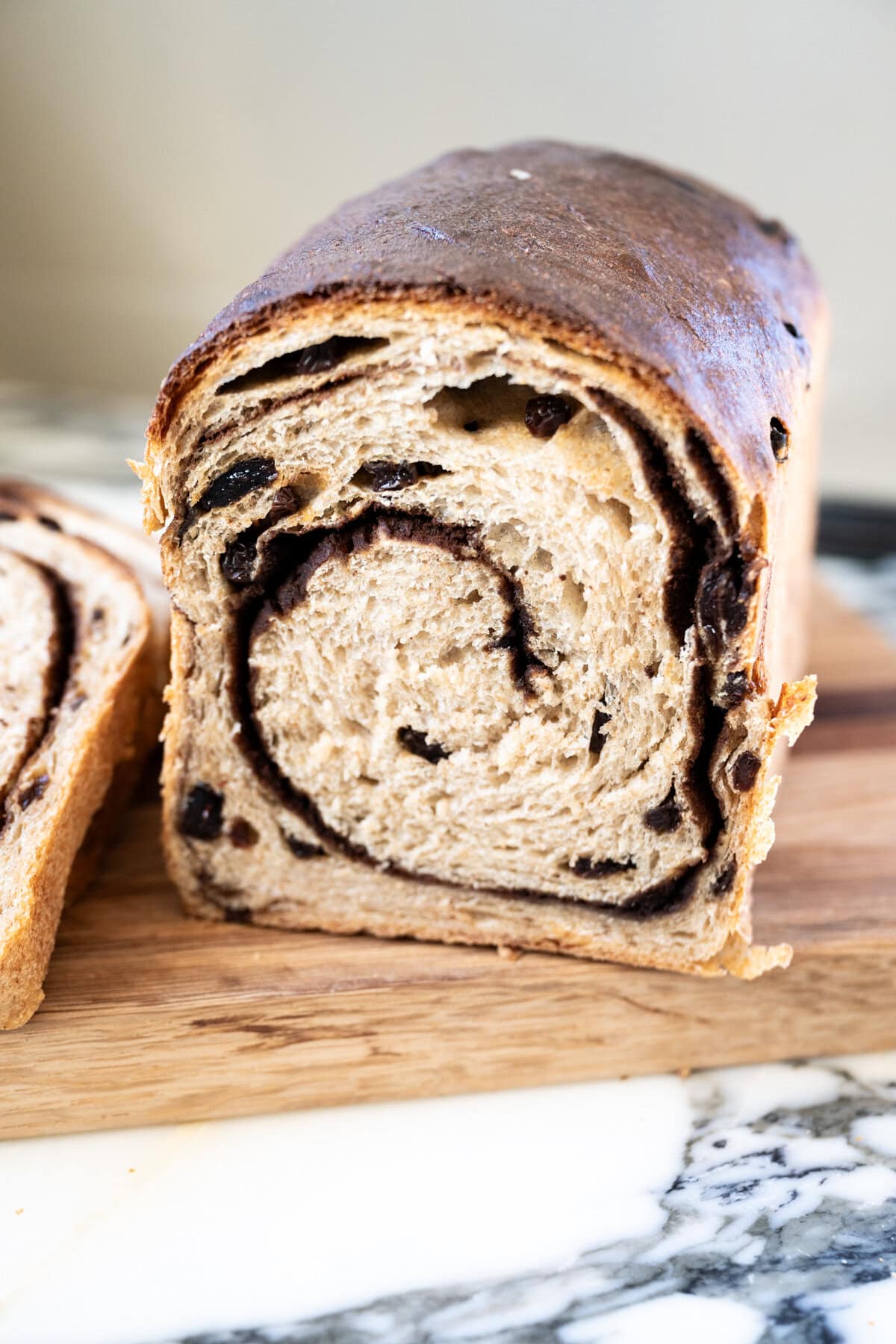
Table of contents
- Why You Will Love This Cinnamon Raisin Sourdough Bread
- What Makes This a Great Sourdough Cinnamon Raisin Bread
- Why This Cinnamon Raisin Sourdough Sandwich Bread Works
- Ingredients You Will Need
- How to Make Plump Juicy Raisins (Optional but Recommended)
- Best Flour Mix for Cinnamon Raisin Sourdough Bread
- Step-by-Step Instructions: Cinnamon Raisin Sourdough Bread
- Shaping the Cinnamon Raisin Swirl Loaf
- Final Proof and Baking
- Recipe Tips and Tricks
- How to Know It’s Properly Proofed
- Sample Baking Schedule (Overnight Method)
- How to Store Cinnamon Raisin Sourdough Bread
- Serving Ideas
- Variations and Favorite Add-Ins
- FAQs: Cinnamon Raisin Sourdough Bread
- Final Thoughts
- More Sourdough Recipes to Try
- Love This Recipe?
Why You Will Love This Cinnamon Raisin Sourdough Bread
- Soft crumb with a tender crust that stays soft for days
- Warm cinnamon swirl flavor without being overly sweet
- Perfect for toast, French toast, or breakfast sandwiches
- Naturally fermented with your own sourdough starter
- A simple sourdough recipe that feels special but fits into everyday baking
Example: Toast a slice until golden brown and spread with butter or cream cheese for the easiest weekend breakfast.
What Makes This a Great Sourdough Cinnamon Raisin Bread
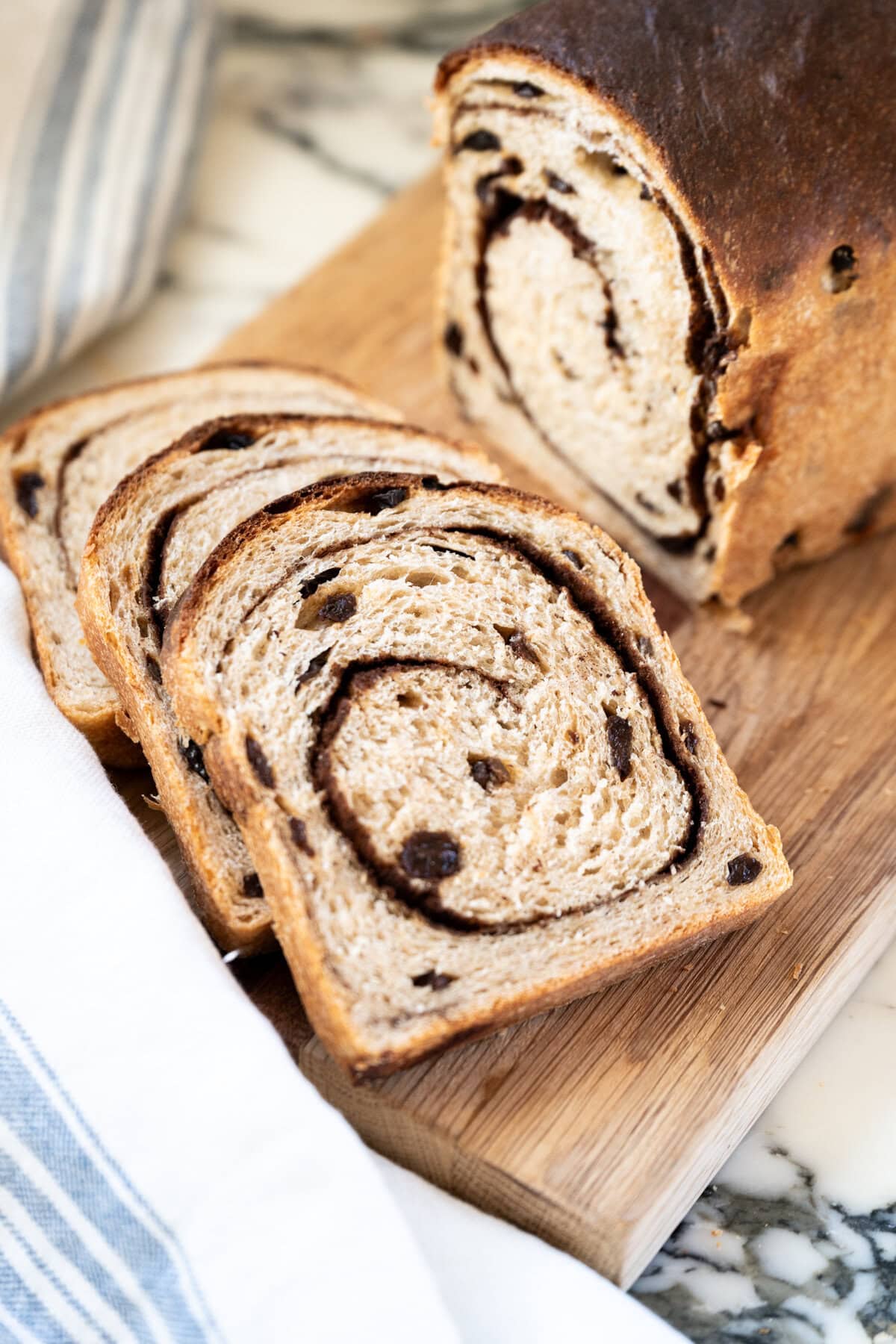
Not all cinnamon raisin loaves are created equal. Many recipes rely on commercial yeast, but this one is naturally leavened with an active sourdough starter, which gives the loaf a deeper flavor and a better texture.
Because this bread is baked in a pullman pan or standard loaf pan, you get a consistent sandwich shape and a soft crust that is easy to slice. The cinnamon sugar filling adds sweetness while the raisins create little bursts of flavor in every bite.
Pro Tip: If your raisins feel dry, soak them in hot water for 5 to 10 minutes first, then drain well. This helps create plump juicy raisins throughout the loaf.
If you love warm cinnamon spice flavors, my Soft Sourdough Hot Cross Buns Recipe is another favorite and has that same tender, enriched texture.
Why This Cinnamon Raisin Sourdough Sandwich Bread Works
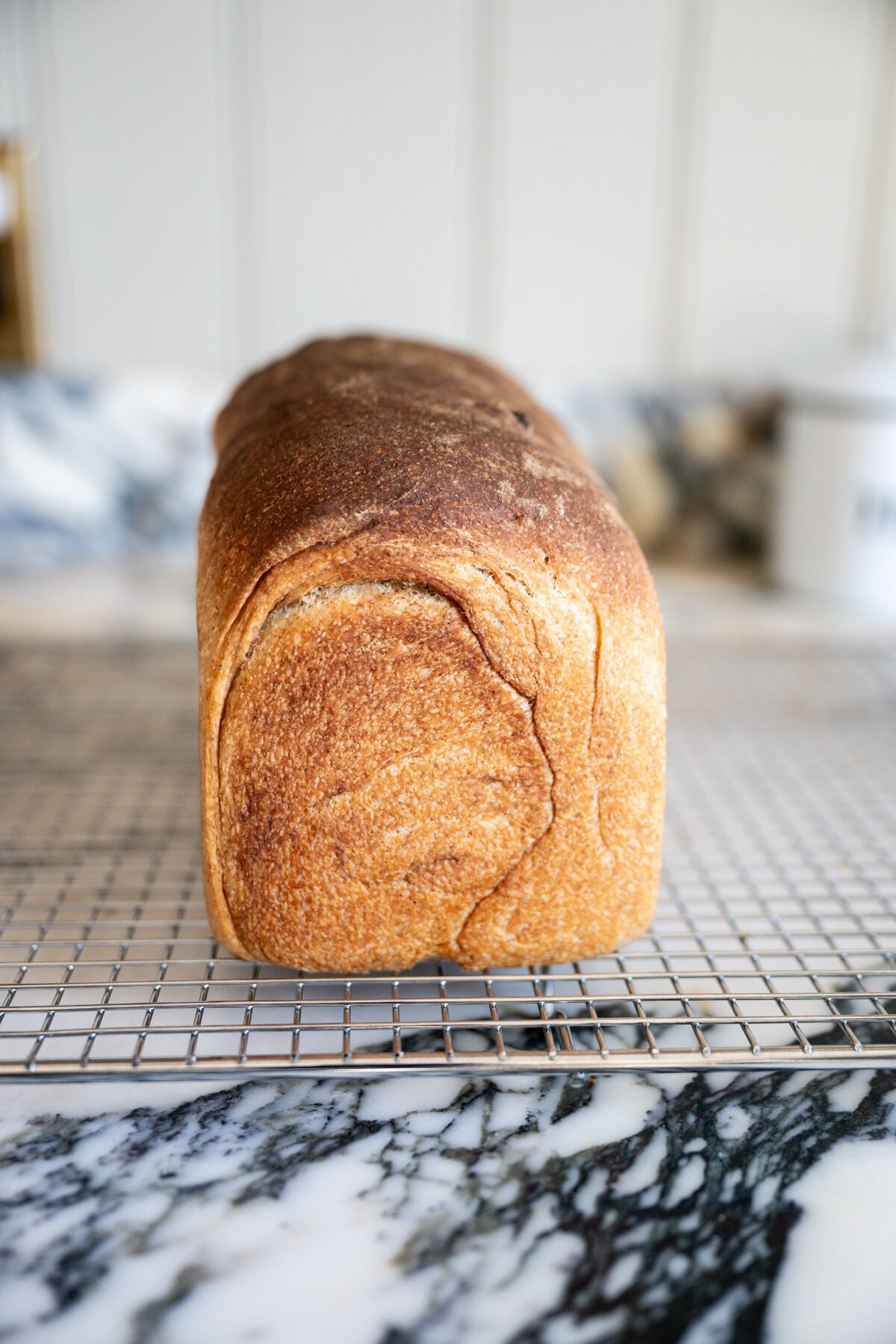
This recipe is designed for a soft crumb, strong rise, and a swirl that stays inside the bread instead of leaking out.
- Balanced flour blend: Bread flour provides structure while whole wheat flour adds flavor and keeps the loaf hearty.
- Milk, oil, and honey: These ingredients keep the loaf soft and tender, similar to store-bought sandwich bread but with better flavor.
- Overnight fermentation: A slow rise improves sourdough flavor and makes shaping easier the next day.
- Swirl shaping method: Folding raisins into the dough before adding cinnamon sugar helps keep the swirl neat and evenly distributed.
- Loaf pan baking: The loaf pan supports the dough rise and helps prevent spreading.
Ingredients You Will Need
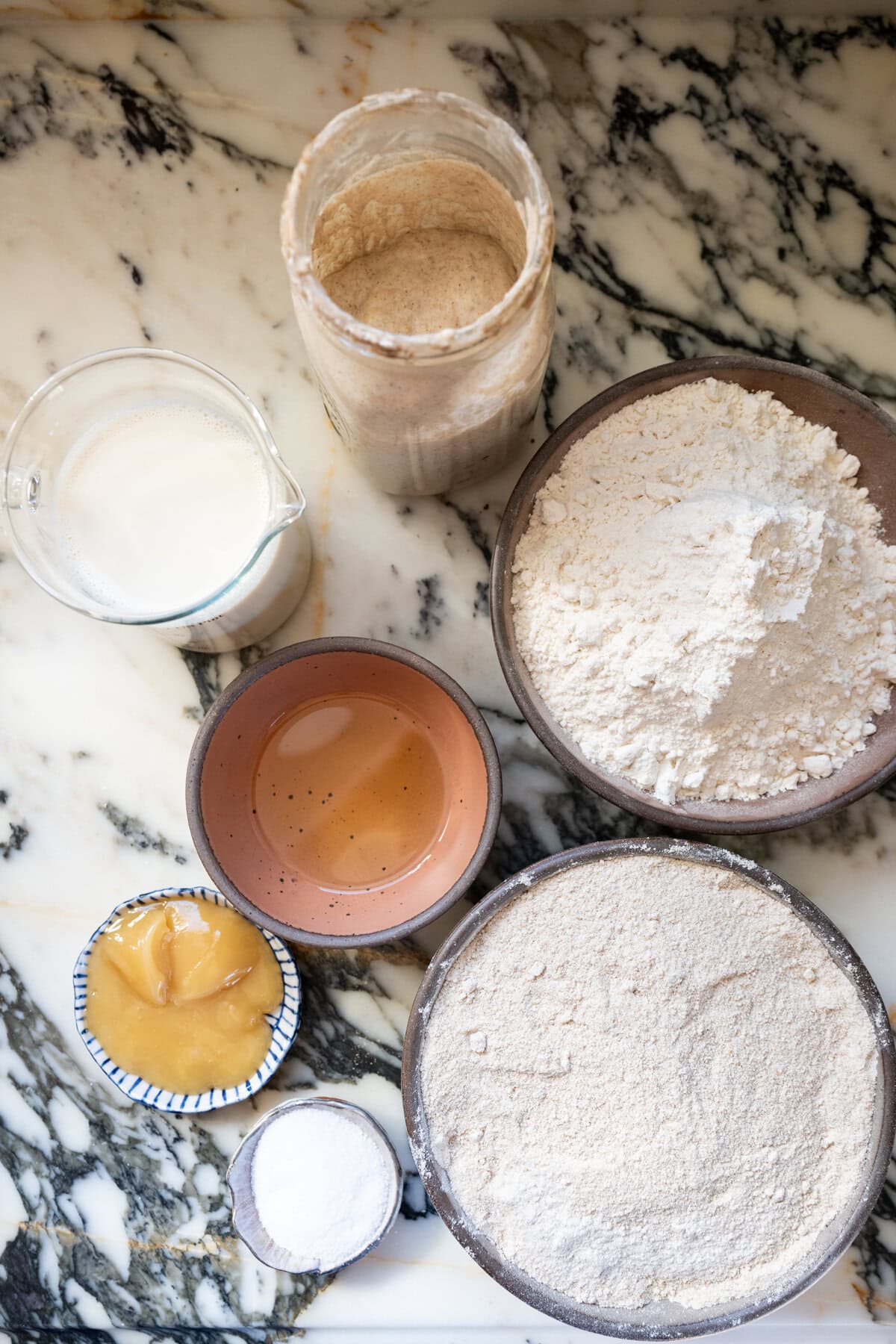
This cinnamon raisin sourdough bread uses simple pantry ingredients, but each one plays an important role.
If you are new to sourdough baking, check out my guide on how to make sourdough starter from scratch so you can build an active starter for all your sourdough recipes.
Dough Ingredients
- Water (tap water): Hydrates the dough and helps the dough forms properly.
- Active sourdough starter: Provides wild yeast and good bacteria for fermentation and rise.
- Milk: Makes the crumb softer and more tender.
- Oil (olive oil or avocado oil): Keeps the loaf moist and improves texture.
- Honey: Adds light sweetness and encourages a golden brown crust.
- Bread flour: Builds strength and structure for a tall loaf of bread.
- Whole wheat flour: Adds nutty flavor and balances the sweetness.
- Salt: Strengthens gluten and improves overall flavor. I use Diamond Crystal Kosher Salt in all of my recipes unless otherwise noted.
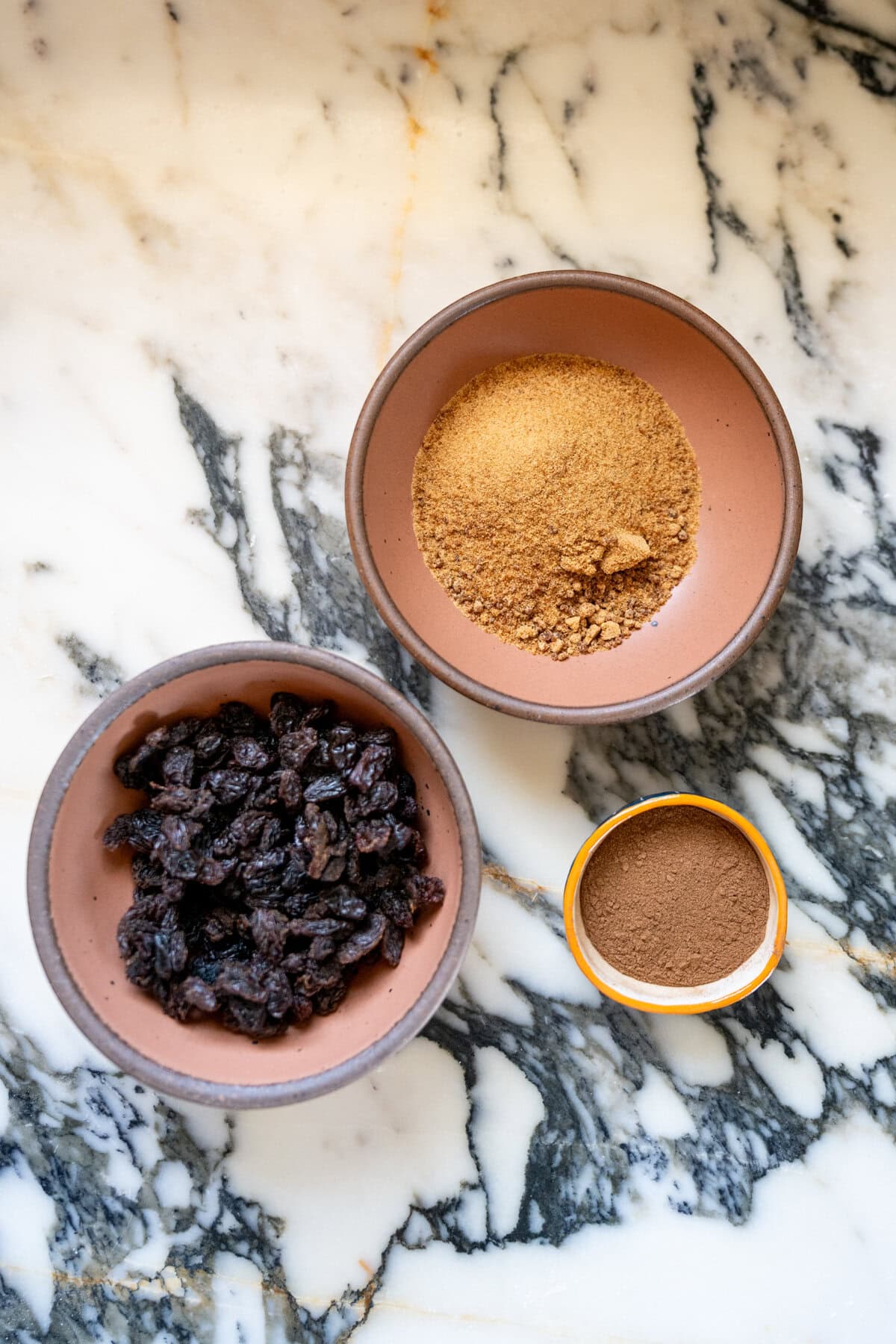
Cinnamon Raisin Inclusions
- Raisins: Use sweet raisins or soak them for plump raisins that stay juicy while baking.
- Whole cane sugar or brown sugar: Adds richness and caramel-like sweetness.
- Cinnamon: Creates the classic cinnamon swirl flavor.
Pro Tip: For the best cinnamon sugar filling, mix the brown sugar and cinnamon in a small bowl so it spreads evenly.
How to Make Plump Juicy Raisins (Optional but Recommended)
If your raisins are dry, soak them in hot water for 5 to 10 minutes, then drain and pat dry with a tea towel or paper towel. This prevents them from pulling moisture from the dough and keeps them soft and plump after baking.
Best Flour Mix for Cinnamon Raisin Sourdough Bread
Using a blend of bread flour and whole wheat flour gives you the perfect texture. Whole wheat adds flavor, but too much can make the loaf dense, especially with the addition of cinnamon and raisins.
If you want a lighter loaf next time, you can substitute a portion of the whole wheat flour with white whole wheat flour.
Step-by-Step Instructions: Cinnamon Raisin Sourdough Bread
This method uses stretch and folds to strengthen the dough without kneading. You can mix by hand in a large bowl or use a stand mixer with a dough hook.
1. Mix the dough
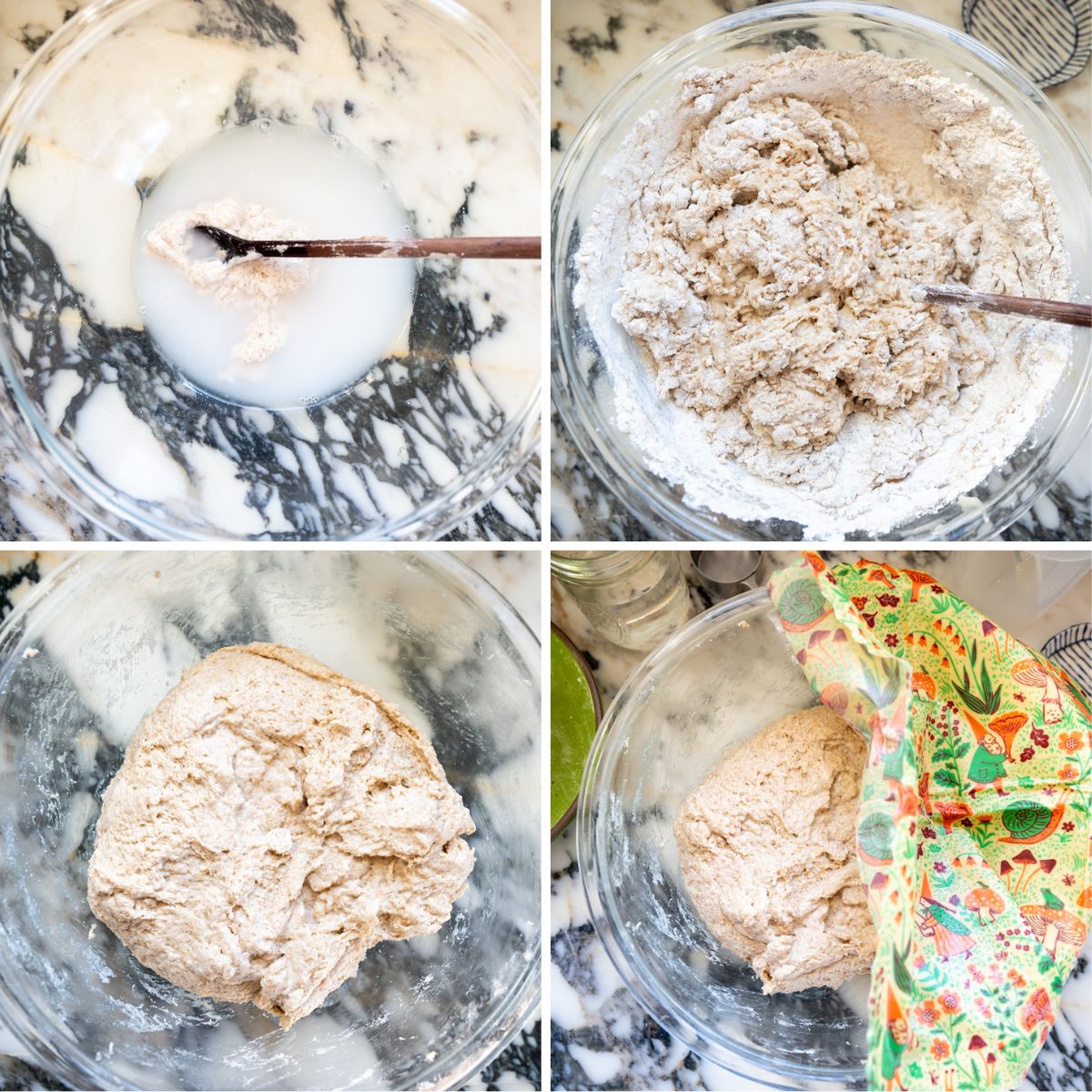
In a large mixing bowl, add the water and active starter. Use a Danish dough whisk or fork to break up the starter until mostly dissolved.
Add the milk, oil, and honey and stir until combined.
Add the bread flour, whole wheat flour, and salt. Mix until a shaggy dough forms and no dry flour remains. The dough will feel sticky at this stage.
Quick Summary: The dough should look rough and shaggy, but fully mixed.
2. Rest the dough
Cover the bowl with plastic wrap, a damp towel, or a tea towel. Let the dough rest at room temperature for 30 to 60 minutes.
This dough rest improves gluten development and makes folding easier.
3. Stretch and folds
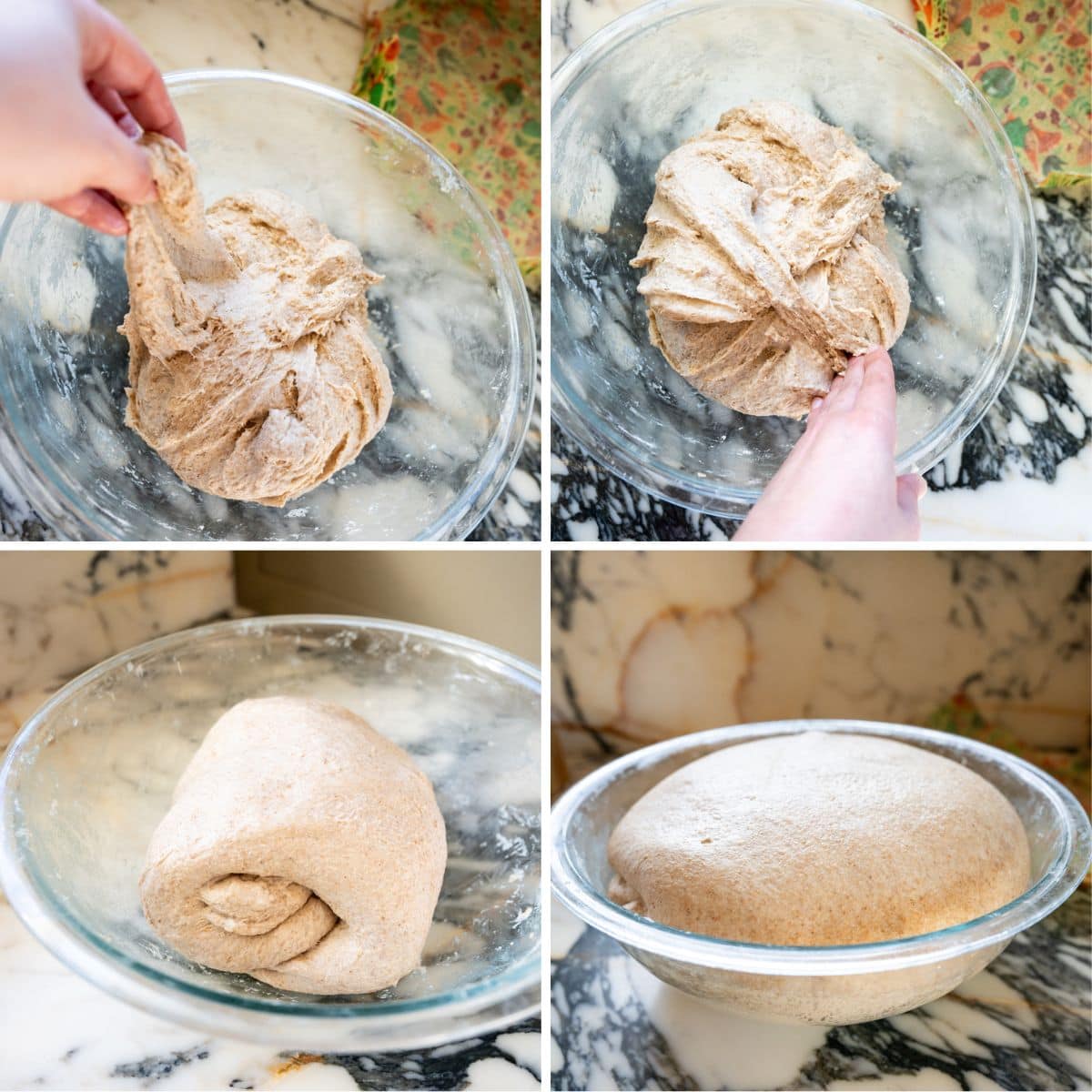
With wet hands, perform 3 to 4 rounds of stretch and folds spaced 15 minutes apart.
To stretch and fold:
- Grab one side of the dough
- Stretch upward gently
- Fold toward the center of the dough
- Rotate the bowl and repeat on all sides
The dough will become smoother after the first stretch and even stronger after the second stretch.
Pro Tip: If the dough sticks to your fingers, wet your hands instead of adding a little bit of flour.
4. Bulk fermentation
Bulk fermentation time will vary based on your kitchen temperature, humidity, and the temperature of the dough itself. Fermentation happens faster in a warm, humid kitchen, and the dough will rise more quickly. The rise will naturally take longer in a cooler kitchen.
In my coastal New England kitchen, I adjust this step throughout the year. I can often let the dough sit out for a longer bulk rise in the colder months, . In warmer months, I usually shorten the room temperature fermentation and move the dough into the refrigerator sooner to avoid over proofing.
Same-day bake option (warm kitchen):
If your kitchen is warm, cover the bowl and let the dough bulk ferment at room temperature until it looks noticeably puffy and has doubled in volume.
Overnight bake option (cool kitchen or flexible schedule):
If your kitchen is cooler, or you want to bake the next day, allow the dough to ferment at room temperature for a few hours, then refrigerate overnight to slow fermentation.
During bulk fermentation, the dough should expand, double in volume, and feel lighter.
Pro Tip: You can control fermentation speed by adjusting the amount of starter. Using a little more starter will speed up the rise, while using slightly less starter will slow it down and extend the bulk fermentation time.
Shaping the Cinnamon Raisin Swirl Loaf
This shaping method creates a beautiful cinnamon swirl and evenly distributes raisins without tearing the dough.
5. Prepare your raisins and filling
If needed, soak raisins in hot water and pat dry.
In a small bowl, mix brown sugar and cinnamon to create your cinnamon-sugar mixture.
6. Shape the dough and add raisins
The next day, turn the dough out onto a lightly floured work surface. Use a bowl scraper if needed.
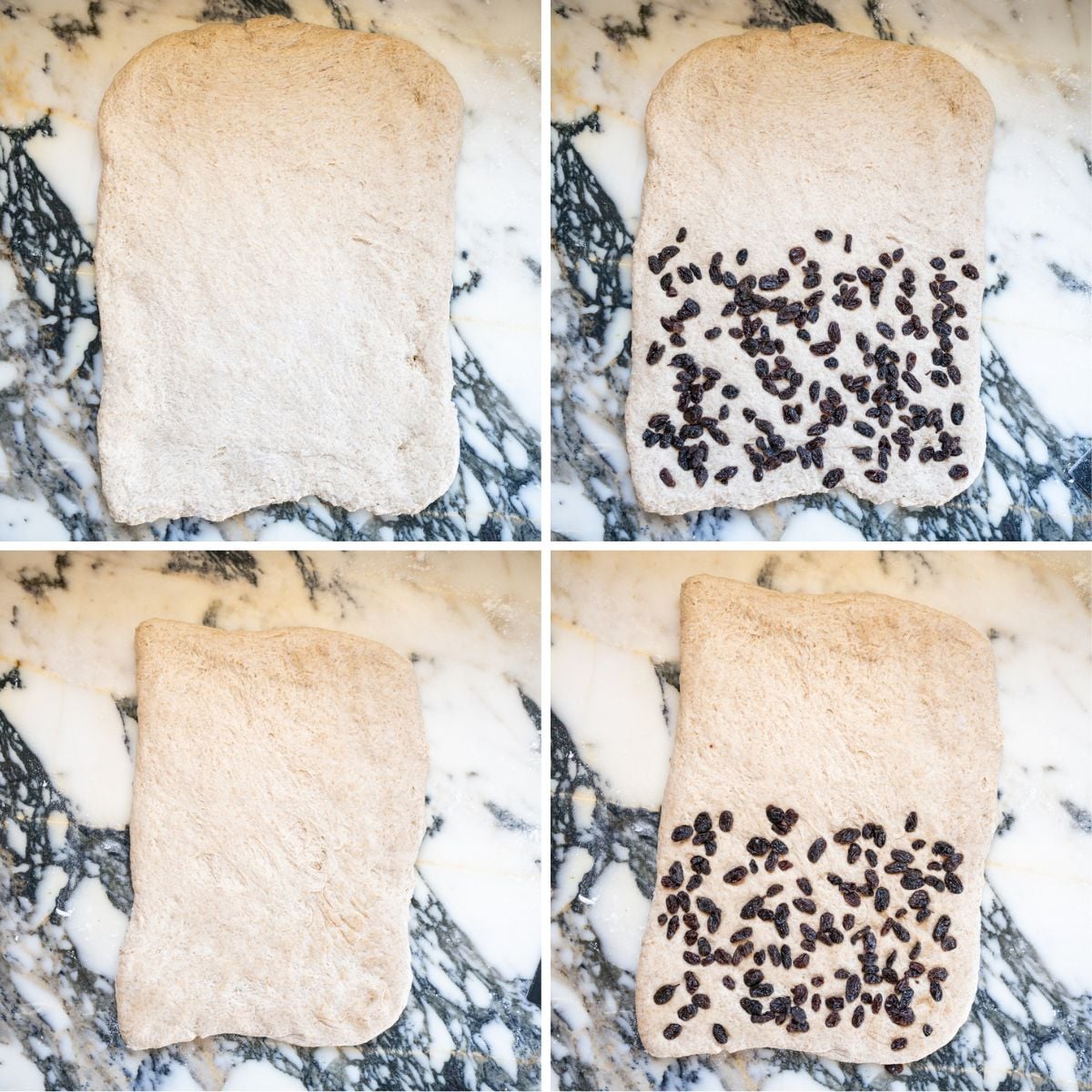
Gently press the dough into a large rectangle. Cover half of the dough with raisins.
Fold the other half over the raisins and press to seal.
Turn the dough 90 degrees and repeat. Cover half with raisins, fold over, and press to seal again.
This step helps keep the raisins inside the dough instead of all falling into one layer.
Pro Tip: If the dough resists stretching, let it rest for a minute rest, then continue.
7. Stretch into a long rectangle
Turn the dough another 90 degrees and gently stretch it into a long, skinny rectangle. You can use a rolling pin if needed, but be gentle so you do not pop all the air out.
8. Add the cinnamon sugar filling
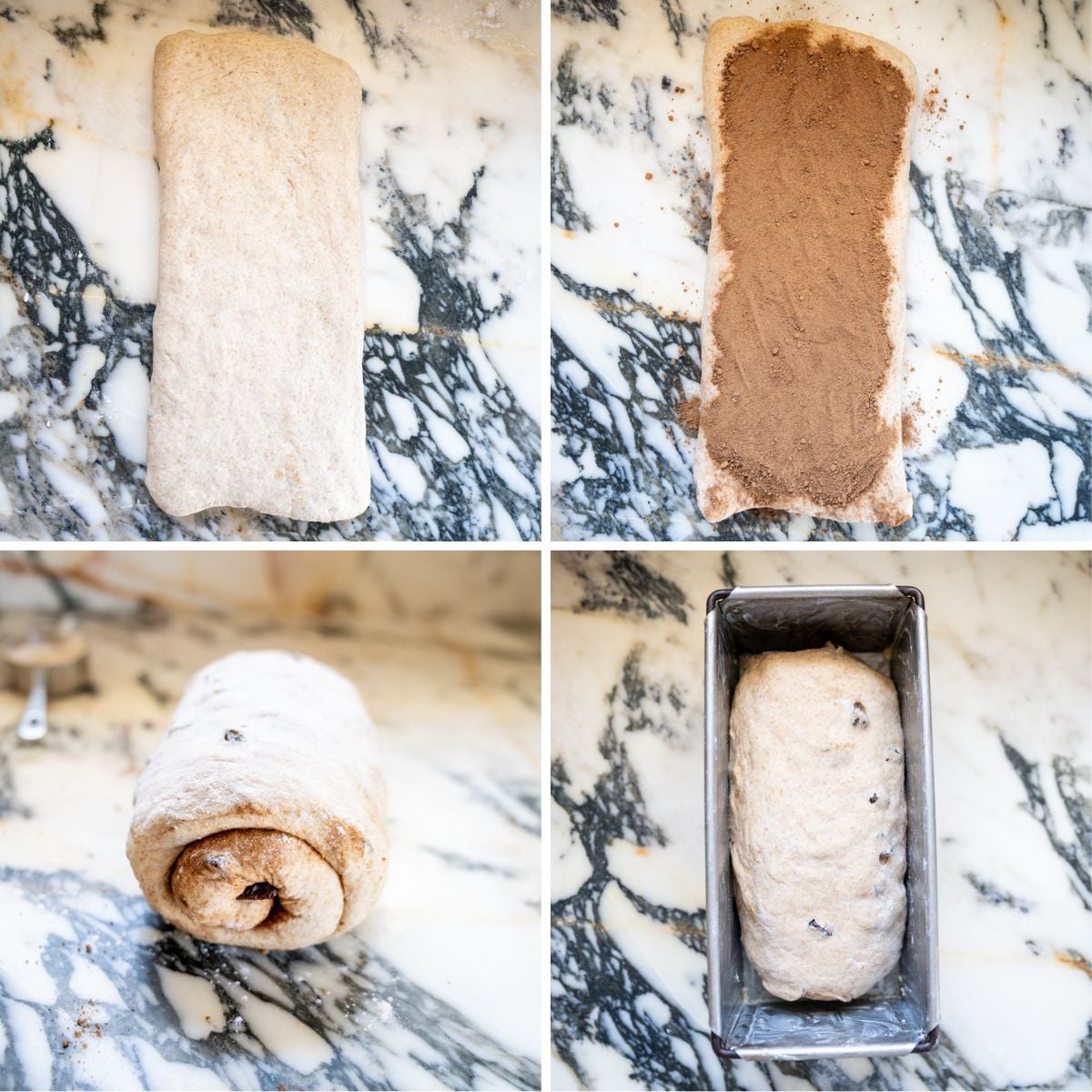
Spread the cinnamon sugar filling evenly over the dough, leaving a 1/2-inch border along one short end.
Leaving a border helps the cinnamon sugar stay inside the loaf instead of leaking out during baking.
9. Roll into a log shape
Starting at the short end closest to you, roll the dough into a tight log shape.
Pinch along the seam to seal the bottom and sides of the dough.
Place the loaf seam-side down into a well-greased Pullman loaf pan.
Pro Tip: Roll tightly and pinch the seam firmly so the cinnamon sugar does not create a gap during baking.
Final Proof and Baking
10. Proof the loaf
Cover loosely with plastic wrap or place the loaf pan inside a plastic bag.
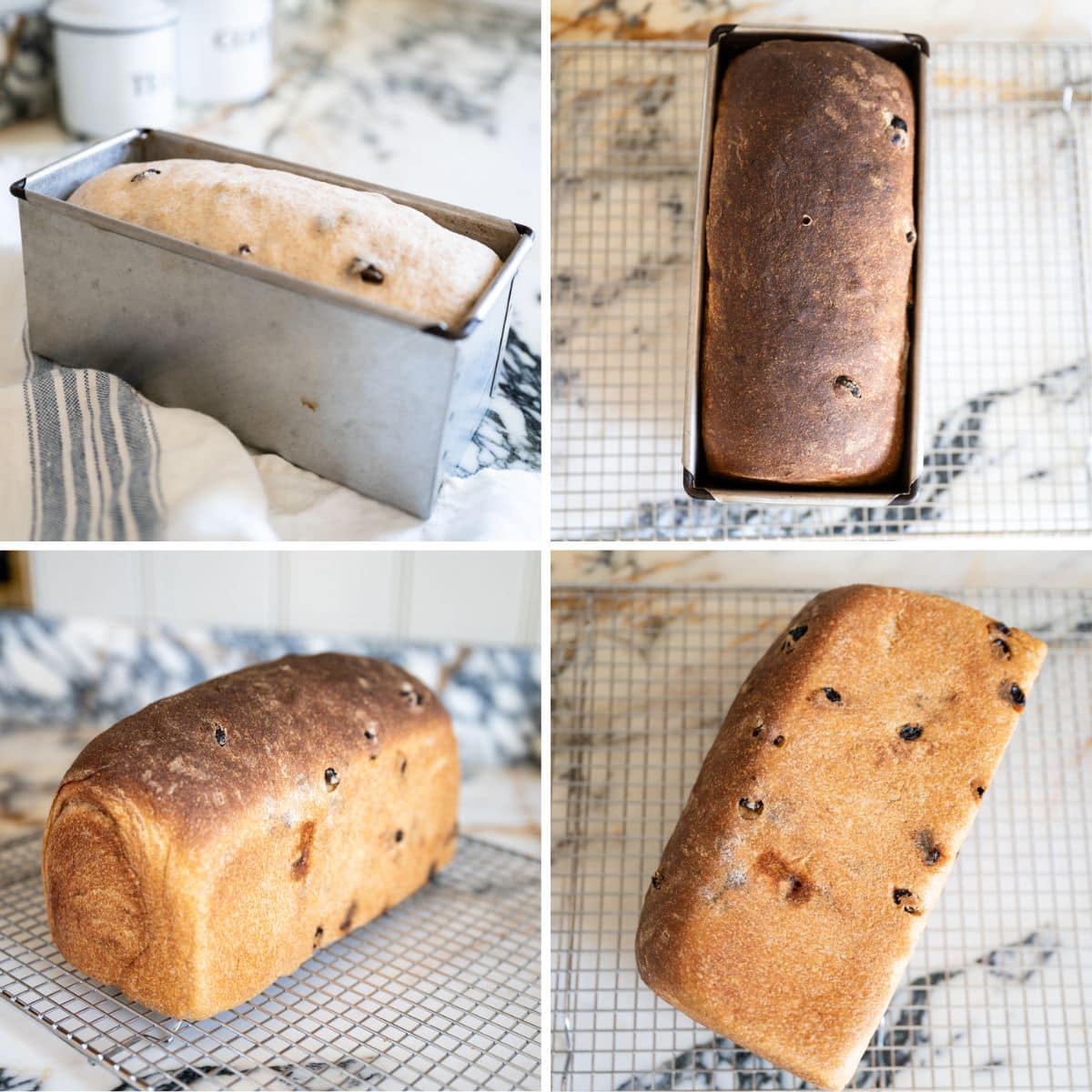
Proof at room temperature until the dough rises close to the rim of the pan and looks airy and puffy.
Quick Summary: The perfect time to bake is when the dough has risen near the top and the surface looks soft and slightly domed.
11. Bake
Preheat the oven to 375°F about 30 minutes before the loaf is done proofing.
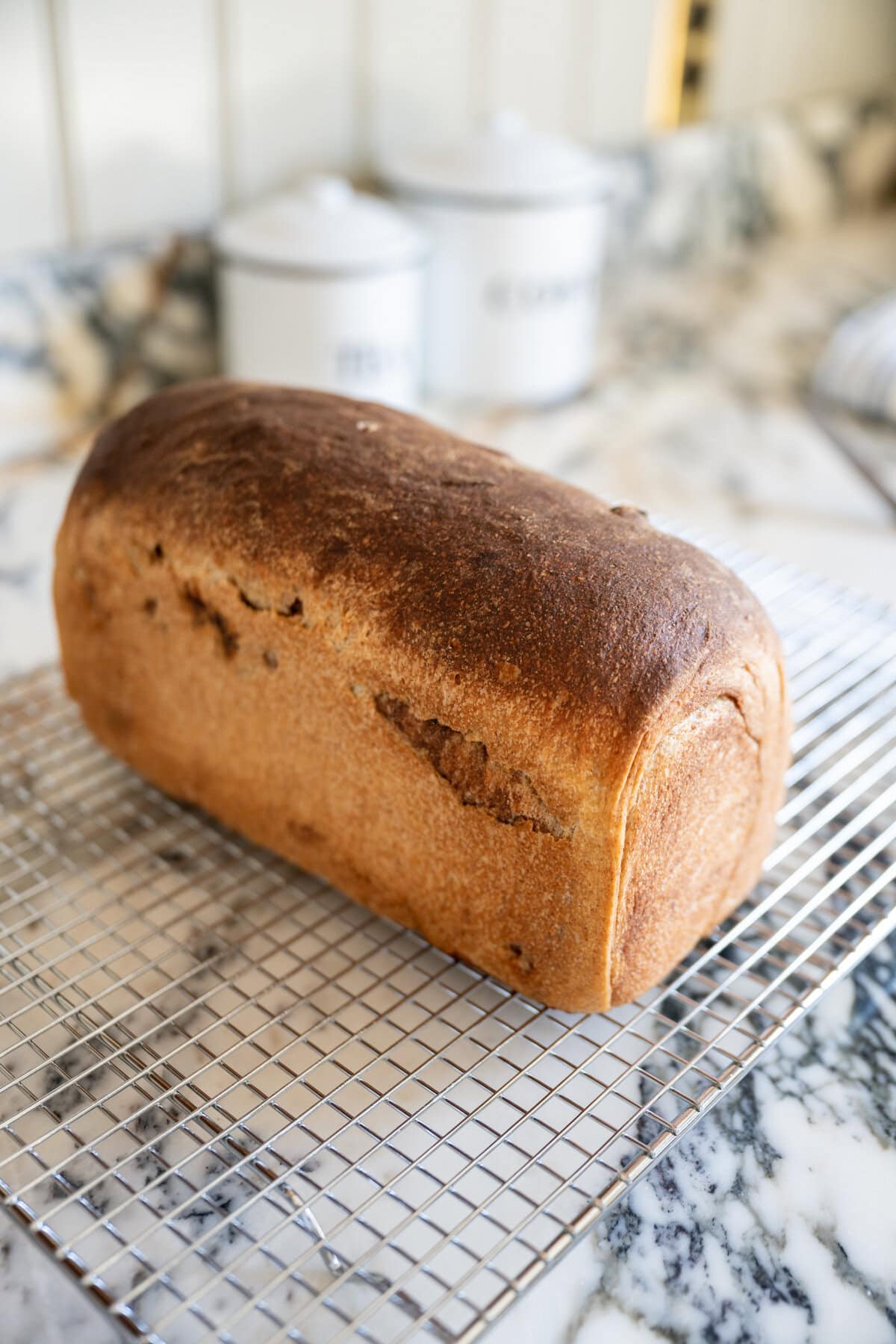
Bake for 45 to 50 minutes until the crust is dark golden brown and the internal temperature reaches 190°F to 200°F.
12. Cool and finish
Remove the pullman loaf pan from the oven and immediately remove the loaf of bread from the pan. This prevents the bottom from sweating.
Brush the top of the dough with melted butter or coconut oil using a pastry brush while the loaf is still warm.
Cool on a wire rack for at least 1 hour before slicing.
Pro Tip: Cutting too early can cause a gummy texture, especially with cinnamon sugar filling.
Recipe Tips and Tricks
- Use a kitchen scale for consistent results
- Use an active sourdough starter for the best rise
- Soak raisins for plump juicy raisins throughout the loaf
- Let the dough rest if it resists stretching during shaping
- Roll tightly to keep the swirl defined
- Proof until the dough reaches near the rim of the pan
- Use a thermometer to confirm doneness (190°F to 200°F)
- Remove from the pan immediately after baking
- Brush with butter to keep the crust soft
- Cool completely before slicing for clean swirl slices
How to Know It’s Properly Proofed
- dough domed
- dough near rim of pan
- jiggles slightly
- finger poke test slow spring back
Sample Baking Schedule (Overnight Method)
- Feed starter midday
- Mix dough in the early evening
- Do stretch and folds 30-60 minutes after mixing
- Bulk ferment at room temperature (all night if kitchen is cold)
- Refrigerate before bed (if kitchen is warm)
- Shape and proof next morning
- Bake late morning
How to Store Cinnamon Raisin Sourdough Bread
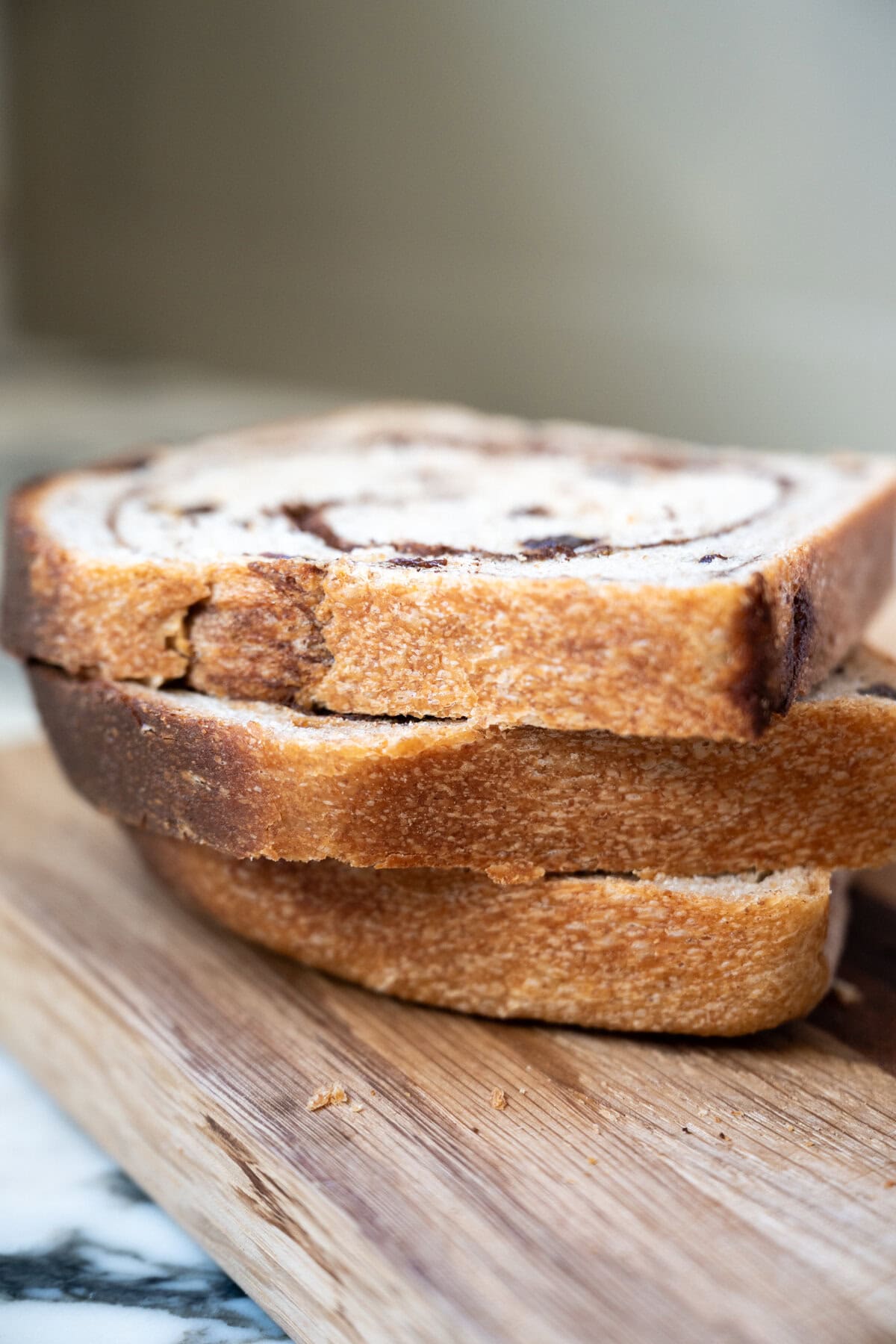
- Room Temperature Storage: Store in an airtight container or bread bag for up to 3 days at room temperature.
- Freezing: Slice the loaf and freeze in a zip-top bag with a piece of parchment paper between slices if desired. Toast straight from frozen.
Serving Ideas
This cinnamon raisin sourdough sandwich bread is perfect for:
- Toast with butter or cream cheese
- Peanut butter and banana
- French toast with maple syrup
- Grilled cinnamon raisin sandwiches
- Warm slices with tea or coffee
For a cozy weekend breakfast spread, serve this loaf with coffee or tea alongside my Easy Sourdough Scones Recipe.
Variations and Favorite Add-Ins
This cinnamon raisin sourdough bread is one of my favorite variations of my regular sourdough sandwich loaf.
Try:
- swapping raisins for dried cranberries
- adding chopped walnuts
- adding orange zest
- using golden raisins
- adding a pinch of nutmeg for extra warmth
If you love baking bread, you may also enjoy my sourdough focaccia bread recipe, which is easy, soft, and perfect for topping with herbs.
FAQs: Cinnamon Raisin Sourdough Bread
If the dough is rolled too loosely or over proofed, the swirl can blend into the crumb. Roll tightly and avoid letting the dough rise too far above the rim of the pan.
Gummy texture is usually caused by underbaking or slicing too soon. Always bake until the internal temperature reaches 190°F to 200°F and cool for at least 1 hour.
Yes, but adding cinnamon directly to the dough can slow fermentation. For best results, keep cinnamon in the filling instead.
Fold the raisins into the dough during shaping instead of sprinkling them on top. This keeps them protected and prevents burning.
Yes. You can substitute the whole wheat flour with bread flour, but the flavor will be less nutty and slightly sweeter overall.
Not as written. This recipe depends on active starter for rise. If you want discard recipes, you can explore my sourdough discard recipes for ideas.
Yes. A Pullman pan is ideal because it supports the dough during proofing and helps the loaf rise tall with straight sides for clean slices.
Leave a border around the edges, roll the dough tightly, and pinch the seam well. Baking fully and cooling completely also helps set the swirl.
You can, but adding raisins during shaping gives better distribution and prevents tearing during stretch and folds.
Yes. You can make cinnamon raisin sourdough bread without sugar, but the swirl will be less sweet and less defined.
Final Thoughts
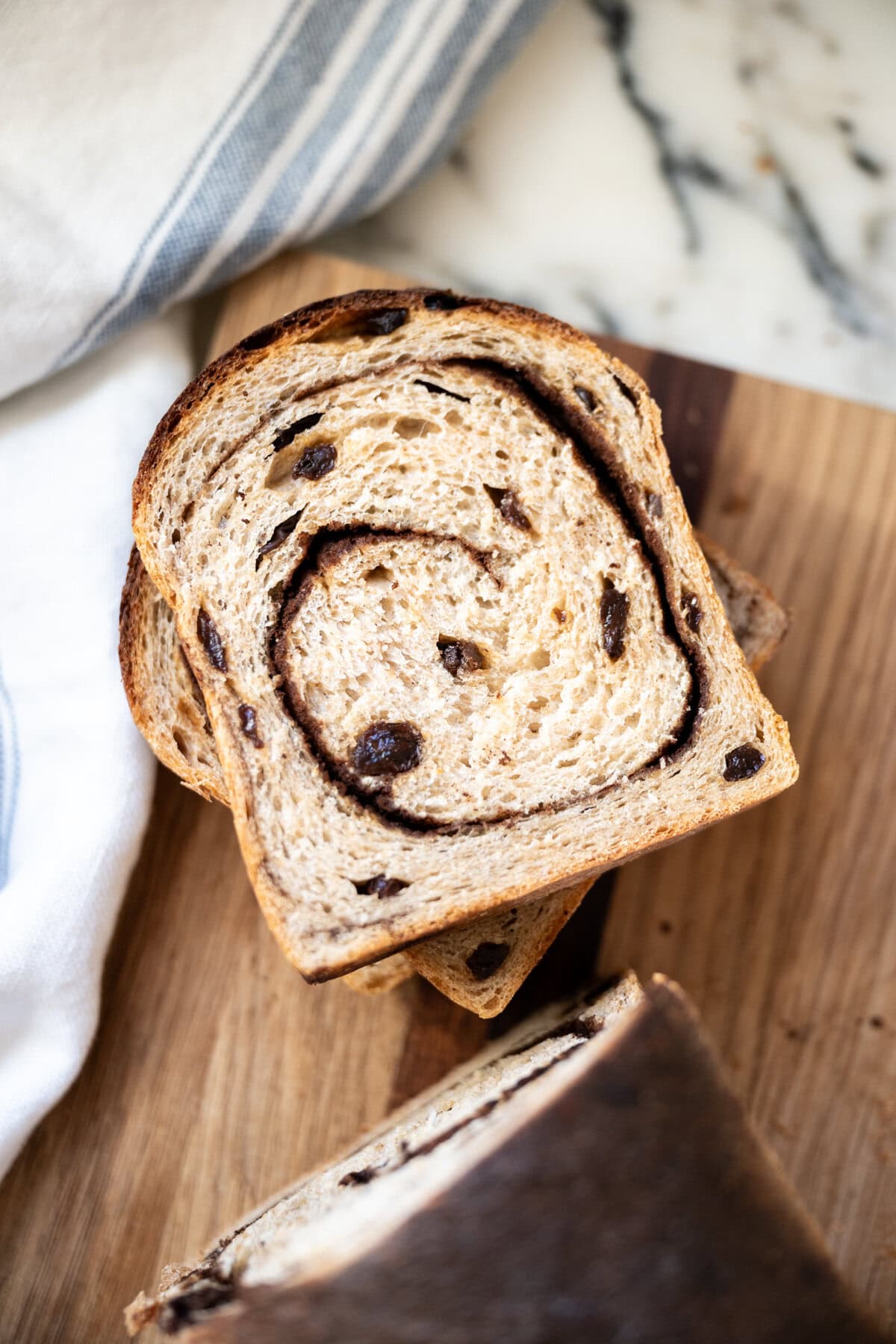
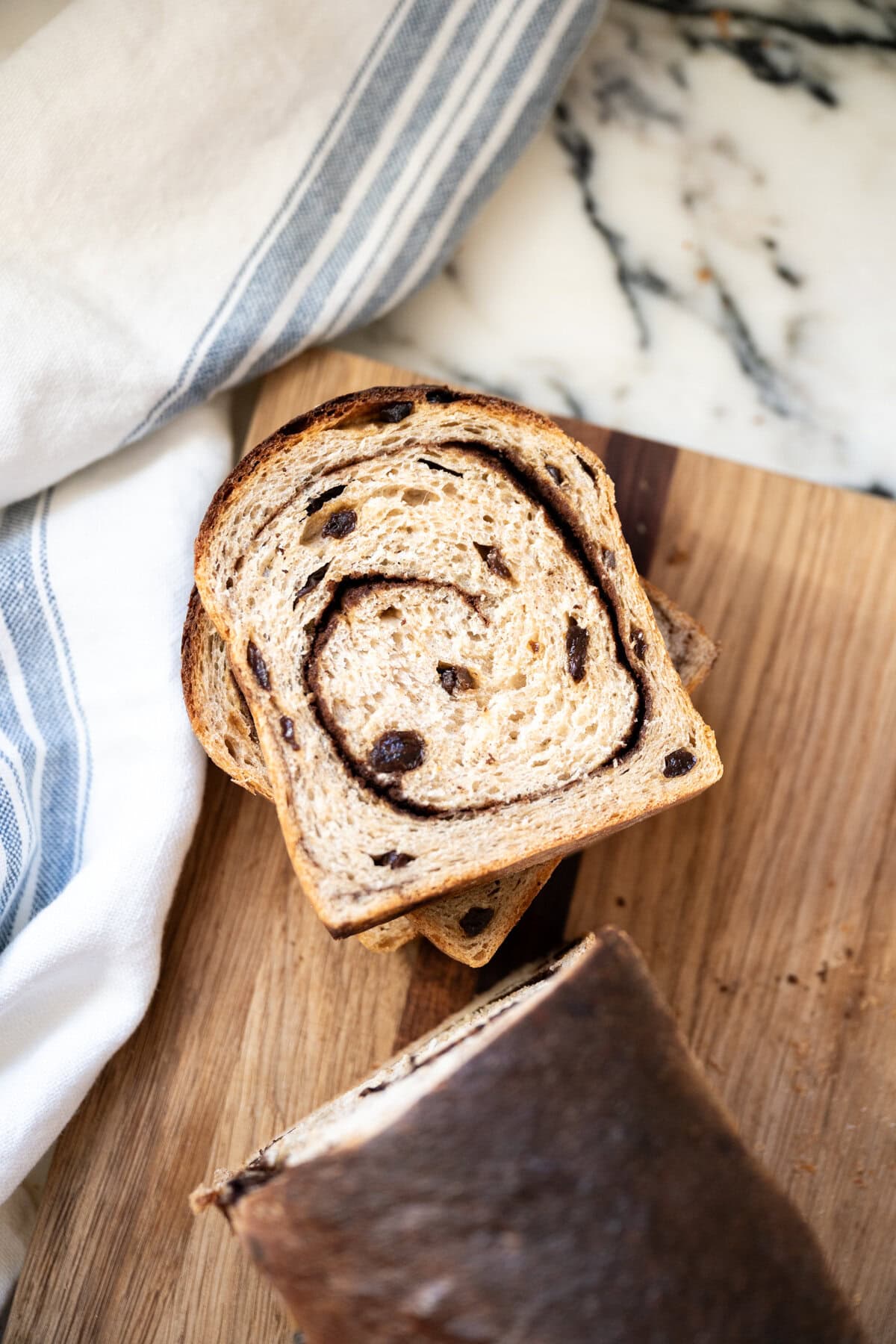
This sourdough cinnamon raisin swirl bread is the kind of loaf that makes your kitchen smell like a bakery. It is sweet but not overly sweet, soft enough for everyday toast, and full of warm cinnamon flavor.
If you are already baking sourdough regularly, this is one of the easiest ways to turn your standard loaf into something special. It is also a great recipe for the first time you want to experiment with inclusions, because the shaping method keeps everything neat and contained.
Once you make it, do not be surprised if it becomes a weekly favorite. And if you are in the mood for another sweet sourdough project, my Vegan Sourdough Donuts are a fun weekend bake and a great way to use an active starter.
More Sourdough Recipes to Try
If you love this recipe, you might also enjoy:
- Soft Honey Whole Wheat Sourdough Sandwich Bread
- How to Make Sourdough Starter from Scratch
- Homemade Artisan Sourdough Bread Recipe
- Sourdough Focaccia Bread Recipe
- Easy Sourdough Naan Recipe
- Sourdough Bagel Recipe
Love This Recipe?
Please leave a star rating of the recipe and let me know what you think in the comments. Ratings and reviews help more people find and trust my recipes, and they are one of the best ways to support the food blogs you read and love.
Cinnamon Raisin Sourdough Sandwich Bread (Swirl Loaf)
Equipment
- 1 9 x 4 inch pullman loaf pan or standard 1 pound loaf pan
Ingredients
Dough
- 110 g water at room temperature
- 40 g sourdough starter recently fed and active
- 240 g milk at room temperature
- 40 g honey
- 30 g extra-light olive oil or any neutral-tasting oil
- 250 g bread flour
- 250 g whole wheat flour (can replace 50 g with rye flour)
- 10 g kosher salt
- 2 tbs butter or coconut oil for greasing pan and brushing top of loaf
Filling and Inclusions
- 150 g raisins
- 50 g whole cane sugar or brown sugar
- 2 tbs cinnamon
Instructions
- Mix the dough: In a large mixing bowl, combine the water and active sourdough starter. Break up the starter with a fork or Danish dough whisk until mostly dissolved. Add the milk, oil, and honey and mix well. Add the bread flour, whole wheat flour, and salt and stir until a shaggy, sticky dough forms and no dry flour remains.
- Rest: Cover the bowl and let the dough rest at room temperature for 30 to 60 minutes.
- Stretch and folds: With wet hands, perform 3 to 4 rounds of stretch and folds (or coil folds) every 15 minutes.
- Bulk fermentation: Cover and bulk ferment at room temperature (or transfer to the refrigerator to slow the fermentation) until the dough is puffy and doubled in volume. *See detailed notes about bulk fermentation times in the post.
- Prepare filling: The next day, soak raisins in hot water for 5 to 10 minutes if desired. Drain and pat dry. In a small bowl, mix the brown sugar and cinnamon together.
- Add raisins: Turn the dough out onto a lightly floured surface and gently press into a large rectangle. Cover half of the dough with raisins, fold the other half over, and press to seal. Turn the dough 90 degrees and repeat with more raisins, folding and sealing again.
- Stretch dough: Turn the dough 90 degrees again and gently stretch into a long, skinny rectangle. Use a rolling pin if needed.
- Add cinnamon sugar: Spread the cinnamon sugar mixture evenly over the dough, leaving a 1/2-inch border at one far short end.
- Roll into loaf: Starting at the short end closest to you, roll the dough tightly into a log shape. Pinch to seal the seam, bottom, and sides.
- Pan the loaf: Place the dough seam-side down into a well-greased pullman loaf pan or loaf pan. Cover loosely with plastic wrap or a proofing bag.
- Final proof: Proof at room temperature until the dough fills the pan and rises close to the rim.
- Bake: Preheat the oven to 375°F about 30 minutes before the loaf is finished proofing. Bake for 45 to 50 minutes until dark golden brown and the internal temperature reaches 190°F to 200°F.
- Cool: Remove the loaf from the pan immediately. Brush the top with melted butter or coconut oil while warm for a soft crust. Cool on a wire rack for at least 1 hour before slicing.
Notes
- Proofing and bulk fermentation time will vary depending on room temperature and starter strength.
- For the best rise, use an active starter that doubles within 4 to 6 hours after feeding.
- Soaking raisins helps keep them plump and juicy throughout the loaf.
- The loaf is fully baked when the internal temperature reaches 190°F to 200°F.

Kaity Farrell
Have a question? Ask me here in the comments! If you’ve made the recipe, please leave your star rating and review. Thanks!
Allison
Hi! Do you have a variation where I can make this if I don’t have a sourdough starter? Thanks!
Kaity Farrell
You can use 7g (1 packet) of dry active yeast or instant yeast. Proof dry-active yeast in lukewarm water first though. The first rise should only take 1-2 hours in a warm spot. The second proof should take 30-60 minutes.
Hannah
Once I cut mine, it created a huge gap/hole along the top of the swirl basically all the way through the bread. How do I keep the bread holding together with the swirl?
Kaity Farrell
It could have been caused by overproofing or a large air bubble. To avoid a large gap in the swirl proof it a bit less, shape it tightly enough so that there is surface tension but not too tightly that it won’t rise, add a tablespoon of flour to the cinnamon sugar to help absord any moisture that can create steam and therefore air pockets during baking.