
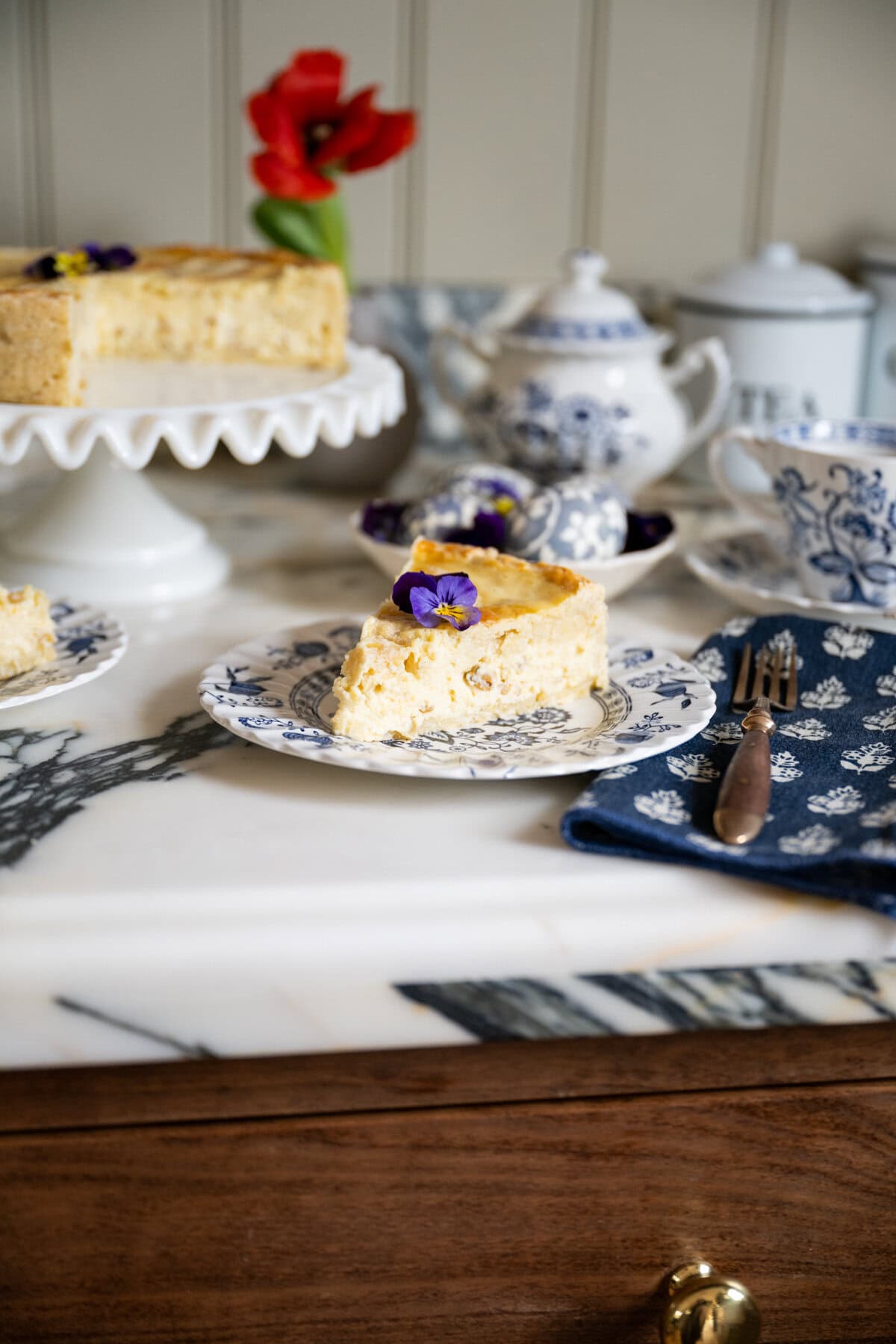
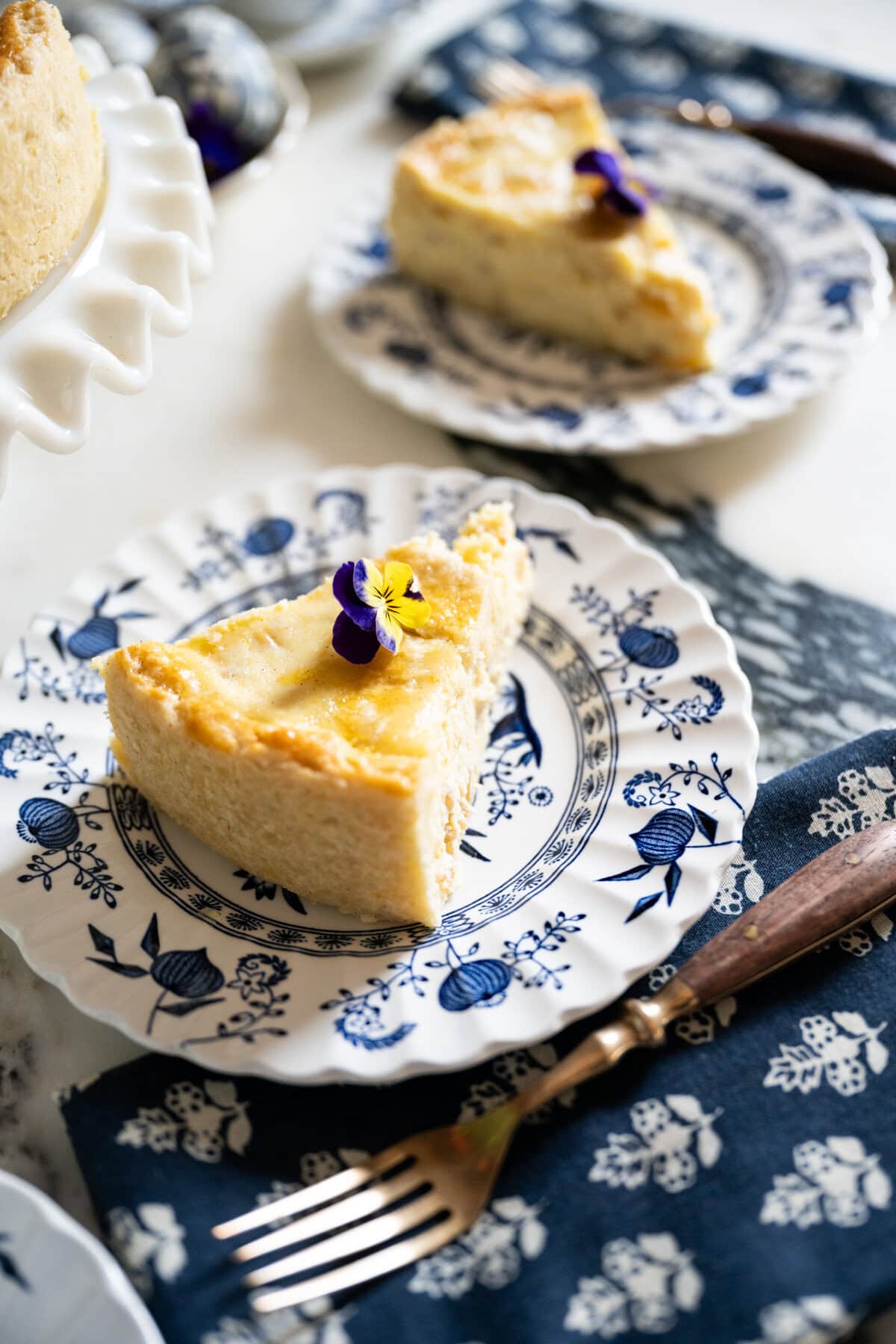
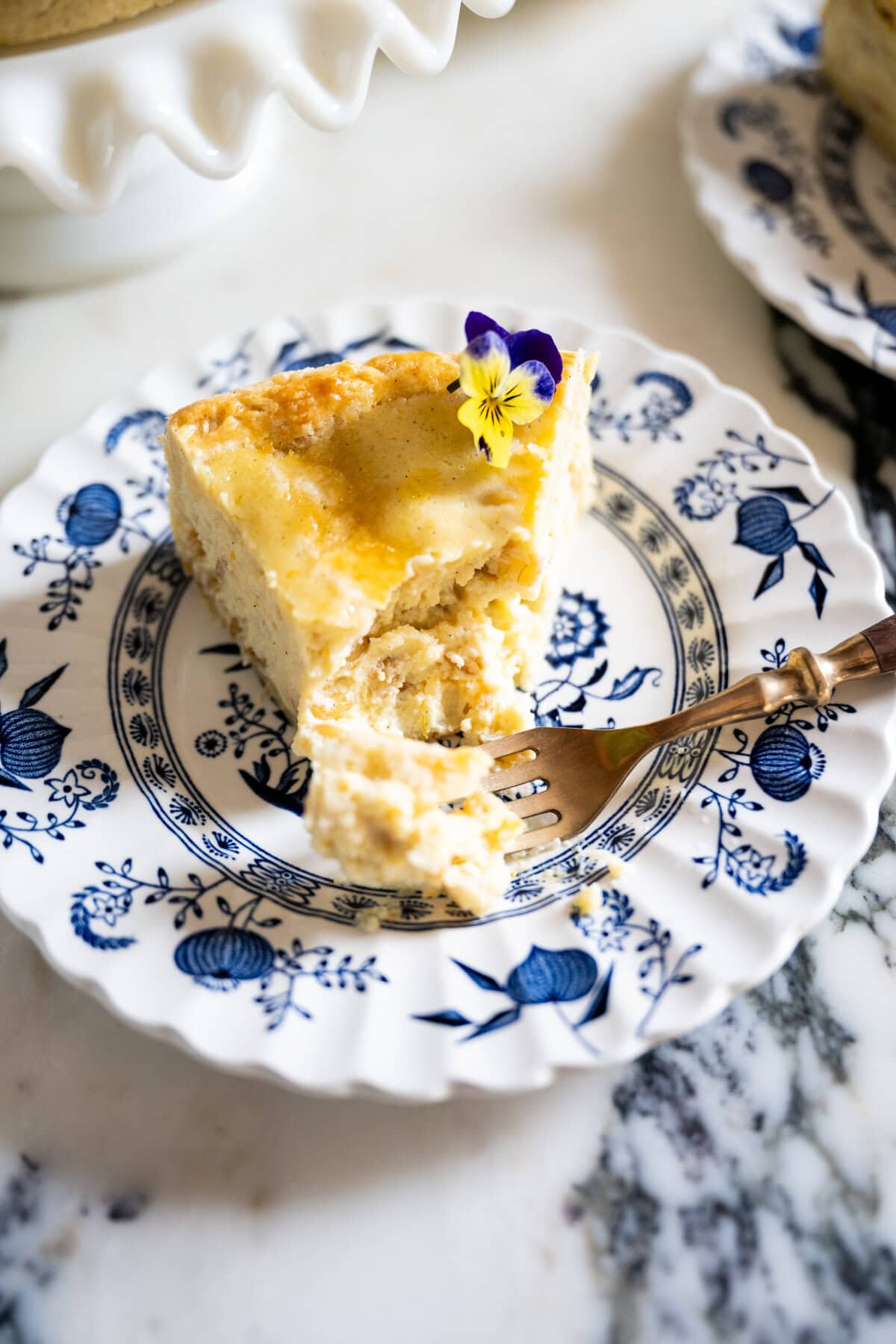
If there is one dessert that truly defines Easter time in southern Italy, it is Pastiera Napoletana. This traditional Italian Easter grain pie is fragrant with orange zest and vanilla, filled with creamy ricotta, and made with tender grano cotto wheat berries that give it its signature texture. The buttery pasta frolla crust bakes up golden brown with a classic lattice top that looks straight out of an Italian pastry shop. It takes a bit of time, but it is absolutely worth it. Best of all, pastiera tastes even better the next day after resting at room temperature.
This is the kind of dessert I love serving as a private chef because it feels both nostalgic and impressive. It is not just a ricotta pie. It is a traditional recipe with deep roots in the Naples area, often baked on Holy Thursday, Maundy Thursday, or Good Friday, then served on Easter Sunday as part of a beautiful Easter table.
This pastiera napoletana recipe uses homemade pasta frolla, a cooked wheat cream made from pre cooked wheat berries, and a silky ricotta filling flavored with orange zest and vanilla bean. For the most authentic flavor, it uses Millefiori extract, which is traditional in many Italian pastry shops. If Millefiori is difficult to find in the USA, Fiori di Sicilia is a good substitute and a great choice for similar citrus vanilla notes.

Table of contents
- What Makes Pastiera Napoletana Special?
- What Is Pastiera Napoletana?
- Why You Will Love This Traditional Pastiera Recipe
- Pastiera Napoletana Ingredients
- What Is Grano Cotto?
- Millefiori vs Fiori di Sicilia (Which Extract Should You Use?)
- How to Make Pastiera Napoletana (Step by Step)
- Let Pastiera Rest Overnight (Traditional and Worth It)
- How to Serve Pastiera Napoletana
- How to Store Pastiera
- Traditional Variations (Optional)
- Common Mistakes to Avoid for Good Results
- Pastiera Napoletana FAQs
- Final Thoughts
- Love This Recipe?
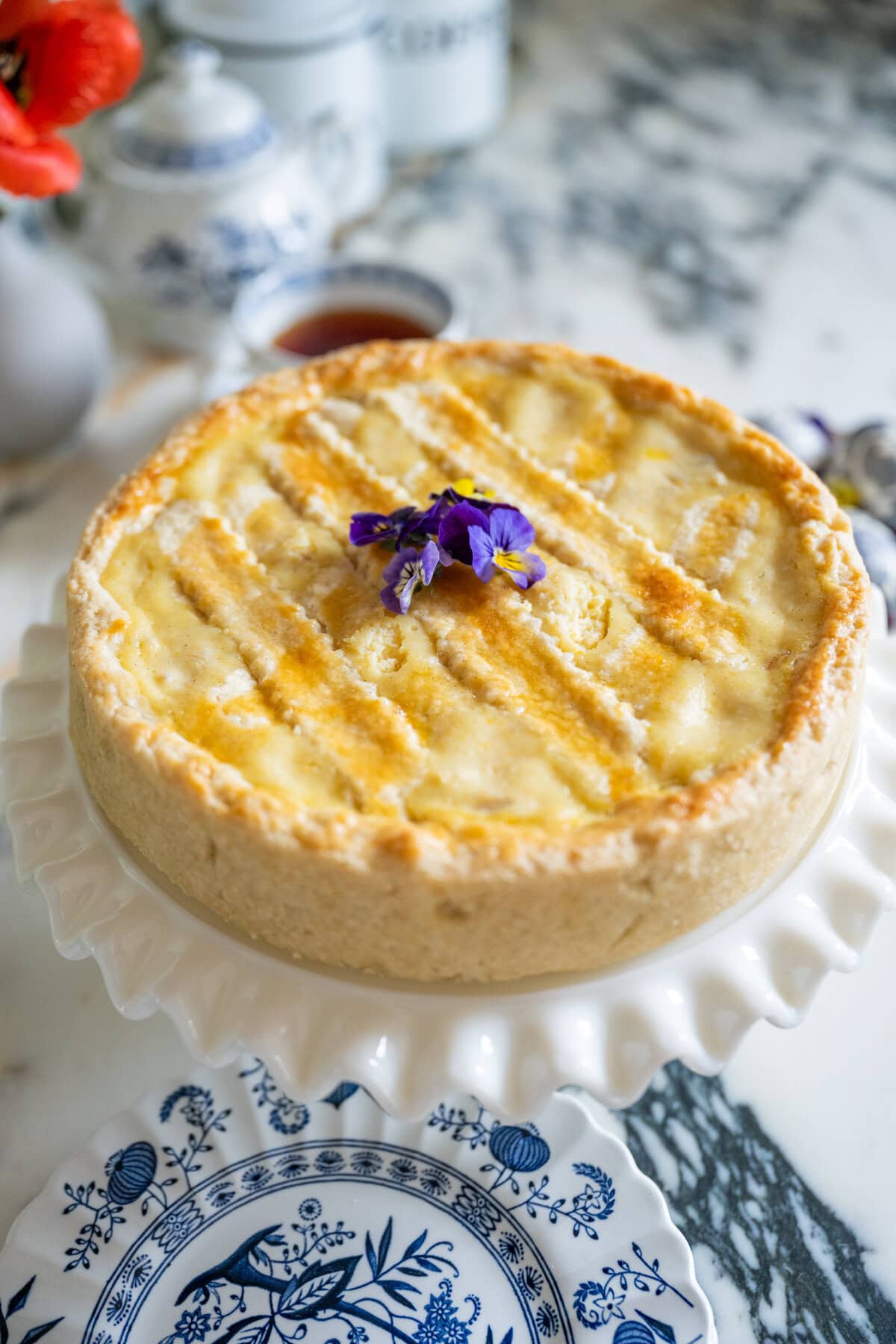
What Makes Pastiera Napoletana Special?
Pastiera Napoletana is a traditional Italian Easter grain pie from the Gulf of Naples made with:
- pasta frolla (Italian shortcrust pastry)
- grano cotto (cooked wheat berries simmered in milk)
- a ricotta mixture made with whole eggs, sugar, and milk
- orange zest, lemon zest, and vanilla
- a classic lattice top baked until golden brown
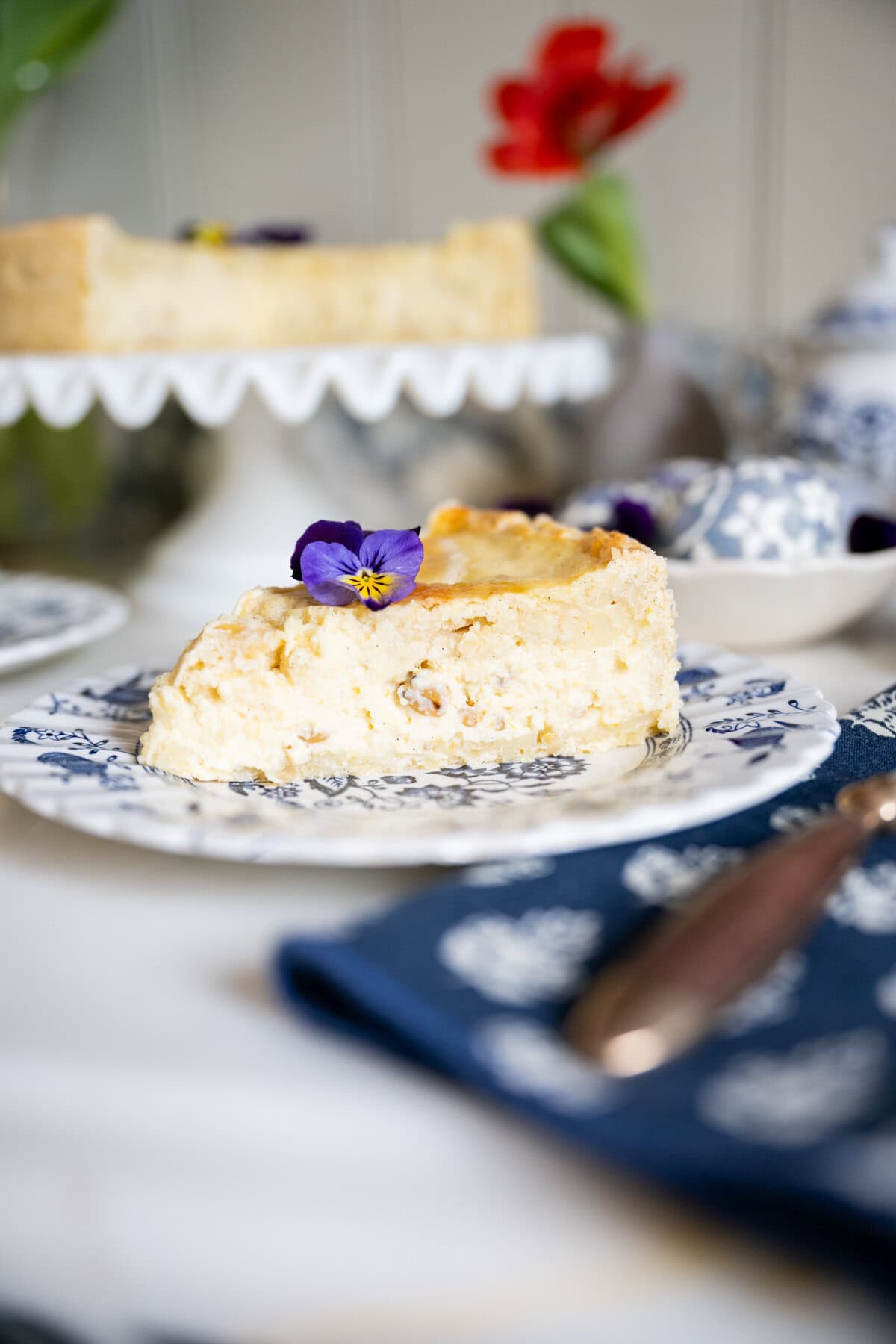
Unlike many ricotta pie recipes, pastiera has a signature wheat cream texture that is often compared to rice pudding, but made with wheat berry instead.
If you love traditional European baking, you might also enjoy my Sourdough Hot Cross Buns or my adorable Sourdough Brioche Easter Bunny Buns, both perfect for Easter morning.
What Is Pastiera Napoletana?
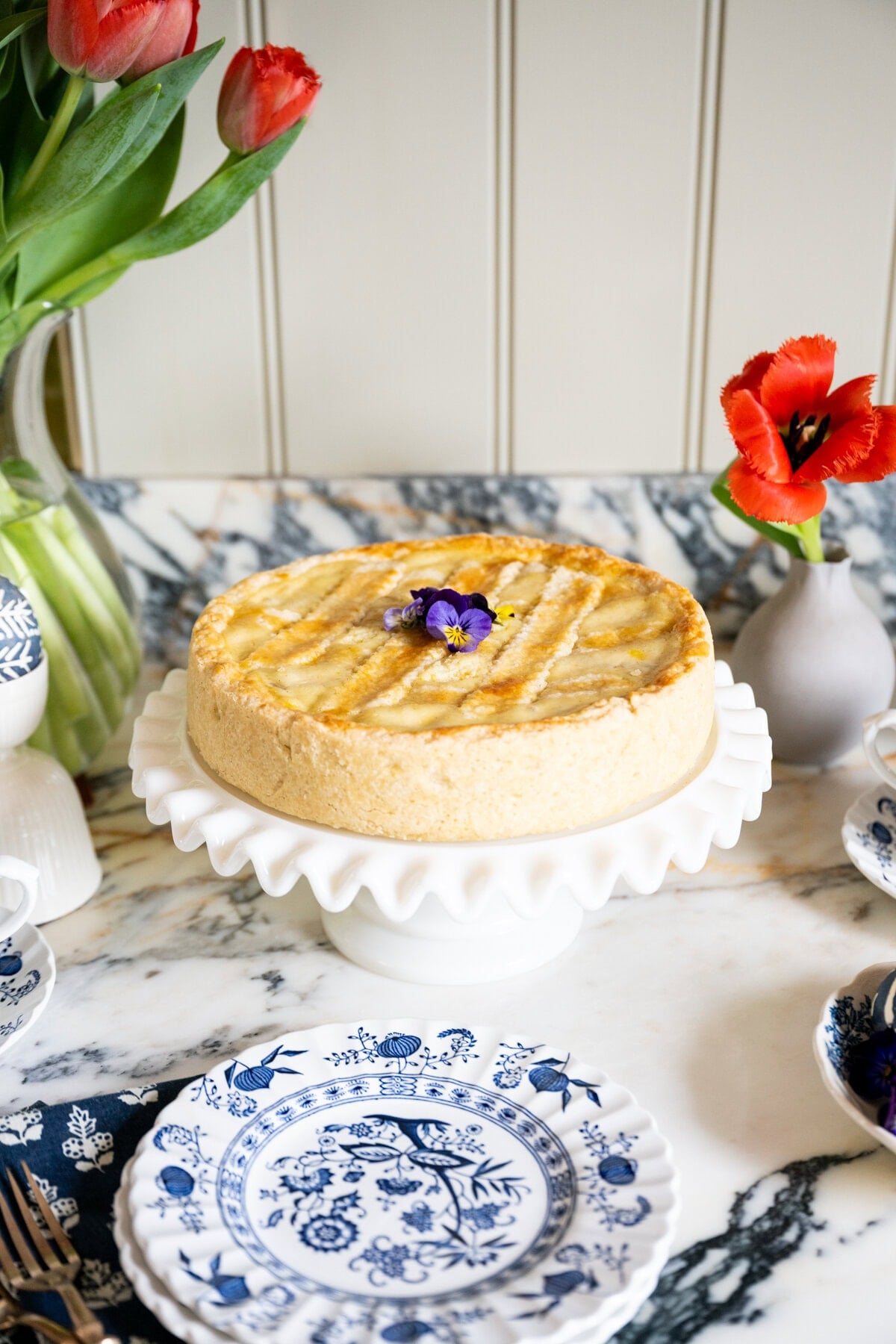
Pastiera Napoletana is a traditional dessert from the Naples area in southern Italy, most closely associated with Easter time. It is made with an Italian shortcrust pastry called pasta frolla, then filled with a creamy ricotta filling mixed with grano cotto, eggs, sugar, and citrus.
Traditionally, pastiera is baked ahead of time and served at room temperature, often dusted with icing sugar. It is a dessert that represents spring, new life, and celebration, which is why it is so closely tied to Easter Sunday.
Many Italian pastry shops still make it the same way today, especially throughout the Naples area.
Why You Will Love This Traditional Pastiera Recipe
This version is designed to give you authentic flavor with clear steps for good results.
- Traditional Italian Easter pie made with real grano cotto
- Tender pasta frolla crust made quickly in a food processor
- Creamy ricotta filling with smoothness like pastry cream
- Fragrant citrus flavor with orange zest and lemon zest
- Traditional Millefiori extract with Fiori di Sicilia as a good substitute
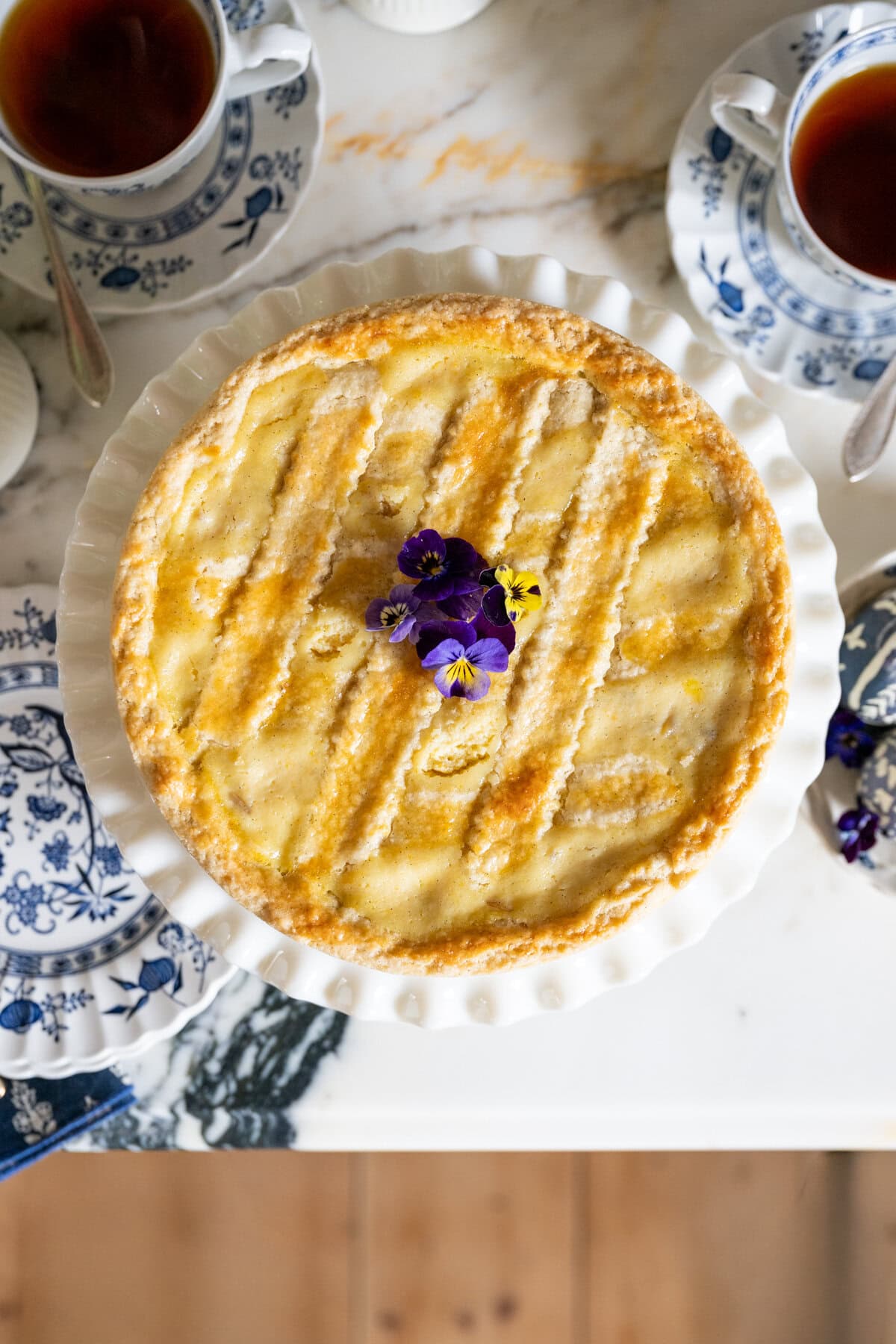
- A beautiful lattice top that makes it look bakery worthy
- Perfect for Easter time and spring gatherings
Pastiera Napoletana Ingredients
This traditional pastiera napoletana recipe is made in three parts: pasta frolla (Italian shortcrust pastry), grano cotto (cooked wheat berry cream), and the ricotta filling.
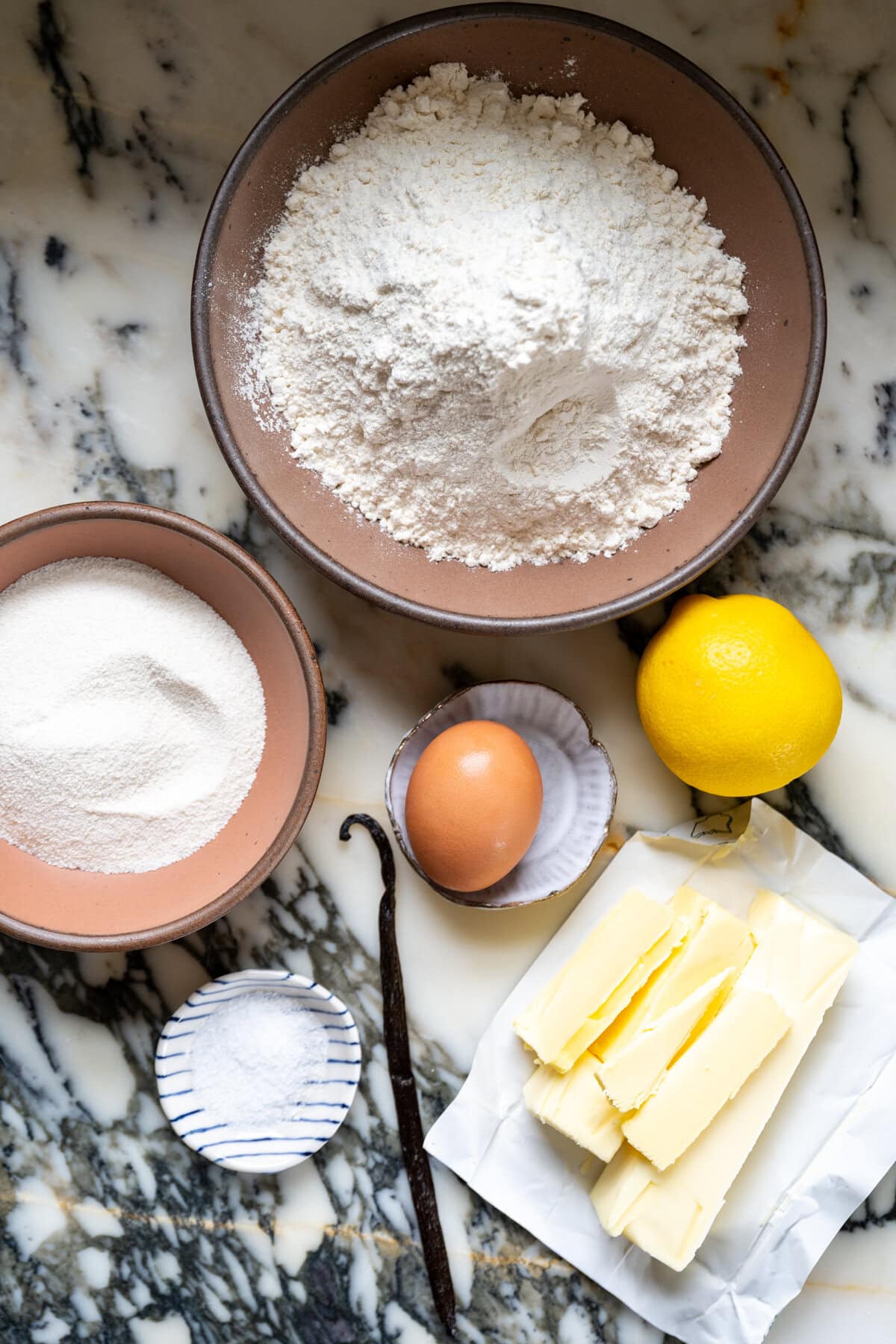
Pasta Frolla (Italian Shortcrust Pastry)
- All purpose flour: The base structure of the pastry dough, giving the crust stability without making it tough.
- Butter: Adds richness and creates a tender, crumbly pie crust texture when kept cold.
- Sugar: Sweetens the pasta frolla slightly and helps it bake into a golden brown crust.
- Egg: Binds the dough and adds richness, making the crust more tender than traditional pie dough.
- Salt: Enhances flavor and balances the sweetness.
- Vanilla bean seeds: Adds a warm pastry shop aroma that pairs beautifully with the ricotta mixture.
- Lemon zest: Brightens the crust and gives it a classic Italian flavor.
- Cold water: Helps bring the dough together without melting the cold butter.
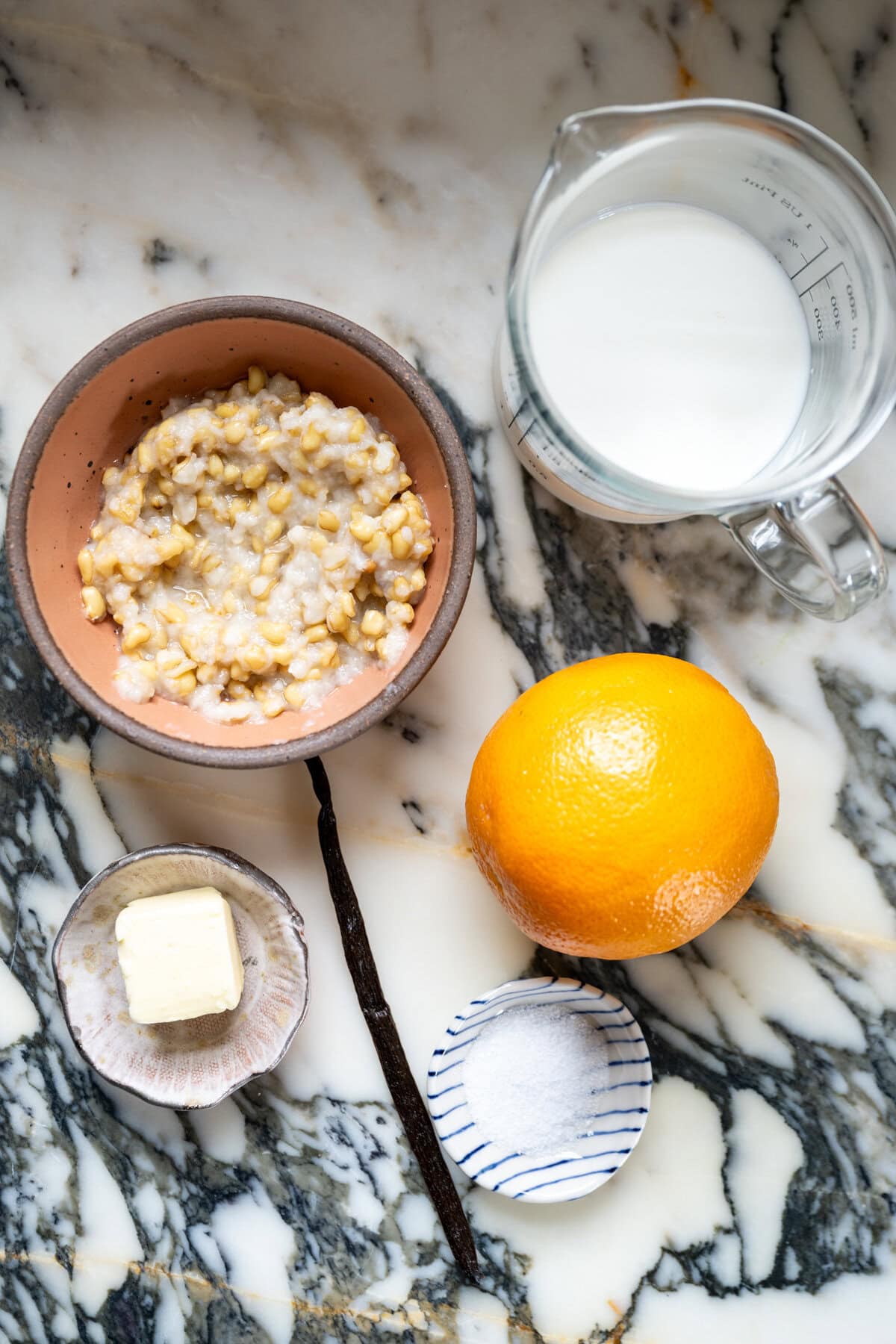
Grano Cotto (Cooked Wheat Berry Cream)
- Cooked Wheat Berries (Grano Cotto): The signature ingredient in traditional Italian Easter grain pie, giving the ricotta filling its creamy texture with a gentle chew. Most modern recipes use canned or pre-cooked grano cotto, which can be found in Italian specialty stores and saves a lot of time. For a traditional approach, you can make it from dried whole wheat berries by soaking them for 2–3 days and then simmering in water or milk until the grains split and form a creamy wheat cream. Soft wheat berries are preferred for a smoother, creamier texture. If you cannot access grano cotto or dried wheat berries, good substitutes include pre-cooked farro, pearled barley, or arborio rice.
- Whole milk: Softens the wheat berries and creates a creamy wheat cream, similar to thick rice pudding.
- Orange zest: Adds fresh citrus aroma and balances the richness of the filling.
- Vanilla bean seeds: Adds warmth and depth, giving the grain mixture a bakery style flavor.
- Butter: Enriches the wheat mixture and gives it a silky texture.
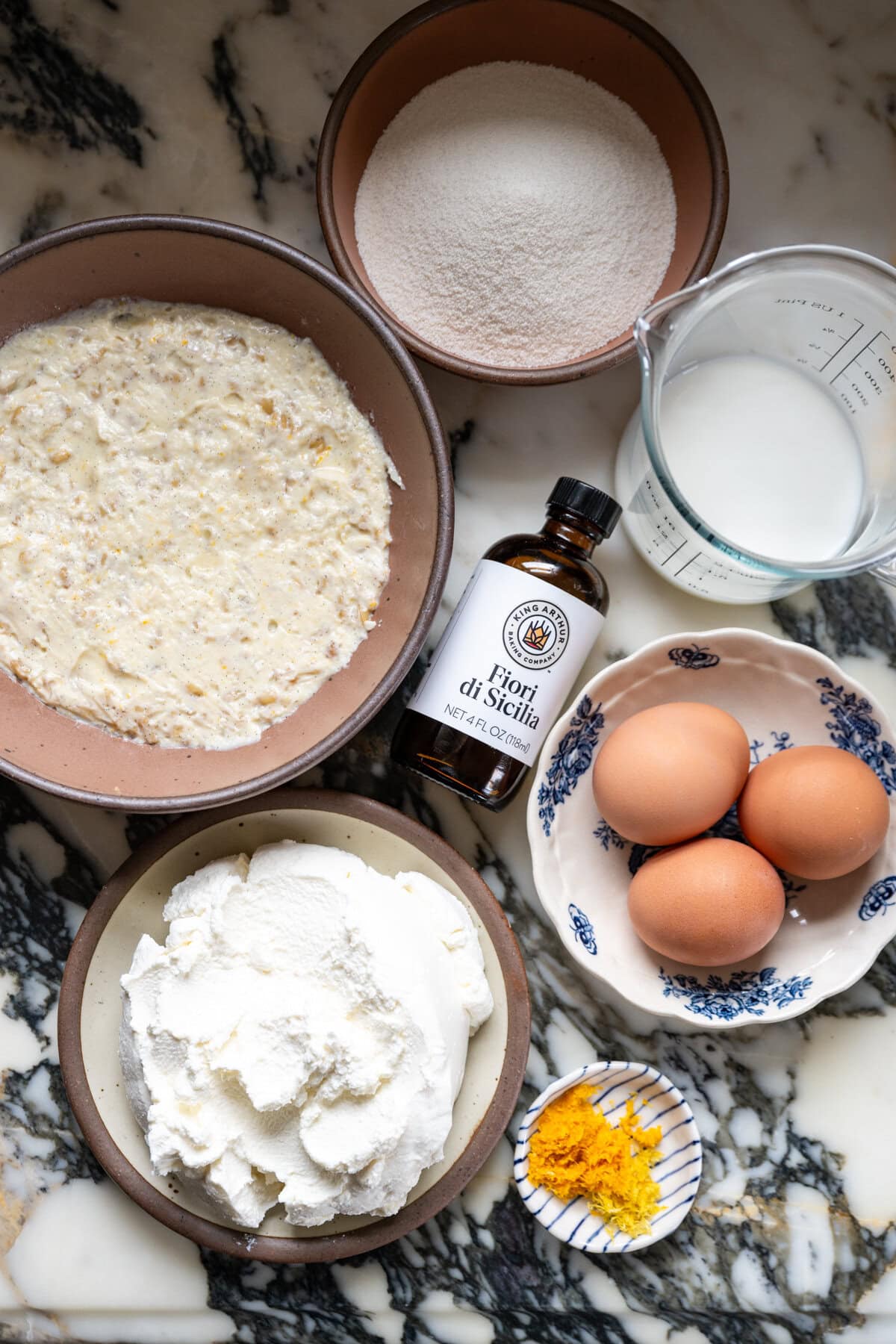
Ricotta Filling
- Ricotta cheese: The creamy base of the filling, creating the classic texture of an Italian Easter pie.
- Whole eggs: Help the filling set while baking and give it a custard-like structure.
- Milk: Lightens the ricotta filling and keeps it smooth and creamy.
- Sugar: Sweetens the filling and balances the citrus and floral notes.
- Prepared cooked wheat mixture (grano cotto): Adds body, texture, and that traditional wheat cream flavor.
- Orange zest: Essential for the classic pastiera aroma and bright citrus flavor.
- Millefiori extract: The traditional flavoring used in many Italian pastry shops, giving a floral citrus scent similar to orange blossom.
- Fiori di Sicilia extract: A good substitute for Millefiori and easier to find in the USA, adding citrus and vanilla notes. Orange blossom water can also be used in a pinch.
Pro Tip: Use fresh ricotta made without stabilizers and strain it in cheese cloth or a coffee filter to remove excess liquid whey.
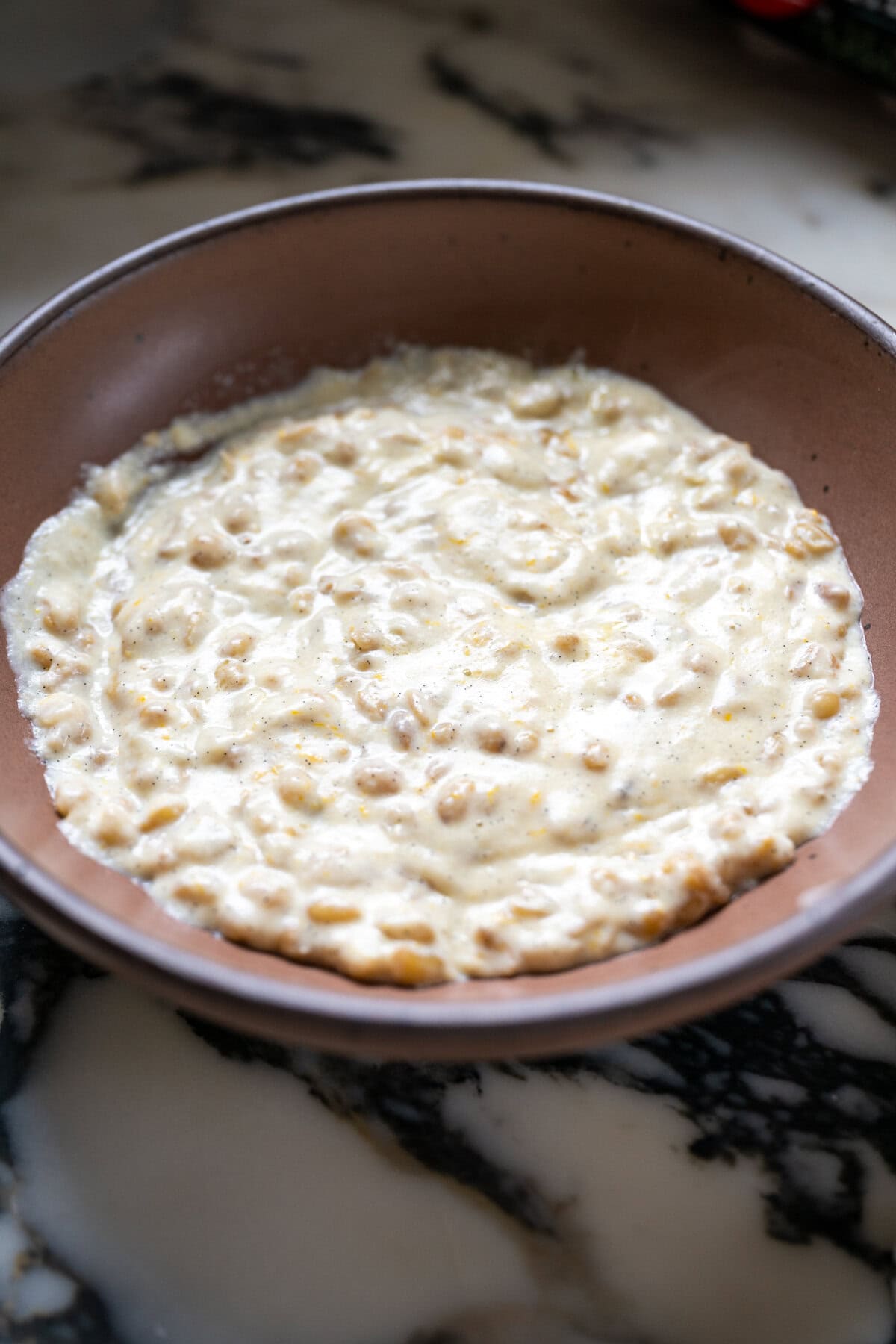
What Is Grano Cotto?
Grano cotto, or cooked wheat, is the signature ingredient in authentic pastiera napoletana. It gives the ricotta filling its traditional texture—creamy like rice pudding but with a slightly chewy bite.
Using Prepared Grano Cotto (Modern Shortcut)
Most modern pastiera recipes, especially in Italian pastry shops, use canned or pre-cooked grano cotto. This is the easiest way to achieve the classic texture without long cooking:
- Warm the pre-cooked wheat berries with whole milk, orange zest, and vanilla bean seeds over medium heat until thickened like porridge.
- Stir in cold butter off the heat to create a silky wheat cream.
- Let the mixture cool completely to room temperature before adding to the ricotta mixture.
Pro Tip: Prepared grano cotto is a good choice for first-time bakers or anyone looking for convenience while still achieving an authentic taste.
Making Grano Cotto from Dried Wheat Berries (Traditional Method)
For the most traditional approach, you can make grano cotto from dried whole wheat berries. This method requires more time and preparation:
- Choose soft wheat berries if possible: Soft wheat berries cook faster and yield a creamier texture than hard wheat berries, making them ideal for traditional pastiera.
- Soak the wheat berries: Place them in plenty of water for 2–3 days, changing the water daily.
- Cook the wheat berries: Simmer in milk (or milk and water) over medium to low heat for 3–4 hours until the grains split and form a creamy wheat cream.
- Stir in cold butter off the heat, then cool completely to room temperature before adding to the ricotta mixture.
Substitutions for Wheat Berries
If you cannot find grano cotto or dried wheat berries, you can use:
- Pre-cooked farro
- Pre-cooked pearled barley
- Pre-cooked arborio rice
These alternatives provide a similar texture and flavor while still producing a delicious pastiera napoletana.
Quick Summary: Prepared grano cotto is the standard in modern recipes and saves time, while making it from dried wheat berries is a good substitute for a more traditional, nutty flavor and slightly chewy texture. Choosing soft wheat berries improves the creamy texture when cooking from scratch. Wheat berry alternatives allow you to adapt the recipe without compromising the signature pastiera experience.
Millefiori vs Fiori di Sicilia (Which Extract Should You Use?)
If you want the most authentic flavor, use Millefiori extract. This is the traditional extract used in many Italian pastry shops, and it gives pastiera that floral citrus aroma associated with Easter dessert.
If you cannot find Millefiori in the USA, Fiori di Sicilia is a good substitute. It is easier to find, and it has a similar citrus vanilla profile that works beautifully in the ricotta filling.
Orange blossom water is another alternative but its aroma and flavor are more citrus forward and not as rounded as Millefiori or Fiori di Sicilia.
Pro Tip: Start with a smaller amount of extract if yours is very strong. Pastiera should smell fragrant and floral, not overly perfumed.
How to Make Pastiera Napoletana (Step by Step)
This is not a rushed dessert. Take your time, read through the steps, and enjoy the process. If it is your first time, you will be surprised how approachable it feels once the dough and filling are prepared.
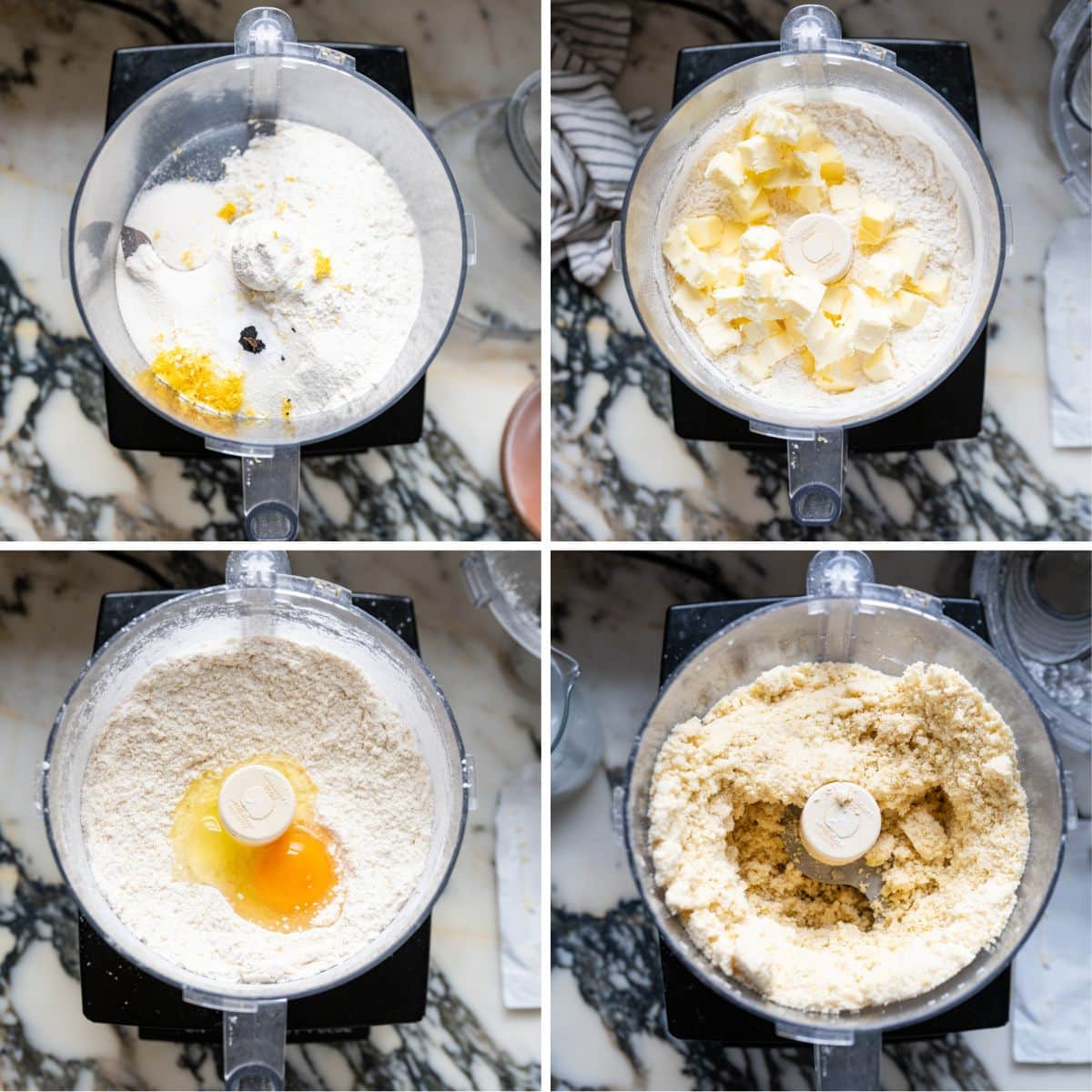
Step 1: Make the Pasta Frolla Dough
- In a food processor, pulse together the flour, sugar, salt, vanilla bean seeds from half of the vanilla bean, and lemon zest.
- Add cold cubed butter and pulse until the mixture resembles coarse bread crumbs.
- Add the egg and pulse until the dough begins to clump.
- Add ice water 1 tablespoon at a time, pulsing between additions, until the dough holds together.
- Turn the dough out onto a lightly floured work surface and form it into a disc.
- Divide the dough into two portions:
- one larger portion (about 2/3)
- one smaller portion (about 1/3)
- Form each piece into a round disc, wrap tightly in plastic wrap, and refrigerate while you prepare the filling.
Quick Summary: Cold butter, cold water, and chilling the dough are the keys to pasta frolla that rolls easily and bakes into a tender crust.
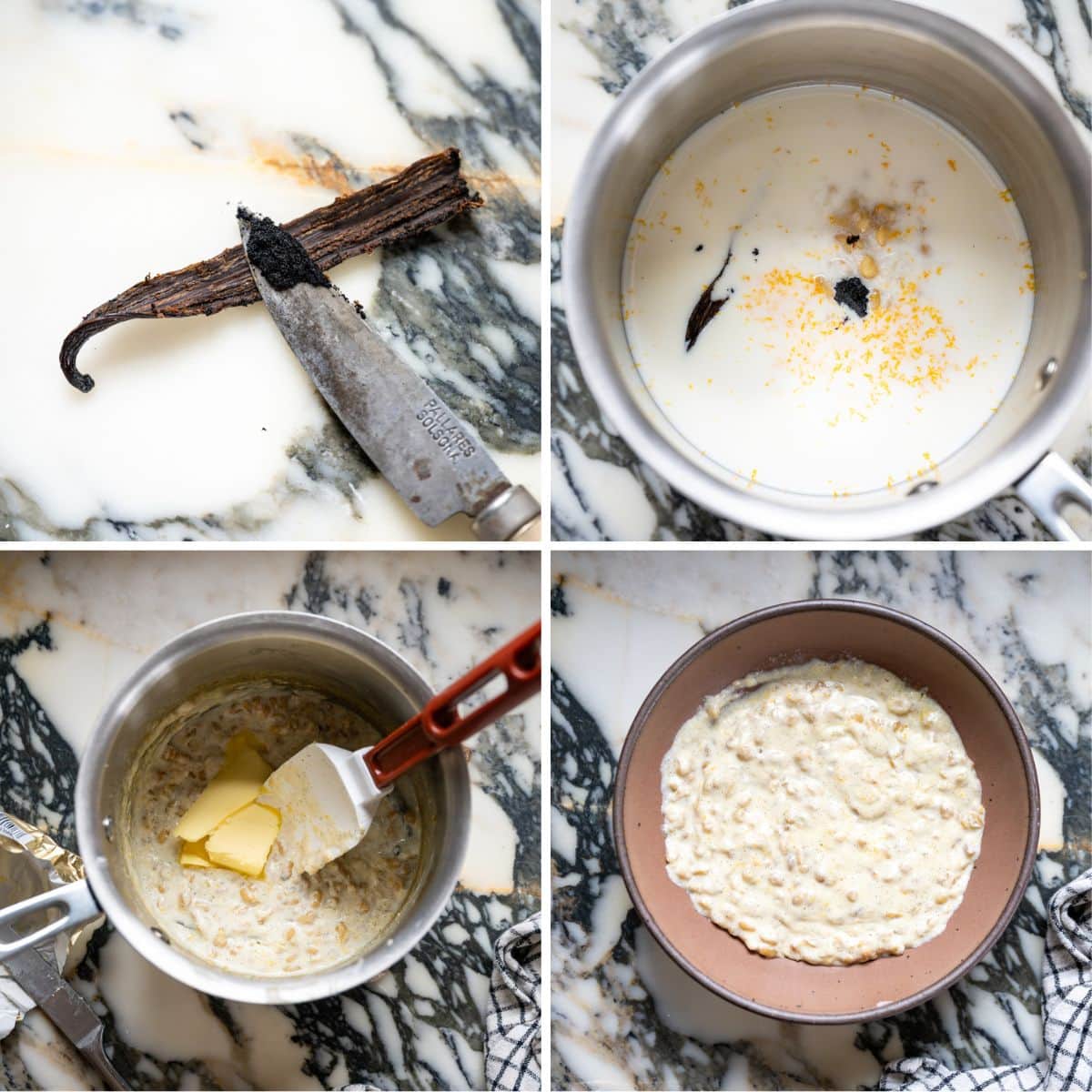
Step 2: Cook the Wheat Berry Mixture (Grano Cotto)
- In a saucepan, combine:
- cooked wheat berries
- whole milk
- orange zest
- vanilla bean seeds from the remaining half of the vanilla bean
- Bring to a gentle simmer over medium heat, then reduce to a low flame. Stir often with a wooden spoon so it does not stick.
- Cook until the mixture becomes thick like porridge. This is the wheat cream that gives the traditional Italian Easter grain pie its signature texture.
- Remove from heat and stir in cold butter.
- Let the mixture cool completely to room temperature before adding it to the ricotta mixture.
Important Step: If the wheat cream is still warm, it can loosen the ricotta filling and lead to a moist filling that does not set properly.
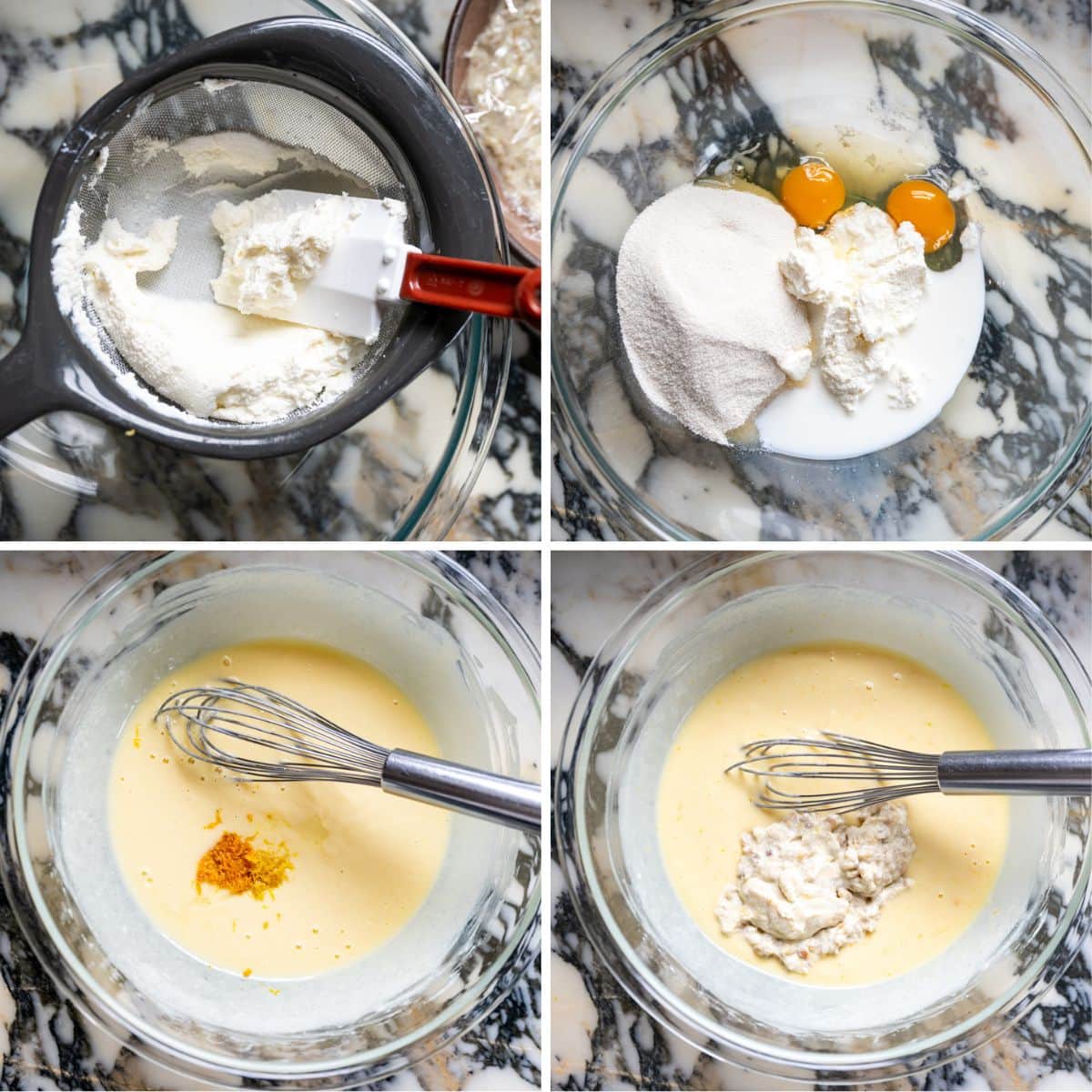
Step 3: Make the Ricotta Filling
- Pass the ricotta cheese through a fine sieve into a large bowl. This step gives the filling a more refined pastry shop texture.
- In a separate bowl, whisk the whole eggs.
- Measure out 120g of the beaten egg and add it to the ricotta. Reserve the remaining egg for the egg wash.
- Add sugar, milk, orange zest, and Millefiori extract. Whisk until smooth.
- If using Fiori di Sicilia, add it here instead. It is a good substitute and gives excellent flavor.
- Add the cooled cooked wheat mixture and stir to combine.
Example: The ricotta mixture should be thick enough that it slowly falls from a spoon. If it pours quickly, your ricotta may be too wet.
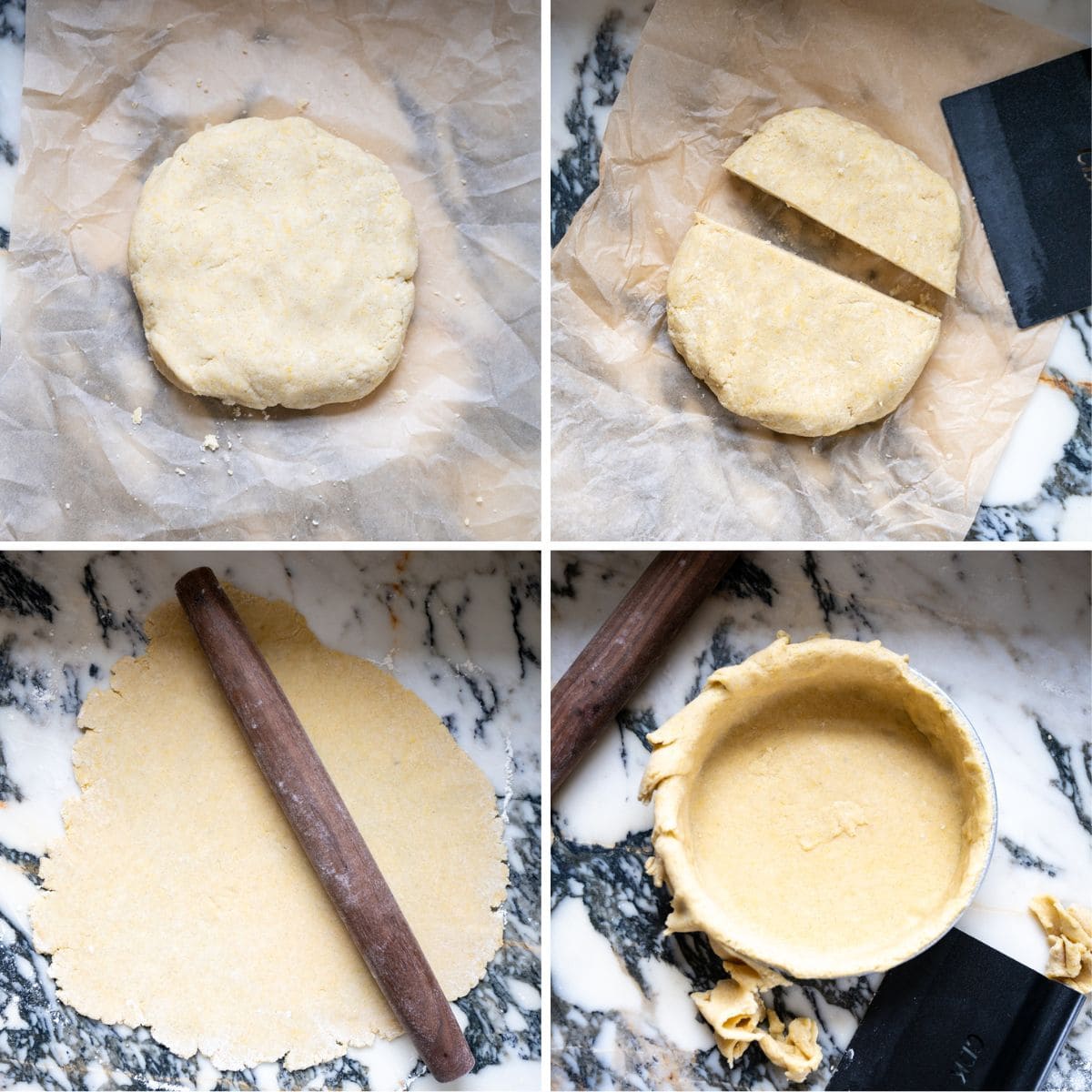
Step 4: Assemble the Pastiera
- Preheat the oven to 375°F.
- Roll out the larger piece of dough on a lightly floured surface using a rolling pin. Roll it to about 1/4 inch thickness.
- Line a pie plate, cake pan, or springform pan with the dough, letting it overhang slightly. Dock the bottom with a fork.
- Pour the filling into the crust and smooth the top of the pastiera.
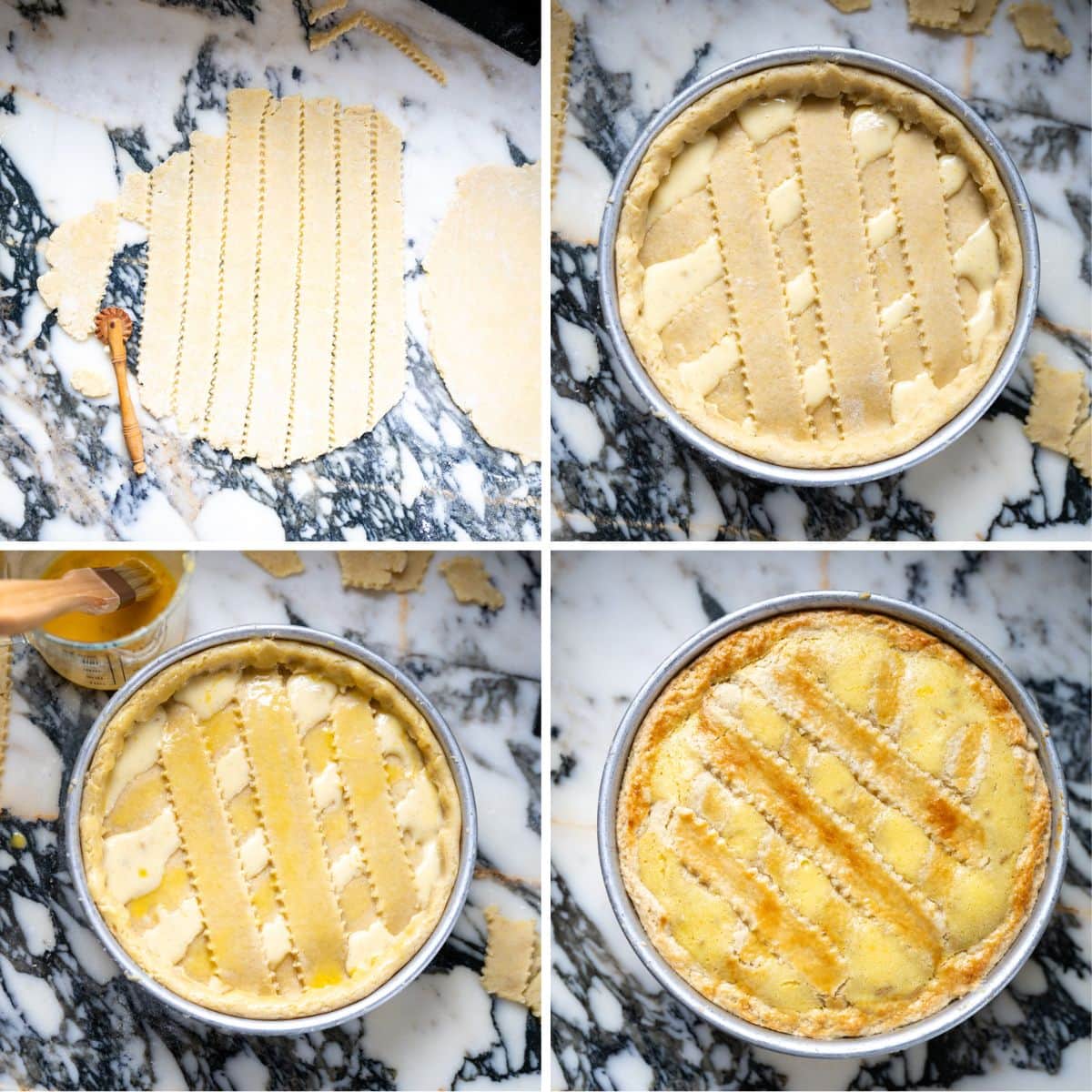
- Roll out the remaining dough and cut it into seven strips about 1 inch wide. (Seven strips represent the seven ingredients of the filling.)
- Place 4 strips across the filling in the same direction, then place the remaining 3 strips diagonally over them to create a diamond shaped lattice top.
- Trim the excess dough and pinch the edges to seal.
- Brush the lattice top with egg wash using the reserved beaten egg.
Step 5: Bake the Pastiera
- Lower the oven temperature to 350°F.
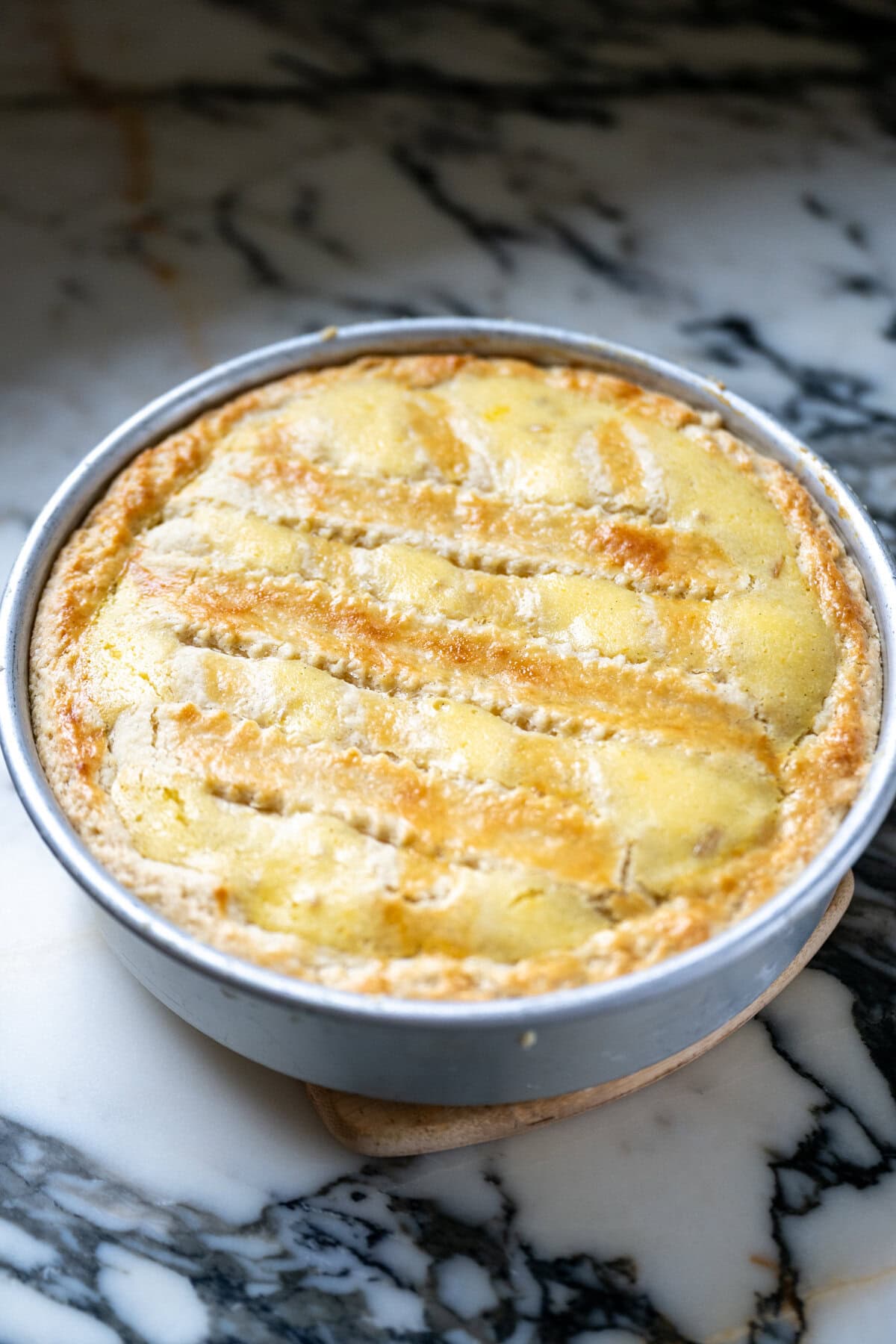
- Bake for 40 to 45 minutes, or until:
- the top is golden brown
- the edges are puffed and set
- the center has a slight wobble
- Cool completely to room temperature on a wire rack before slicing.
Cook’s Note: Cooking time may vary slightly depending on your pan. A springform pan may take a bit longer than a pie plate.
Pro Tip: Pastiera should never be served warm. Cooling fully is one of the most important steps for good results.
Let Pastiera Rest Overnight (Traditional and Worth It)
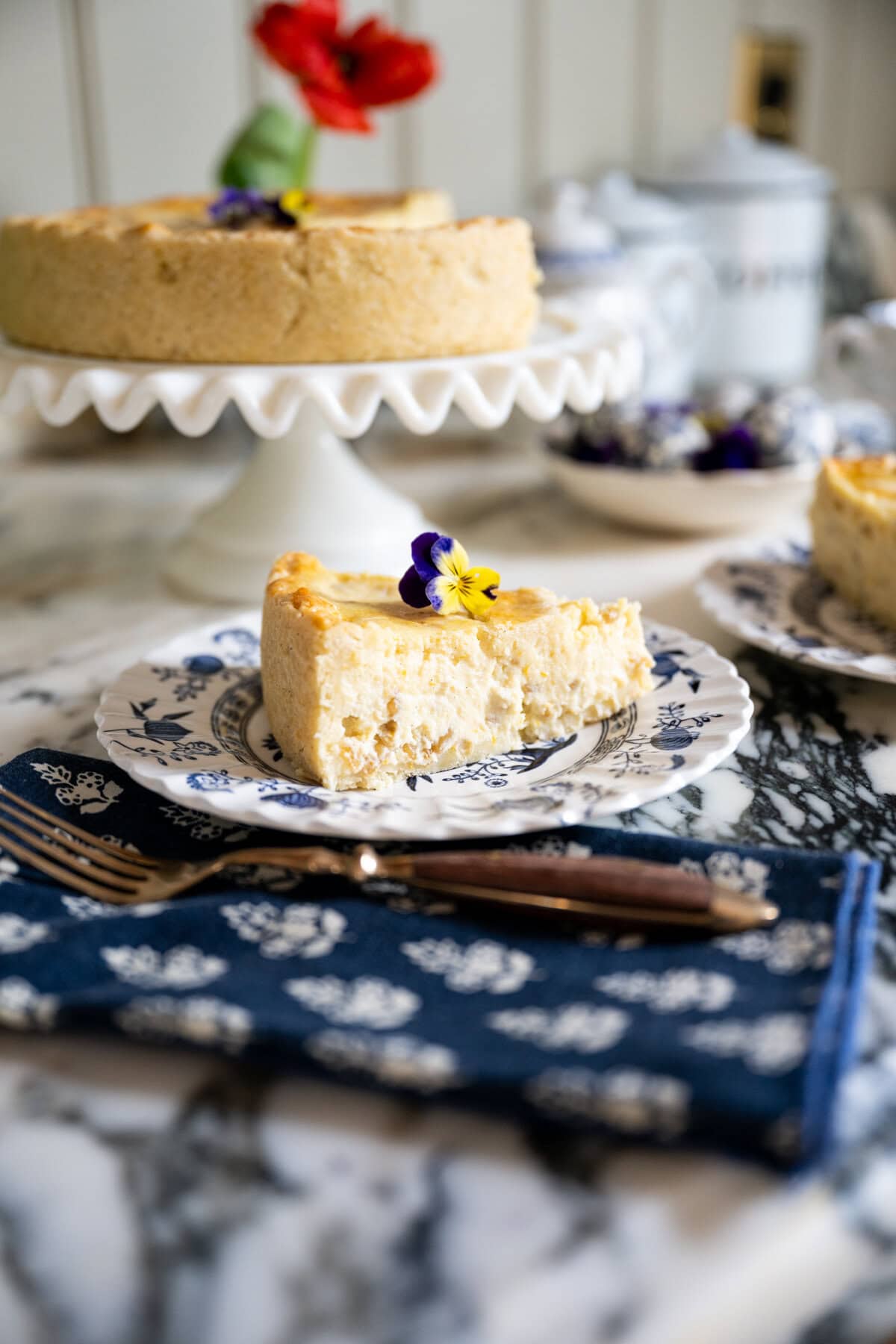
Pastiera is famous for tasting better the next day. After it cools to room temperature, cover it loosely and let it rest overnight in a cool place. The flavor becomes deeper, the grain mixture softens, and the filling becomes more cohesive.
If you are baking for Easter Sunday, this is exactly why many families make it on Holy Thursday or Good Friday.
If your kitchen is warm, refrigerate overnight for food safety, then bring the pastiera back to room temperature before serving.
How to Serve Pastiera Napoletana
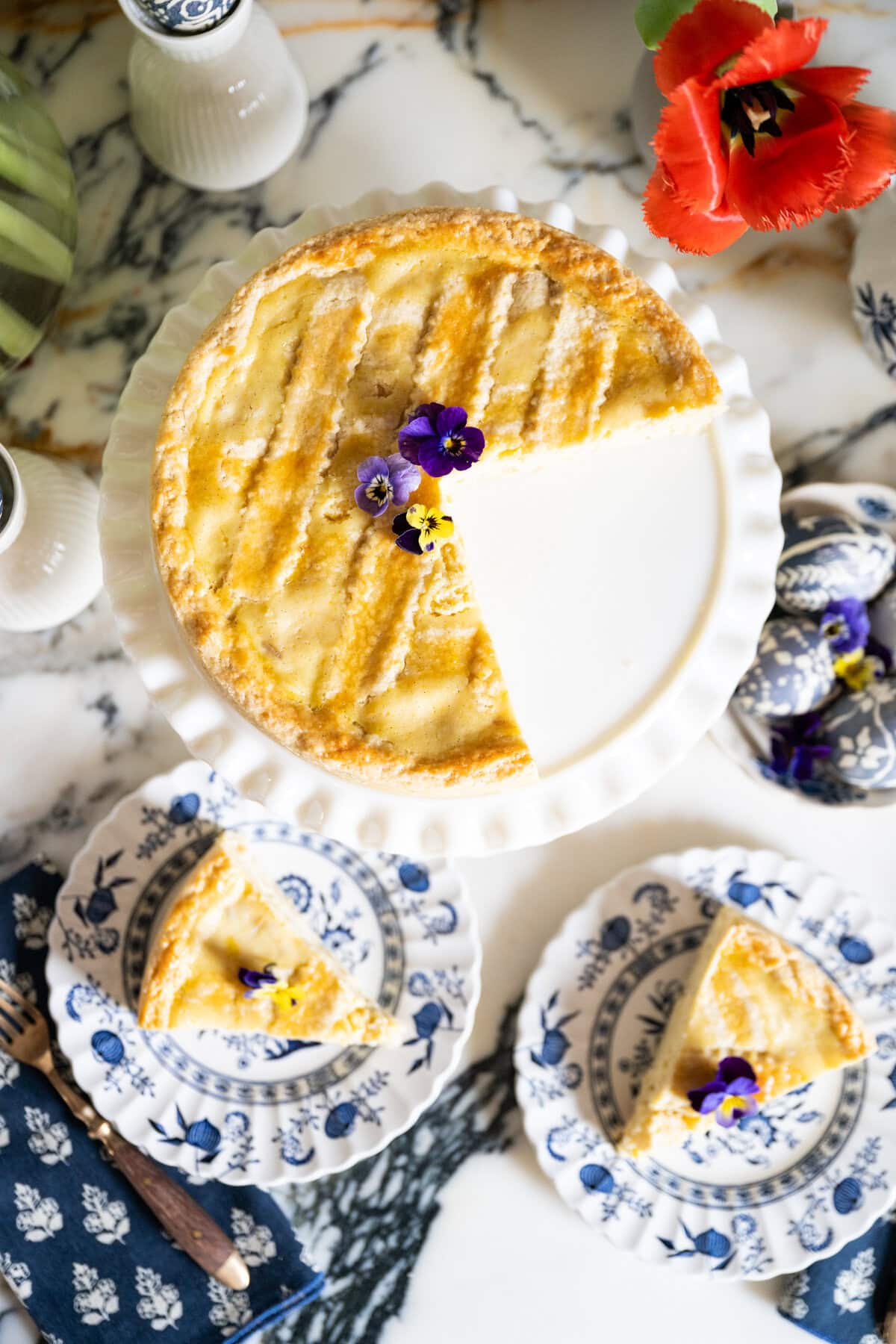
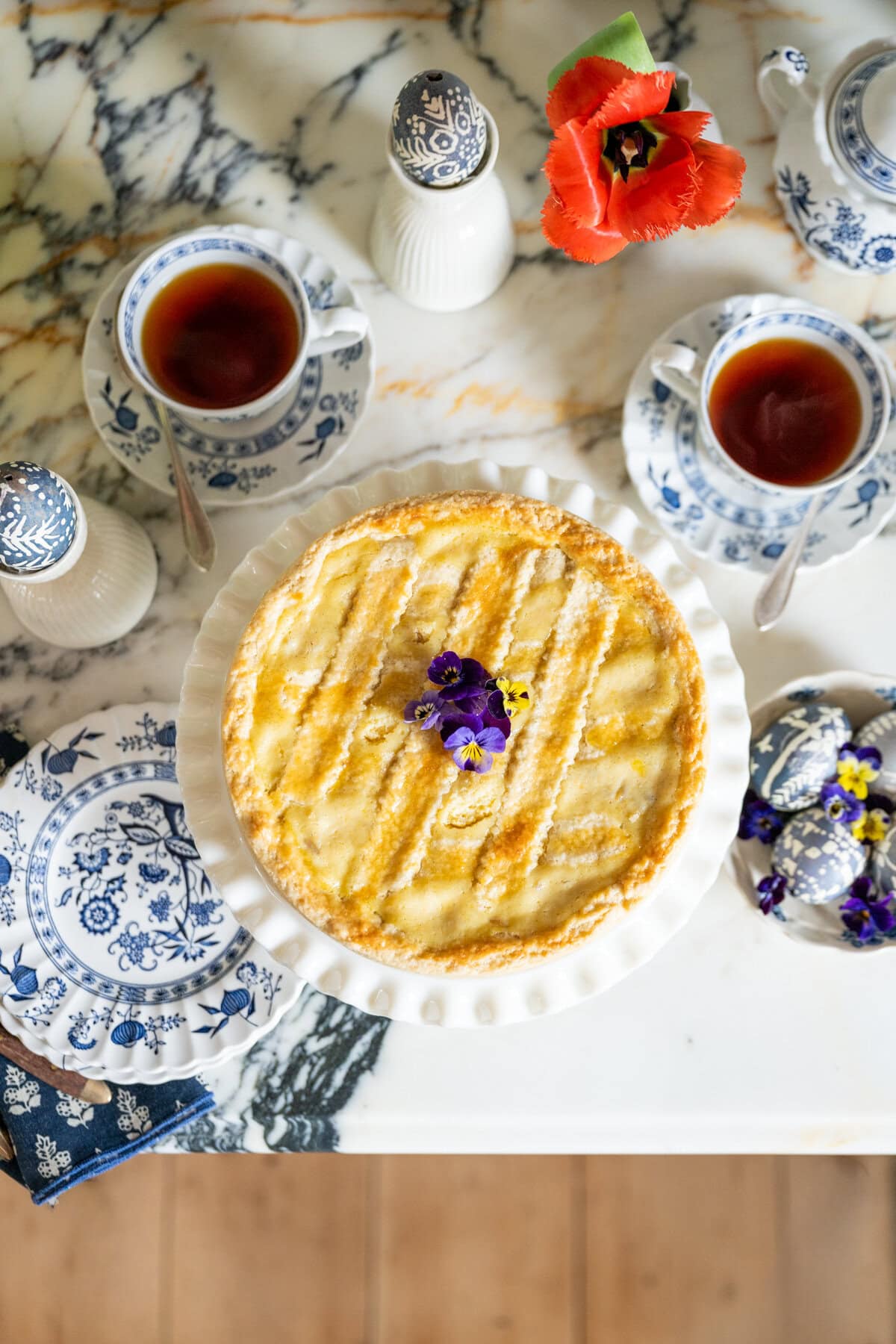
Pastiera is traditionally served at room temperature with a dusting of icing sugar.
It is perfect for:
- Easter Sunday brunch
- an Easter dessert table
- coffee after a holiday meal
- a spring celebration
Pro Tip: For the best texture, slice it once it has fully cooled and rested.
If you are building a full Easter dessert table, pair this pastiera with my Italian Carrot Cake or my bright and springy Lemon Coconut Cake with Cream Cheese Frosting.
How to Store Pastiera
Because this is a ricotta filling made with whole eggs and milk, it should be stored in the refrigerator.
- Room temperature: up to a few hours for serving
- Refrigerator: 4 to 5 days
- Freezer: up to 2 months, tightly wrapped
Store leftovers covered. When ready to serve, let the pastiera sit at room temperature for 30 to 60 minutes for the best flavor.
Traditional Variations (Optional)
Pastiera varies slightly between families in southern Italy, but the foundation remains the same.
- Candied Fruit: Some traditional recipes include candied fruit such as candied orange peels or candied citron. If you love classic Italian pastry shop flavor, this is a delicious addition.
- Orange Flower Water: Some recipes use fragrant orange blossom water instead of extract. If using orange flower water, start with a small amount since it can be strong.
- Pine Nuts: My great-grandmother’s recipe uses pine nuts or pignoli instead of wheat berries. Pine nuts add a nutty flavor with a textural bite similar to the wheat berries.
If you love citrus desserts, you will definitely want to try my Lemon Honey Ricotta Tart Recipe next.
Common Mistakes to Avoid for Good Results
Pastiera is forgiving, but these are the most common issues that can affect the final texture.
- Ricotta cheese was too wet, leading to a moist filling
- Grain mixture was not thickened enough before cooling
- Filling was sliced before reaching room temperature
- Pastry dough was too warm, causing shrinking
- Lattice top strips were rolled too thin and broke during assembly
If you take your time with the important steps, you will end up with a pastiera that looks and tastes like it came from the best pastry shops in the Naples area.
Pastiera Napoletana FAQs
Grano cotto is traditional and gives pastiera its signature texture. If unavailable, you can cook whole wheat berries from scratch or use pre-cooked farro, barley, or arborio rice.
Look for grano cotto at Italian specialty stores or online. Pre-cooked wheat berries are a convenient alternative.
Yes. Soak whole wheat berries 2–3 days, then simmer in milk until creamy. Soft wheat berries yield a smoother texture.
Refrigerate in warm kitchens for food safety, then serve at room temperature. Resting overnight deepens flavor and softens the wheat cream.
A slight wobble is normal. If it stays loose after cooling, your ricotta may have been too wet or the filling underbaked.
Yes. Seal the crust well to prevent leaks, and enjoy clean, elegant slices.
Ricotta pie is smooth and custard-like, while pastiera includes cooked wheat berries (grano cotto), giving it the signature slightly chewy texture that makes it traditional for Easter.
Whole eggs are traditional for structure and custard-like setting. Using only yolks makes the filling richer but softer, which may change the classic texture.
Stored in the refrigerator, pastiera lasts 4–5 days. It tastes best in the first 2–3 days, when the crust remains crisp and the flavors are fresh.
Yes! Resting overnight allows the flavors to meld and the wheat cream to soften, giving a more cohesive and flavorful pastiera.
Final Thoughts
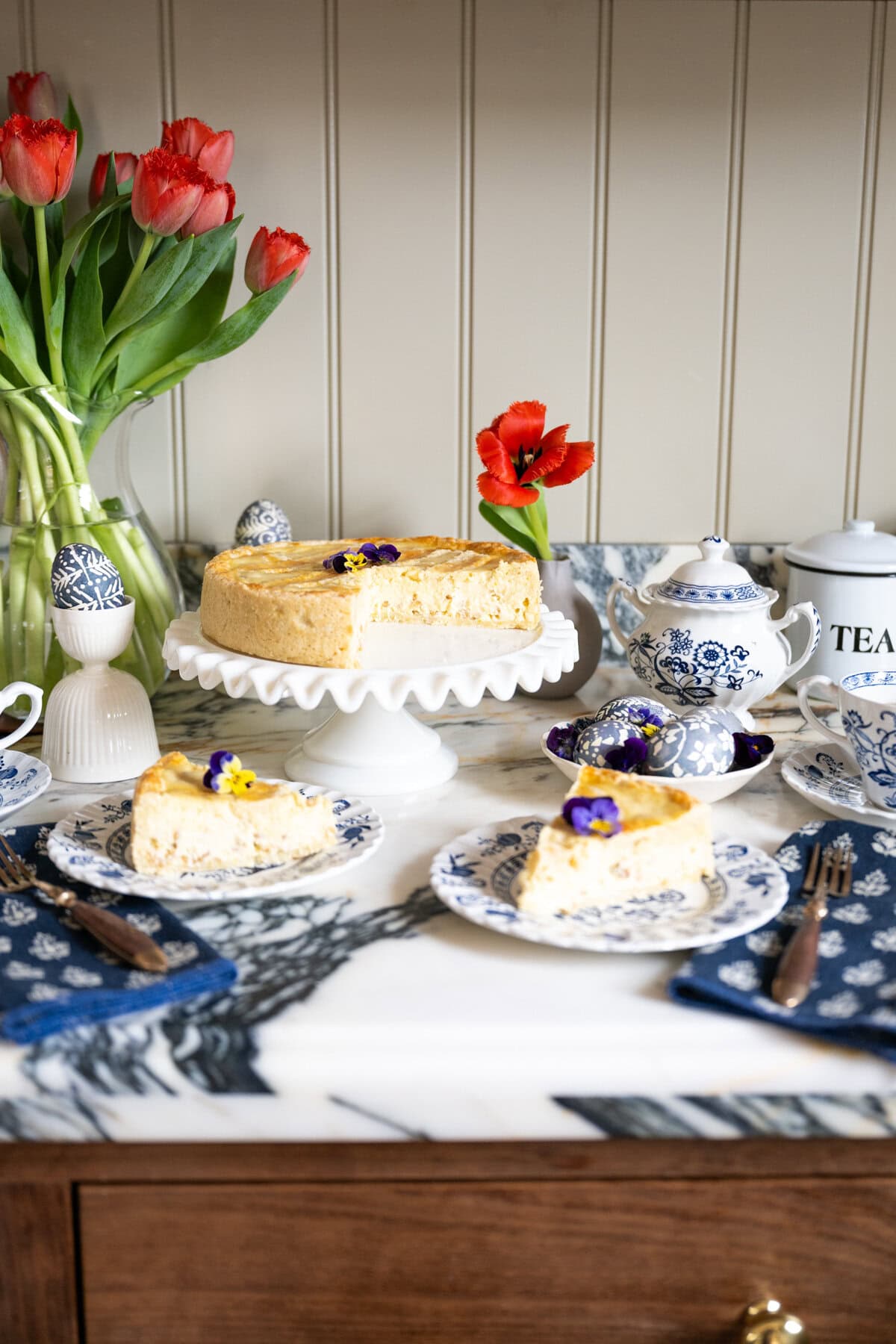
Pastiera Napoletana or Italian Easter Grain Pie is one of those desserts that feels like a piece of history. Between the lemon zest in the pasta frolla, the creamy ricotta mixture, and the fragrant orange blossom aroma of Millefiori extract, it is a dessert that instantly tastes like Easter time in the Gulf of Naples.
If you are making it for the first time, take your time and enjoy the process. The reward is a golden brown lattice topped pie that feels both rustic and elegant, and tastes like it came straight from a traditional Italian pastry shop.
More Italian Inspired Desserts to Try
If you love traditional recipes and seasonal baking, you might also enjoy these favorites on Fare Isle:
- Italian Carrot Cake Recipe (Torta di Carote)
- Ricotta Pie Recipe (Italian Lemon Honey Version)
- Italian Baci di Dama Cookies (Lady’s Kisses)
- Vegan Baci Truffles
If you are craving more spring baking, my Berry Chantilly Cake is always a crowd pleaser, and my Strawberry Shortcake Cake is another beautiful option for celebrating the season.
Love This Recipe?
Please leave a star rating of the recipe and let me know what you think in a comment below. This small act is a great way to show your support for the food blogs you read and love.
Tag @fareisle in your photos on Instagram with #fareisle so I can see your creations!
Traditional Pastiera Napoletana (Italian Easter Pie)
Ingredients
Pasta Frolla Dough (Italian Shortcrust Pastry)
- 210 g all purpose flour (1-1/2 cups)
- 50 g sugar (1/4 cup)
- 1/2 tsp kosher salt
- 1/2 tsp vanilla bean seeds scraped from half of vanilla bean pod
- grated lemon zest from half of a lemon
- 113 g cold unsalted butter cubed
- 1 whole large egg
- 3 tbs ice water as needed
Grano Cotto Wheat Mixture
- 200 g grano cotto or pre-cooked wheat berries
- 250 g whole milk (1 cup)
- vanilla bean seeds scraped from half of vanilla bean pod
- grated orange zest from half of an orange
- 1/4 tsp kosher salt
Ricotta Filling
- 300 g pre-strained ricotta (about 1-1/4 cup)
- 3 whole large eggs at room temperature
- 133 g sugar (2/3 cup)
- 60 g whole milk (1/4 cup)
- grated orange zest from half of an orange
- grated lemon zest from half of a lemon
- 1/2 tsp Millefiori extract or Fiori di Sicilia extract
Instructions
Pasta Frolla Dough
- Pulse flour, sugar, salt, vanilla bean seeds, and lemon zest in a food processor.
- Add cold cubed butter and pulse until coarse bread crumbs form.
- Add egg and pulse to combine.
- Add cold water 1 tablespoon at a time and pulse until the dough holds together.
- Turn onto a lightly floured work surface and form into a disc.
- Divide into 2 pieces, one 2/3 and one 1/3. Shape into discs, wrap in plastic wrap, and refrigerate.
Grano Cotto Wheat Mixture
- Add cooked wheat berries, milk, orange zest, and vanilla bean seeds from the remaining half of the vanilla bean to a saucepan.
- Simmer over medium heat, then reduce to a low flame. Stir with a wooden spoon until thick like porridge.
- Remove from heat and stir in butter.
- Transfer mixture to a bowl and place plastic wrap directly onto the mixture to prevent a skin from forming. Cool completely to room temperature.
Ricotta Filling
- Pass ricotta through a sieve until smooth.
- Whisk whole eggs. Add 120g of beaten egg to the ricotta mixture and reserve the remaining egg for egg wash.
- Add sugar, milk, orange and lemon zest, and Millefiori or Fiori di Sicilia extract. Whisk until smooth.
- Stir in cooled cooked wheat mixture.
Assemble and Bake
- Preheat oven to 375°F.
- Roll the larger dough piece to 1/4 inch thick and line a pie plate or 8-9" cake pan or springform pan, allowing dough to overhang slightly.
- Dock the bottom with a fork.
- Pour in filling and smooth the top.
- Roll remaining dough and cut into seven 1 inch strips.
- Place 4 strips across, then 3 diagonally to create a lattice top. Trim and pinch edges to remove excess dough.
- Brush the top with egg wash.
- Reduce oven to 350°F and bake 40 to 45 minutes until golden brown with a slight wobble in the center.
- Cool completely to room temperature before serving.
Notes
- Pastiera is best made the day before and allowed to rest before serving.
- Store at cool room temp lightly covered over night or refrigerate and bring to room temperature before serving.
- Store leftover pastiera in the fridge up to 3-4 days or slice, wrap and freeze slices in freezer bags. Thaw slices in the fridge before serving.

Kaity Farrell
Have a question? Ask me here in the comments! If you’ve made the recipe, please leave your star rating and review. Thanks!